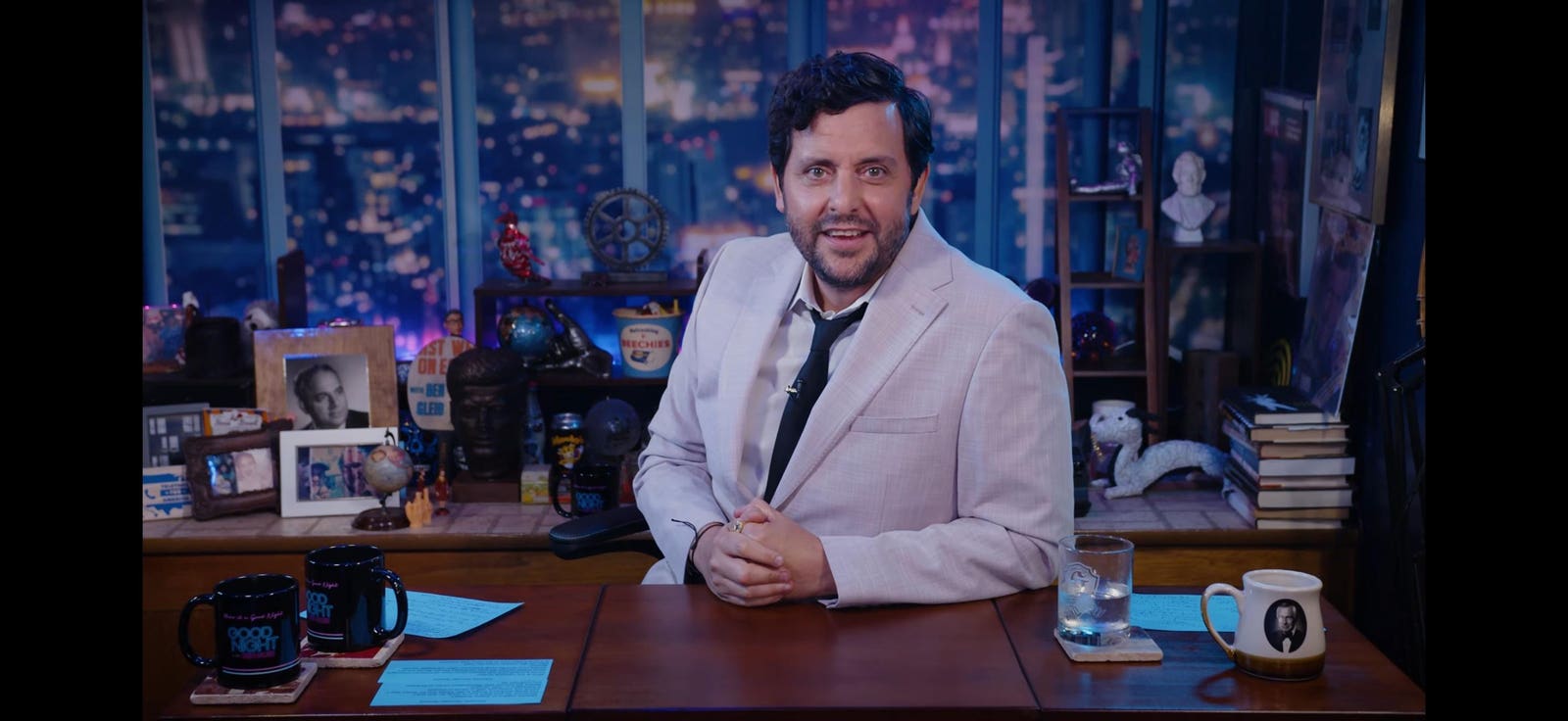
Comedian Ben Gleib has launched a late-night show on YouTube that he owns outright, producing it from his home with a team of 33 and selling virtual audience seats alongside Patreon subscriptions. The programme, called "Good Night With Ben Gleib," keeps the traditional desk, house band and opening monologue, then drops the network overhead and the 22-minute runtime.
Gleib serves as host, head writer, executive producer and CEO. "The buck stops with me in every department," he said. The show releases every Thursday on YouTube. One recording session produces the full episode, individual interviews, short clips and a members-only after-show.
The timing is not accidental. Advertising revenue across broadcast late-night shows fell from an estimated $439 million in 2018 to $220 million in 2024, according to Guideline figures. YouTube accounted for a record 13.8% of US television viewing in May 2026, maintaining the largest share of any media distributor for the third consecutive month. YouTube said television has overtaken mobile as the main device for watching its content in the US, measured by watch time. More than 1 billion hours of YouTube are watched on television screens each day.
Gleib is betting that a creator-owned show can capture that audience without the cost structure of network television. His home studio and part-time team allow him to produce a programme that looks like traditional late night but costs far less. "YouTube, when you're doing a proper budgeted production, is for sure the new TV," Gleib told me on my podcast, The Business of Creators.
The show's revenue model spreads risk across multiple sources. YouTube advertising, sponsorships, product integrations, memberships, virtual tickets, merchandise and touring are all part of the plan. Virtual audience members pay for a seat, appear on video walls behind Gleib and can ask questions. Patreon members get the full "Nightcap" after-show. Kendall Breitman, Riverside's Head of Community, said the approach reflects a broader pattern among creators. "More people need to focus on how they can build a space for their audience beyond their YouTube channel or podcast," she said.
Gleib previously hosted 210 episodes of the Game Show Network series "Idiotest." He said he received no further financial benefit when that programme later appeared on Netflix and Pluto TV. With "Good Night," he and his investors own the asset. "It has the potential to be this enormous thing that I own and my investors own and get to profit from," he said. "And it also has the potential to have been the most amazing amount of work that goes away after a year."
The production speed is a differentiator. Gleib described how showrunner Stewart Bailey suggested a new audience segment on the morning of a recording. Bailey, Gleib and writer Caroline Choi developed it during gaps in the day, printed the material on cards and performed it that evening. "It came to life within hours, which I think is a very unique thing," Gleib said. Traditional television development can take months.
The team monitors click-through rates and average watch time. Editors make live notes during interviews, marking moments that might travel as clips. Gleib said he will not compromise for analytics he does not agree with, a tension familiar to any established creator.
The first season is planned for 42 episodes. Returning viewers matter because celebrity interviews can become disconnected hits without a loyal audience. "People come back to you because they like your questions and the way that you think about things," Breitman said.
Gleib has ambitions beyond one show. "The plan is to create the Good Night Network and give shows to others who are breakouts from our show, other people I believe in, and create a whole network of shows that entertain people, for decades to come," he said. Getting the first show right remains the hard part.
"I don't want to look for a job again," he said.