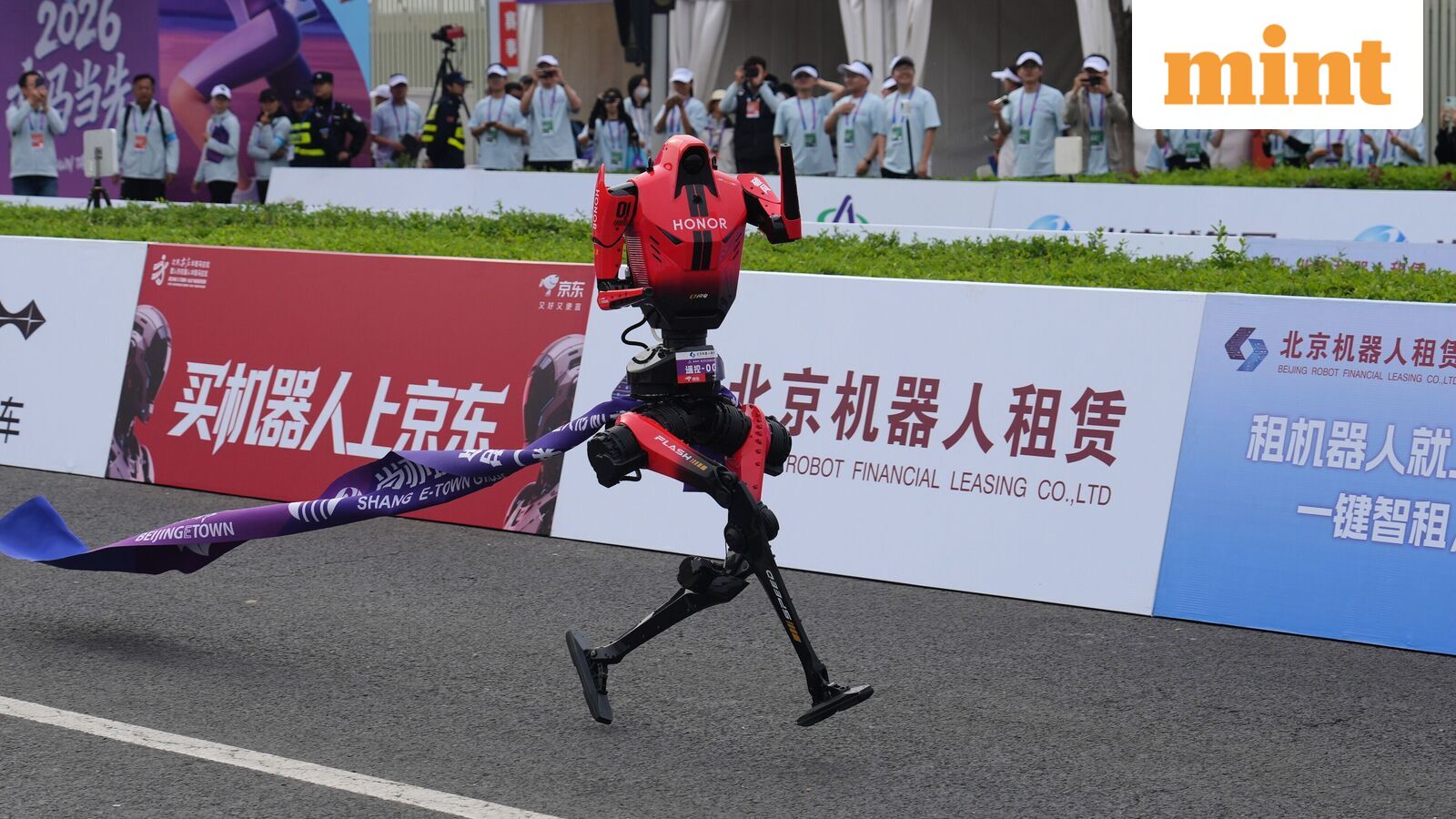
The recent completion of a half-marathon by a humanoid robot in Beijing marks a shift in the perceived capabilities of autonomous mechanical systems. By posting a finish time that exceeds the current human world record, the machine has moved the discussion from theoretical potential to tangible performance metrics. This event serves as a public demonstration of advancements in bipedal locomotion, energy efficiency, and real-time environmental navigation.
Advancements in Autonomous Locomotion
The performance of the Honor-developed unit highlights the rapid integration of high-torque actuators and sophisticated balance algorithms. Unlike previous iterations of humanoid robots that struggled with uneven terrain or sustained endurance, this unit maintained a consistent pace over the long-distance course. The ability to manage heat dissipation and battery life during a sustained physical exertion indicates that the engineering focus has moved beyond laboratory settings into real-world endurance testing.
This development suggests that the mechanical constraints previously limiting humanoid utility are being addressed. The sector is now transitioning toward testing these systems in environments that require complex interaction with physical space. For investors monitoring the stock market analysis, this shift represents a move toward the commercialization of robotics in sectors that demand high-mobility solutions.
Sector Read-Through and Industrial Scaling
The success of this robot serves as a proxy for the broader industrial push within China to integrate AI and robotics into the manufacturing and logistics supply chains. As humanoid units demonstrate the capacity for sustained physical tasks, the focus shifts to the scalability of these designs. The primary challenge for the sector remains the cost of production and the ability to replicate these results across diverse, non-controlled environments.
- Improved energy density in battery technology.
- Enhanced sensor fusion for real-time obstacle avoidance.
- Standardization of bipedal movement patterns for industrial use.
These technical milestones are essential for companies looking to integrate humanoid labor into high-precision assembly lines. While the current focus is on the novelty of the marathon result, the underlying hardware improvements are the primary drivers of long-term value. The ability to sustain high-intensity movement is a necessary precursor to the deployment of these robots in hazardous or labor-intensive industrial roles.
Valuation and Future Performance Markers
Market participants are now looking for data regarding the cost-per-unit and the projected lifespan of these humanoid systems. The transition from a prototype that can complete a race to a unit that can perform repetitive, high-value tasks is the next hurdle. Current valuations in the robotics space often rely on the promise of future efficiency gains, but the Beijing event provides a baseline for evaluating the physical readiness of these platforms.
AlphaScala data currently reflects a varied landscape for companies involved in advanced hardware and automation. For instance, RACE stock page maintains an Alpha Score of 46/100, reflecting a mixed outlook in the consumer cyclical space, while A stock page holds an Alpha Score of 55/100, indicating a moderate position within the healthcare sector. These scores illustrate the broader market caution regarding the capital-intensive nature of hardware innovation.
The next concrete marker for this sector will be the publication of durability reports and the announcement of pilot programs in manufacturing facilities. Observers should monitor the transition from public demonstrations to private sector integration as the primary indicator of commercial viability. The ability to maintain performance consistency outside of controlled racing environments will determine whether these robots represent a scalable industrial asset or remain a specialized research tool.