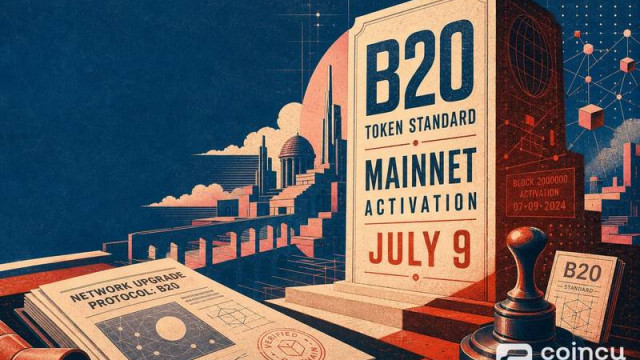
Base, the Coinbase-incubated layer-2 network, will activate the B20 token standard on mainnet July 9. The upgrade is part of the ongoing Beryl cycle and follows a brief delay after Base paused block production to fix a timing issue with the B20 registry.
The B20 standard defines a registry-based framework for token issuance and recognition on Base. Developers who deploy B20-compliant contracts can use the built-in registry to manage token metadata and verify authenticity without relying on external explorers or custom indexing. The mainnet activation means those contracts can go live in production immediately, not just on testnet.
Base had originally planned an earlier activation window but hit the registry issue, which caused a temporary halt in block production. The team took two weeks to resolve the problem before setting July 9 as the new target. The decision to delay rather than push ahead with a known issue signals that the Base team is prioritizing stability over speed on the Beryl rollout.
Why the delay matters for the setup
A common mistake is to treat a token standard activation as a routine upgrade. The B20 registry is the backbone; if it fails, every token deployed under it inherits the risk. The fact that Base caught the timing issue before mainnet and fixed it is a positive signal but one that needs confirmation. The clean launch on July 9 will be the first test.
What would confirm the setup
The activation proceeds without incident. No block production halts, no registry errors, and the standard is immediately usable. The number of B20-compliant token deployments in the first week after activation gives a read on developer demand. A handful of high-profile projects already testing on testnet migrating to mainnet would be a strong sign.
What would invalidate it
Another registry-related issue surfaces during or after activation. Or developer uptake is negligible – if the first week sees only a few test deployments, the standard may not gain traction. Tooling support from wallets and block explorers also matters; if major providers do not announce B20 support within two weeks, adoption will be slower.
For now, the next concrete marker is July 9. A clean launch would confirm the fix and build confidence in subsequent Beryl upgrades. Base already has a strong developer base, and a mainnet-native token standard reduces the friction of bridging tokens from Ethereum or other chains. The ecosystem's next step depends on whether builders trust the new standard and whether the infrastructure around it follows.