Stocks● Neutral
Bank SMS scams: 3 ways to spot fake texts before they trick you
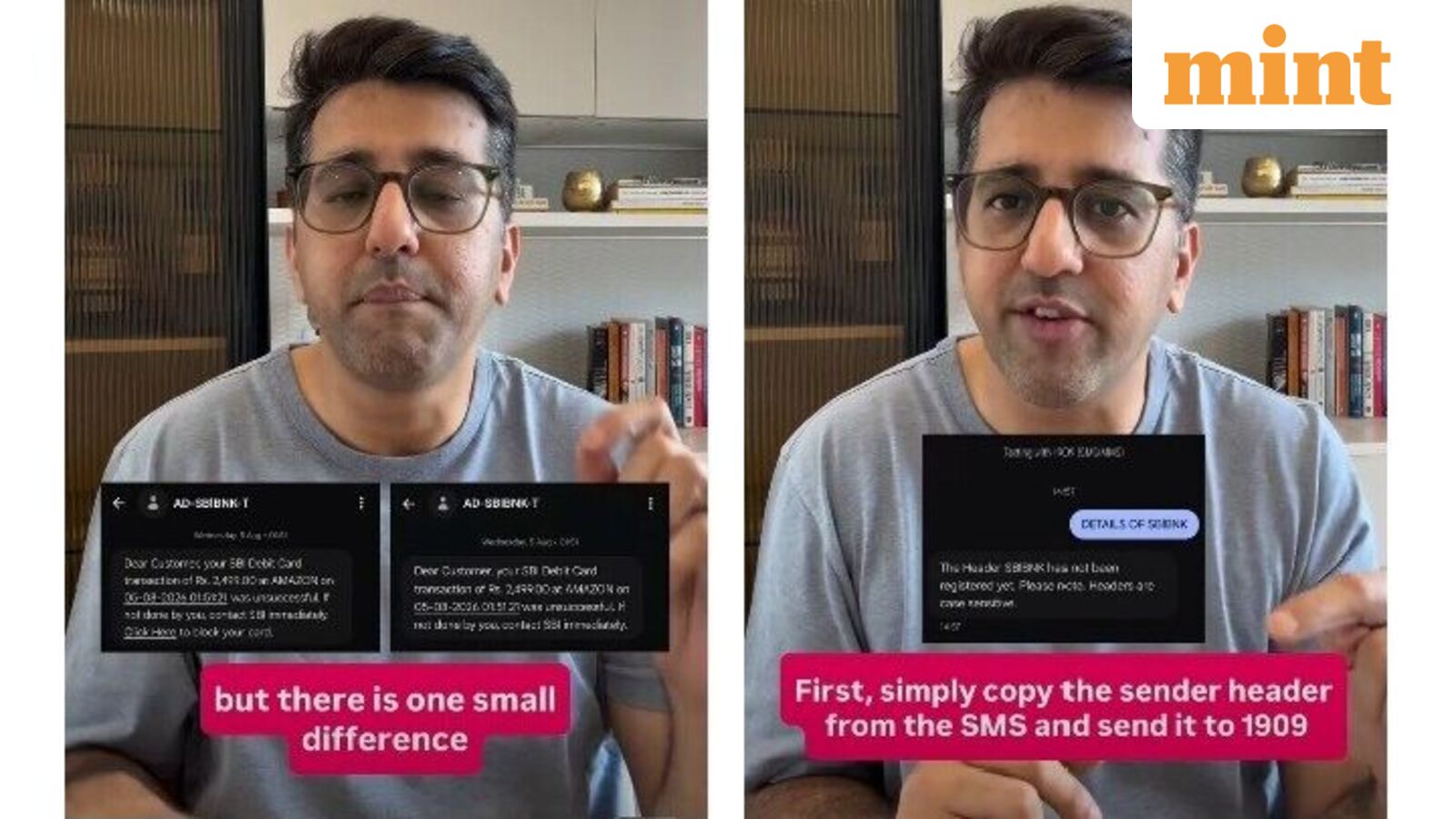
A finance professor shows how to spot fake bank SMS that copy the sender name, branding, and style of a real bank. Three quick checks can prevent a scam before you click.
Continue with
An SEBI-registered investment adviser has posted a video warning bank customers about fraudulent SMS messages that mimic legitimate bank communications. The video, shared by Delhi University finance professor Vinny Arora on Instagram, shows how scammers copy the sender name, branding, and message style of a real bank – with only a single character difference giving the fraud away.
Arora received two messages that appeared to come from SBI. “Same message. Same style. Same branding. Even the sender name,” he said in the video. A closer look revealed the difference: one sender name used a lowercase letter where the genuine one used an uppercase one.
The first tip Arora offered is to copy the sender header from the SMS and send it to 1909. The reply will confirm whether the sender is registered with the Telecom Regulatory Authority of India (TRAI). “If it is unregistered, don't trust the message or click any links in it,” he said.