Stocks● Neutral
Bajaj Auto to expand capacity to 9M vehicles after record Q1
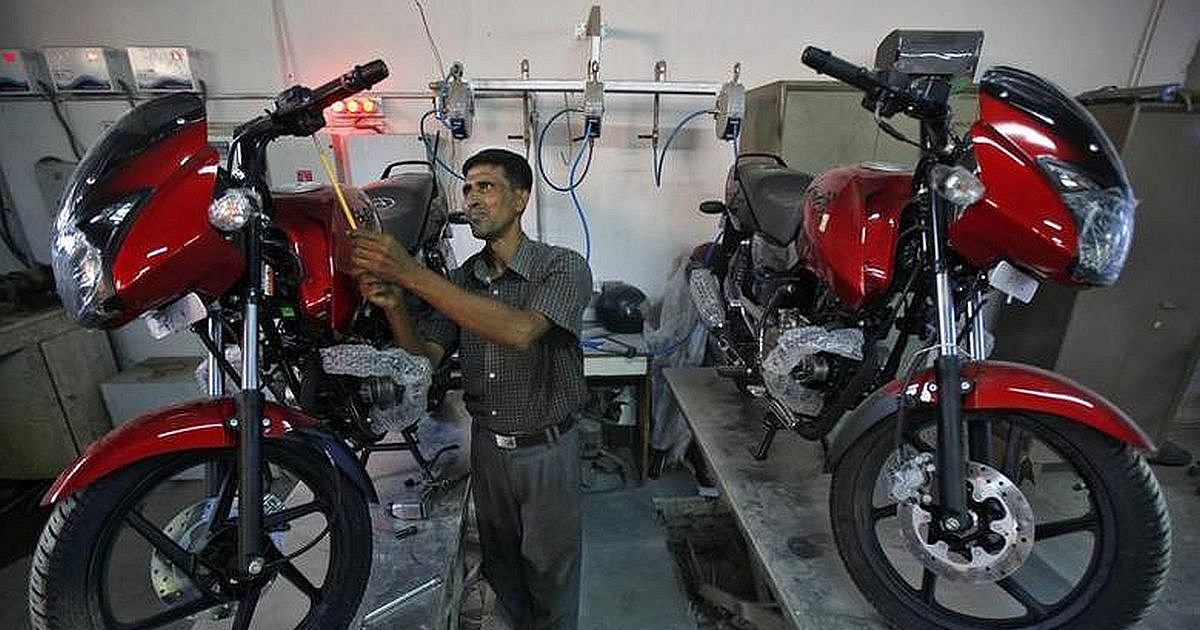
Bajaj Auto will boost annual capacity by 25% to over 9 million vehicles after a record Q1 with 46% profit growth. The brownfield expansion targets EV and premium motorcycle lines.
Continue with
Bajaj Auto will boost annual production capacity by roughly 25% to more than 9 million vehicles over the next few quarters. The expansion follows a record first quarter in which net profit rose 46% year-on-year to Rs 3,225.63 crore on revenue of Rs 21,688.8 crore, up 65%.
Strong export demand and rapid growth in electric vehicles have stretched capacity across key product lines, Rakesh Sharma, joint managing director, said during a post-results media interaction. The brownfield expansion will focus on electric two-wheelers, electric three-wheelers, premium motorcycles, and certain internal-combustion engine three-wheeler models.
"We will progressively increase it to over nine million units over the next few quarters," Sharma said, adding that capacity constraints had become particularly evident in those four areas.
The company did not disclose the capital expenditure required. Sharma said the investment would depend partly on where the additional capacity was created, with final plans and drawings still being prepared. Bajaj Auto is evaluating different locations and has not decided whether the capacity will be added in Maharashtra or another state.
The expansion will also require Bajaj Auto's suppliers to scale up. "Capacity must be viewed at the system level," Sharma said, adding that electronic components, magnets, motors, and battery parts would need to expand alongside vehicle-assembly capacity.
The record quarter
Bajaj Auto sold 1.44 million vehicles in the April-June quarter, a 29% rise year-on-year. Exports were the principal growth driver, rising 54% to a record 732,173 units. African sales more than doubled, with Nigeria recording threefold growth.
Domestic volumes rose 11% to 706,078 units. EV revenue nearly doubled from a year earlier and accounted for about 30% of the domestic business. Bajaj Auto said demand for its electric vehicles continued to exceed available capacity.
Sharma noted the quarter was not easy, pointing to raw-material inflation, supply-chain disruptions, and logistics issues in international markets. "Taken together, these affected product availability by 10-15%. With normal availability, our performance would have been better and volumes could probably have crossed the 1.5 million unit mark," he said.