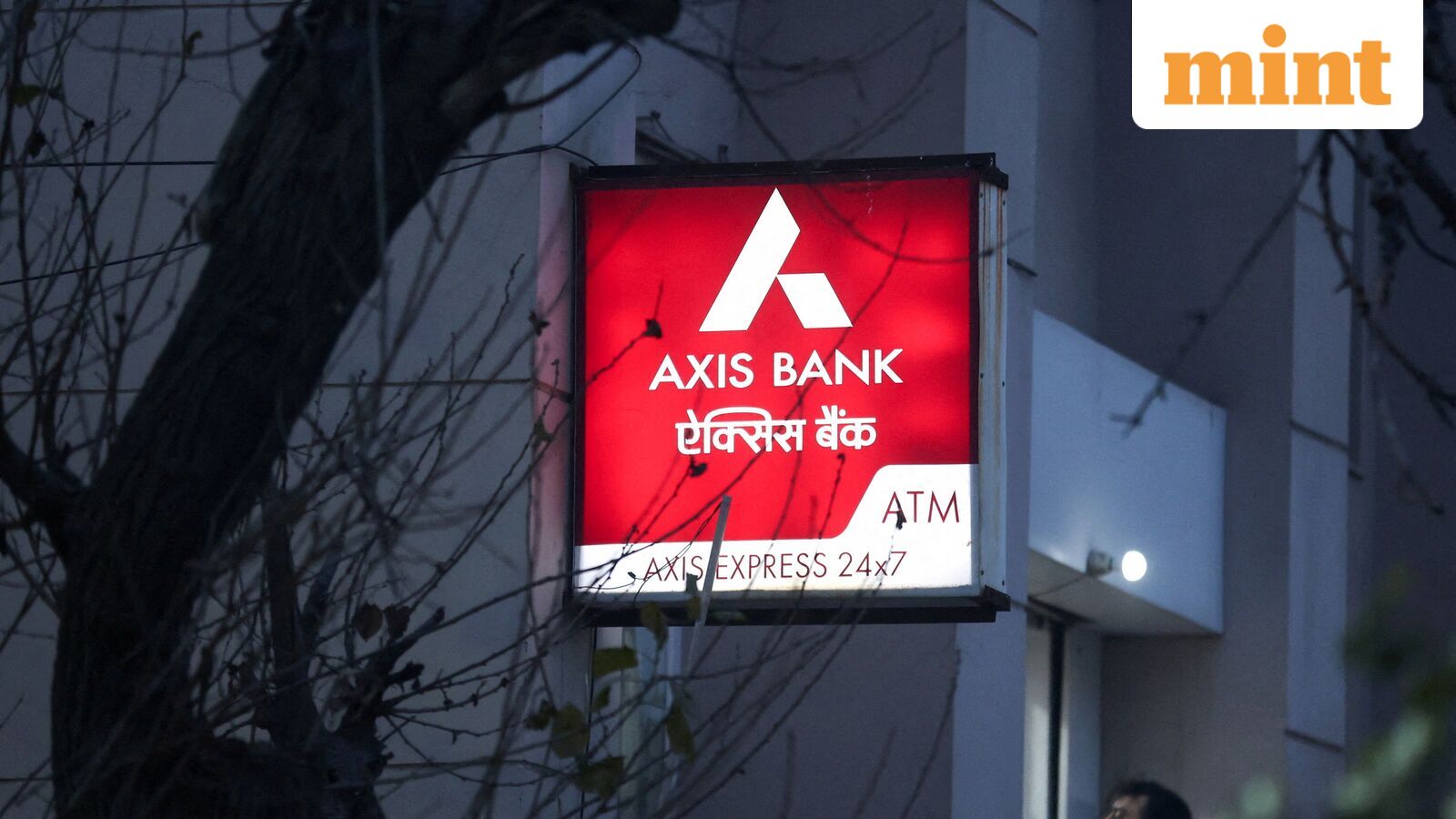
Axis Bank Frontloads Provisions as Geopolitical Uncertainty Clouds FY27 Outlook

Axis Bank has set aside a ₹2,001 crore buffer to mitigate risks from West Asian geopolitical instability, prioritizing long-term balance sheet resilience over near-term profit margins.
Alpha Score of 47 reflects weak overall profile with moderate momentum, poor value, moderate quality. Based on 3 of 4 signals — score is capped at 90 until remaining data ingests.
HASBRO, INC. currently screens as unscored on AlphaScala's scoring model.
Alpha Score of 51 reflects moderate overall profile with poor momentum, strong value, strong quality, weak sentiment.
Alpha Score of 45 reflects weak overall profile with strong momentum, poor value, poor quality, weak sentiment.
Axis Bank has initiated a defensive capital strategy by setting aside a one-time provision of ₹2,001 crore during the final quarter of the fiscal year. This decision to frontload buffers reflects an internal assessment of heightened macroeconomic volatility and the potential for prolonged instability stemming from conflicts in West Asia. By absorbing these costs now, the bank aims to insulate its balance sheet against future credit shocks that could arise if regional tensions escalate and disrupt global trade or domestic liquidity.
Impact on Profitability and Margin Compression
The immediate consequence of this provisioning surge is a measurable contraction in net profit and a tightening of operating margins. While the bank maintains a robust underlying asset quality, the decision to prioritize capital preservation over short-term earnings growth signals a shift in management priorities. Investors are now forced to reconcile the bank's long-term solvency strategy with the reality of suppressed near-term returns. This move mirrors broader trends seen in stock market analysis where financial institutions are increasingly prioritizing risk-weighted asset management over aggressive expansion during periods of geopolitical flux.
Strategic Capital Allocation and Sector Resilience
Beyond the immediate balance sheet adjustment, the move highlights the bank's focus on maintaining a high capital adequacy ratio to weather potential systemic stress. The decision to frontload these provisions suggests that the leadership team anticipates a period of sustained uncertainty rather than a transitory dip. This conservative posture is designed to provide the bank with greater flexibility to navigate potential credit cycle downturns without needing to raise additional capital under duress. The bank’s ability to absorb such a significant one-time charge while maintaining its core operations remains a critical metric for institutional stakeholders evaluating the firm's resilience.
AlphaScala Data and Market Positioning
AlphaScala currently tracks various firms navigating similar macroeconomic headwinds. For instance, ON stock page holds an Alpha Score of 45/100 with a Mixed label, while AS stock page sits at 47/100, also labeled Mixed. These scores reflect the broader difficulty in predicting how capital-intensive sectors will manage the transition from a period of relative stability to one defined by geopolitical risk premiums and frontloaded provisioning requirements.
The Path Toward Fiscal Normalization
The next concrete marker for stakeholders will be the bank's guidance on credit cost normalization in the upcoming quarterly filing. If the geopolitical environment stabilizes, the bank may be able to release portions of these buffers or reduce future provisioning requirements, which would provide a tailwind to earnings. Conversely, if regional instability persists, the market will look for further evidence of asset quality degradation or loan book restructuring. The bank's next earnings call will be the primary venue for management to clarify whether this ₹2,001 crore buffer is sufficient to cover the projected risk horizon or if additional capital preservation measures will be required as the bank moves deeper into the new fiscal year.
AI-drafted from named sources and checked against AlphaScala publishing rules before release. Direct quotes must match source text, low-information tables are removed, and thinner or higher-risk stories can be held for manual review.