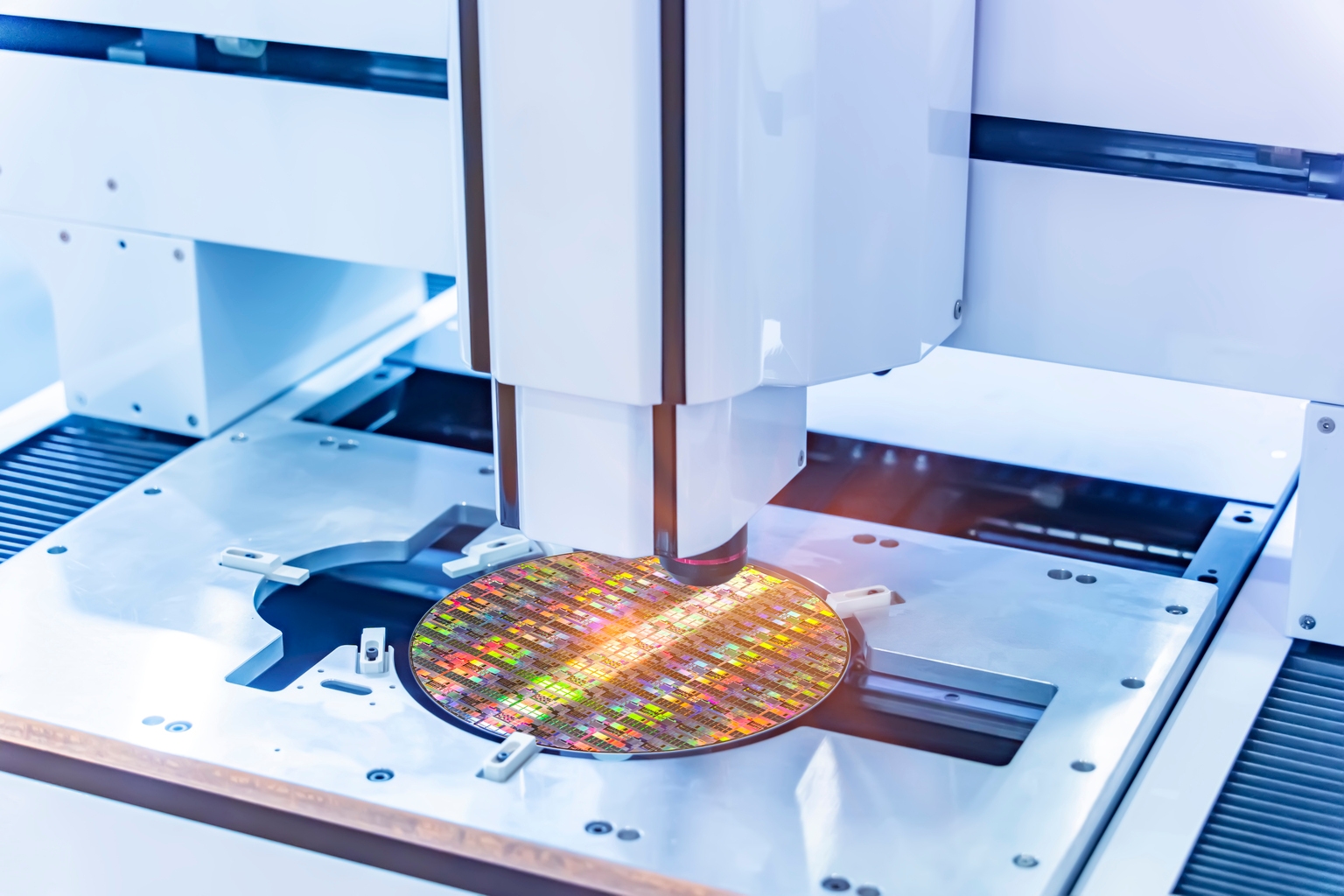
ASML has shifted the narrative surrounding its near-term financial trajectory by raising its full-year revenue guidance to a range of €36 billion to €40 billion. While the company met its initial first-quarter projections, the upward revision in top-line expectations signals a significant acceleration in equipment deployment. This shift suggests that the demand environment for advanced lithography systems remains robust, even as the company navigates the operational complexities of scaling its latest technology platforms.
Operational Scaling and Margin Compression
The primary friction point in the current results is the compression of profit margins. ASML is currently absorbing substantial ramp-up costs associated with the production of its next-generation machines. These expenses are not indicative of waning demand or pricing power, but rather the heavy capital investment required to transition to high-volume manufacturing for its newest lithography tools. The market is currently weighing the benefit of higher revenue against the immediate drag on profitability.
Investors should consider the following factors regarding the current margin profile:
- Elevated research and development spending to maintain technical superiority in extreme ultraviolet lithography.
- Increased supply chain costs related to the procurement of specialized components for high-numerical aperture systems.
- Temporary inefficiencies inherent in scaling production lines to meet the updated revenue targets.
Sector Read-Through and Valuation Dynamics
The broader semiconductor equipment sector is currently sensitive to capital expenditure cycles. ASML's ability to raise revenue guidance provides a positive read-through for the wider supply chain, as it confirms that semiconductor manufacturers are continuing to commit to long-term capacity expansion despite cyclical fluctuations. This commitment is a critical indicator for the ASML stock page, which currently holds an Alpha Score of 67/100, reflecting a moderate outlook within the technology sector.
When evaluating the valuation of equipment providers, the focus often shifts between top-line growth and margin expansion. In this instance, the market is prioritizing the revenue expansion as a proxy for future market share and technological dominance. If the company can successfully transition from the current ramp-up phase to a more stable production environment, the margin pressure is expected to subside, potentially leading to significant operating leverage. This dynamic is consistent with broader trends observed in stock market analysis regarding the capital-intensive nature of AI-driven infrastructure build-outs.
The Path Toward Normalized Profitability
The next concrete marker for investors will be the company's ability to demonstrate margin stabilization in the coming quarters. As the initial ramp-up costs are amortized over a larger volume of shipped units, the focus will shift toward the conversion of revenue into free cash flow. The company must prove that its increased revenue guidance is not merely a function of volume, but a sustainable path toward higher profitability. Any deviation from the projected margin recovery timeline will likely serve as the primary catalyst for a re-evaluation of the stock's current valuation premium. Monitoring the upcoming quarterly filings for evidence of cost absorption will be essential for determining whether the current revenue-led strategy is translating into long-term value creation.