Stocks● Neutral
Asia's hydrogen train push: governments bet on green fuel for rail
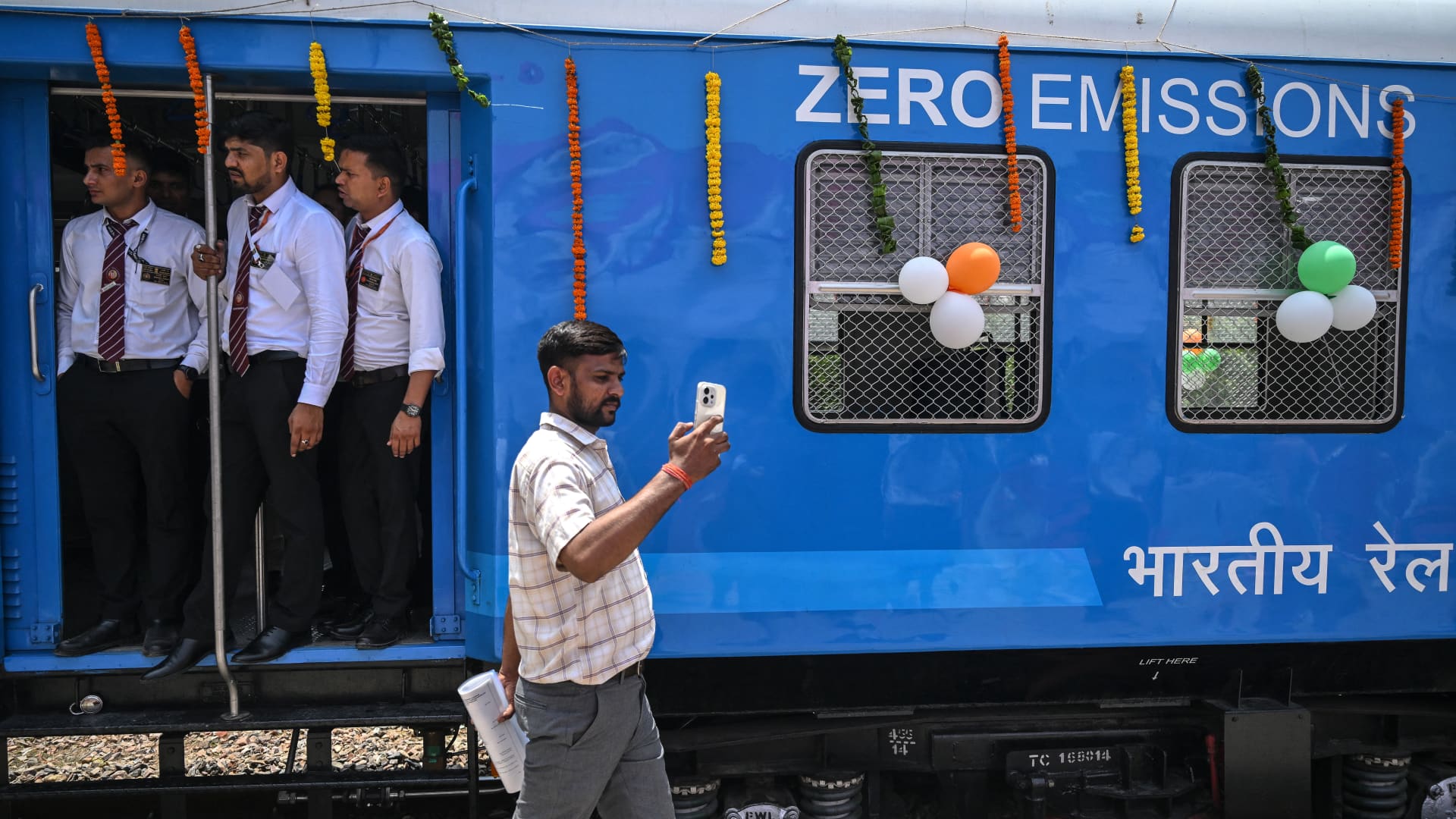
India, Japan, South Korea and China are investing billions in hydrogen-powered trains, using rail as a demand anchor for a green hydrogen economy even as the technology remains years from commercial scale.
Continue with
India, Japan, South Korea and China are pouring money into hydrogen-powered trains. The technology is years from commercial success. Its potential as a sustainable energy source has spurred pilot programs across the region.
India rolled out its first hydrogen fuel-cell train last month, a 35-coach retrofit Indian Railways plans to replicate on heritage and hill routes. The government has launched 12 pilot projects involving 70 hydrogen-powered vehicles–27 buses and 43 trucks–and 16 refueling stations across 21 routes. New Delhi expects roughly $34 billion in green hydrogen and green ammonia investment by 2030, according to the Asian Development Bank.
The hydrogen fuel-cell train was more of a technology demonstration, Vivek Lohia, managing director at Jupiter Wagons, a rolling stock supplier to Indian Railways, told CNBC. A full shift could take over two decades, he said.
East Japan Railway plans to put its hydrogen-hybrid train, HYBARI, into commercial service by the end of fiscal 2027. South Korea is investing 32.1 billion won through 2027 in a hydrogen train demonstration project. The city of Daejeon plans to deploy 34 hydrogen-powered trams by 2028. The government expects the global hydrogen train market to grow more than 25% annually to $26.4 billion by 2035. China has also made advances. CRRC Changchun unveiled the country's first hydrogen-powered tourism train last year, said Ravi Krishnaswamy, managing director at Frost & Sullivan Asia Pacific.