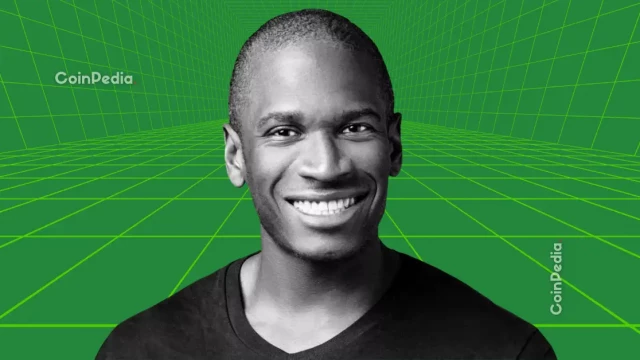
At Consensus 2026, Arthur Hayes challenged the prevailing narrative that institutional adoption and tightening regulatory frameworks will eventually purge the market of altcoins. Instead, he positioned the current landscape of speculative crypto assets as a necessary engine for innovation and capital formation. Hayes argued that the high failure rate of tokens is not a bug in the system but a feature, drawing a direct parallel to the life cycle of traditional publicly traded companies. For investors, the takeaway is to treat tokens as high-risk software startups where the majority of projects will inevitably collapse, while a select few will capture significant long-term value.
The Hyperliquid Thesis and Revenue Mechanics
Hayes identified Hyperliquid as one of his primary altcoin positions, citing the historical dominance of trading applications as the most viable business model in the crypto ecosystem. He framed Hyperliquid as the next iteration of decentralized leveraged trading infrastructure, noting that it successfully integrates high-speed technology with a distinct tokenomics structure. Unlike many projects that rely on heavy venture capital backing, Hyperliquid notably excluded venture capital allocations, a move Hayes suggests aligns the protocol more closely with its community of users.
Central to his bullish outlook is the protocol's revenue distribution model. Hayes noted that approximately 97% of protocol revenue is funneled back to token holders through buybacks. This mechanism serves as a direct incentive for long-term holding and provides a tangible link between platform usage and token value. Based on this structural advantage, he projected that the HYPE token could reach a price of $150 by August. For those tracking the broader crypto market analysis, this model represents a shift away from inflationary tokenomics toward revenue-backed assets.
Leveraged Trading and Market Access
Beyond the token structure, Hayes emphasized the utility of Hyperliquid’s platform in providing 24/7 access to leveraged trading. The platform allows users to trade a diverse array of assets, including oil, the Nasdaq, and the S&P 500, during hours when traditional financial markets are shuttered. This capability addresses a significant liquidity gap for traders who operate outside of standard exchange hours. By bridging the gap between crypto-native infrastructure and traditional financial instruments, Hyperliquid captures a unique market segment that remains active while conventional institutional desks are offline.
Privacy as a Defensive Asset Class
Turning to the privacy sector, Hayes argued that the convergence of government oversight, big tech surveillance, and advanced artificial intelligence will make blockchain transparency a liability for many users. As AI systems become increasingly proficient at de-anonymizing transactions, the demand for privacy-focused protocols will likely accelerate. Hayes specifically highlighted Zcash as a beneficiary of this trend, asserting that there is a fundamental role for private cash on the internet.
He suggested that the ability to maintain financial privacy will become a premium feature in an era where blockchain activity is increasingly easy to monitor and analyze. While the broader market may focus on institutional integration, Hayes maintains that the demand for censorship-resistant and private financial tools will persist as a counter-trend to increasing state and corporate surveillance. This perspective underscores a divergence in the market: while some assets are built to satisfy regulatory requirements, others are being engineered specifically to evade the scrutiny that those same regulations impose. Investors should monitor whether the growth of AI-driven surveillance tools acts as a catalyst for capital rotation into privacy-centric assets like Zcash, or if regulatory headwinds continue to suppress their adoption in mainstream venues.