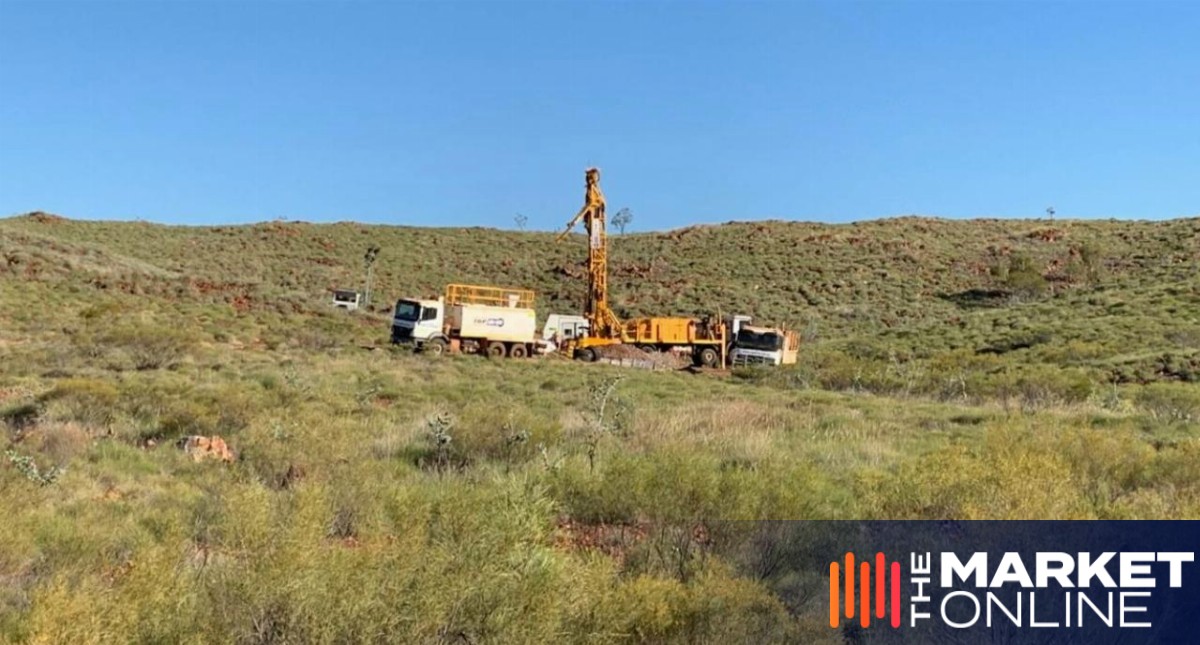
Artemis Resources (ASX:ARV) started a heritage survey at the Cassowary target, pushing toward a maiden drill program at its Madura copper-gold project in Western Australia. The survey covers the proposed drill sites and access tracks for the company's first-pass program, which is designed to test IOCG targets associated with a large interpreted intrusion.
Executive director Matthew Greentree said Cassowary is the largest magnetic intrusion Artemis has identified in the Madura province, with a diameter of more than four kilometres. "Cassowary is the first of two priority drill targets across our belt-scale Madura project and completing this milestone keeps us on track for maiden drilling in Q3 2026," Greentree said. The planned program will involve three holes that target potential IOCG mineralisation related to the intrusive bodies.
The Cassowary target sits within a belt-scale position along the Madura Crustal Boundary, a structural setting that is considered highly prospective for large-scale copper-gold systems. Madura project manager Julian Hanna said the target stands out for the scale of its magnetic signature and its position along the boundary. Sharon Dam is the company's other priority target, with both prospects showing geological and geophysical characteristics consistent with IOCG-style mineralisation.
Artemis controls more than 2,100 square kilometres across over 100 kilometres of strike along the boundary. The company completed the first tranche of an $8 million capital raising, which it says leaves it well funded to advance drilling. "With the first tranche of our recent $8 million capital raising now complete, the company is well funded to advance drilling at Cassowary and unlock the potential of what we believe is one of Australia's most prospective underexplored copper-gold provinces," Greentree said.
The risk event here is the first-pass drilling itself at a large, untested magnetic anomaly in a poorly explored belt. The three holes are not a resource definition program – they are a reconnaissance test of an intrusive body that carries the geophysical signature of a deposit-scale target. The question the drill bit answers is whether the magnetic anomaly corresponds to mineralised IOCG breccias or barren intrusives. That binary outcome is the only thing that matters for the equity.
What would confirm the setup: visible copper mineralisation or alteration consistent with IOCG systems in the first hole, and coincident geochemical anomalies that justify step-out drilling. What would weaken it: barren intrusive with no alteration, or alteration without metal enrichment. The market will price that binary within weeks of the drill report.
The capital raise covers the program, so dilution risk is limited to the second tranche if the company exercises it. The more important risk is technical: IOCG deposits are structurally controlled and often irregularly shaped, meaning a three-hole program can miss or clip the edge of a system. That does not invalidate the target but it does raise the probability of a false-negative result.
Artemis controls a belt-scale position in a province that hosts no active copper mine, which is precisely why the exploration risk is high and the potential payoff is large. The Cassowary drilling in Q3 2026 will be the first data point that allows investors to move from geophysical interpretation to geological fact. Until then, the stock trades on the IR cycle and the capital structure, not on mineralised rock.