Army's Next Generation Command and Control tested in desert, gaps remain
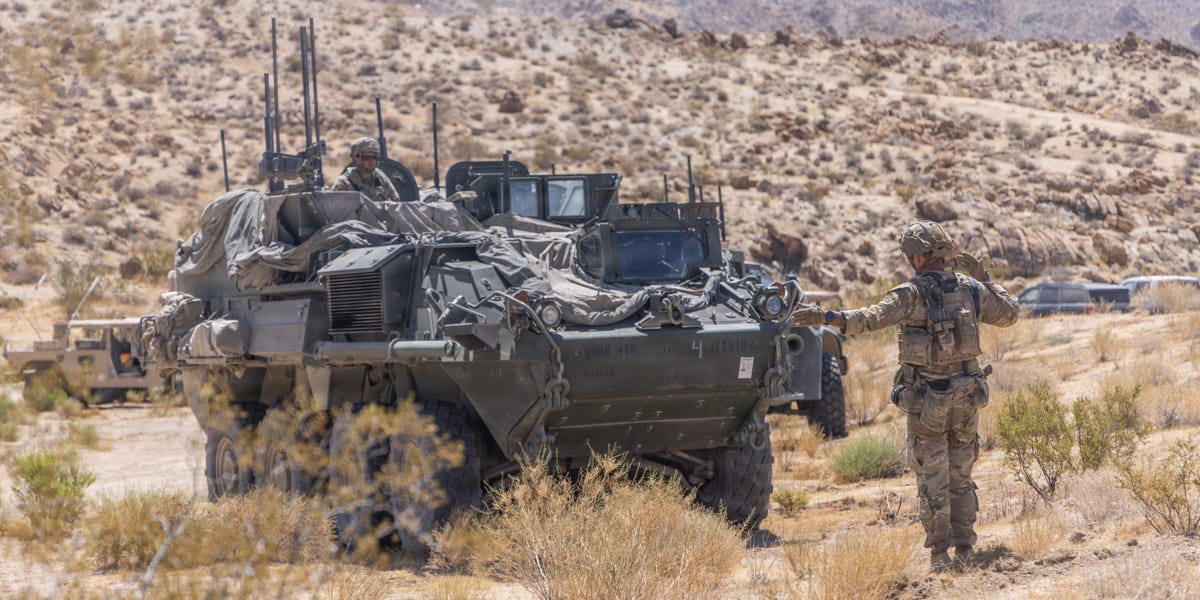
Army's NGC2 system tested at Fort Irwin. Soldiers planned missions and coordinated fires. Connection drops and unlinked drones showed the system is still in prototype phase.
The US Army put its Next Generation Command and Control system through a large-scale exercise at Fort Irwin, California, as part of Project Capstone Convergence. Soldiers used the system to plan missions and track friendly forces through new digital apps. They coordinated fires through the system. The exercise also laid bare the gaps that remain. Connections dropped. Some drones were not integrated into the network. Soldiers sometimes lacked a clear picture of the battlefield.
Joe Welch, an Army senior civilian executive overseeing NGC2 development, told Business Insider the system moved faster than anything he had seen in his career. "We still got challenges to work through," he said. "I've done this kind of work in the Army for most of my career, and I've never seen anything move nearly as fast as what we've delivered over the past nine to 10 months."
The Army started prototyping NGC2 last year with the 4th Infantry Division at Fort Carson, Colorado, and a smaller version with the 25th Infantry Division in Hawaii. The 4th ID's effort is led by a team that includes Anduril. Army leadership describes NGC2 as a replacement for old, siloed systems. A data layer stores information and shares it with applications that cover intelligence, logistics, ammunition, and fires coordination. Artificial intelligence processes data and reviews battle plans.
Brig. Gen. Daniel Hibner, head of the Army Joint Modernization Command, said the exercise focused on specific questions. "How do we use our apps to command and control more efficiently? How do we use those apps to make decisions so that we can close the kill chain faster?"
Soldiers found value in some areas. Mobile command posts allowed decision-making on the move and supported dispersed communications. Lt. Col. Shawn Scott, a unit commander within the 4th ID, said the system made mission planning faster and more distributed. Capt. Dominic Sparkling, another unit commander, said NGC2 helped him communicate with his soldiers and gave commanders a clearer picture of the battlefield.
Connection problems were a recurring issue. Soldiers reported bad or lost connections that prevented them from using NGC2. Static made it hard to hear and talk. Sparkling described soldiers "kind of stepping on each other." Errors loading maps or populating locations were also reported.
In one simulated urban assault, a platoon sergeant opened his chest-mounted Samsung phone loaded with NGC2 and tried to zoom in on the map to see friendly positions. "Right now, I'm off WiFi, so it's not working properly," he said. He could see his location and the relative positions of his objective, the map would have ideally been more detailed. "Without WiFi, it's dead in the water," he said. The same sergeant made repeated calls for an ammunition resupply over the MPU5 radio, noting connection issues. Industry partners said the disruptions could have come from planned effects in the training, including a cyber vulnerability assessment and electronic warfare elements.
Anduril's GhostX was connected to NGC2. Others the Army was testing, including the Bolt-Munition and Rogue 1, were not. The Army attributed the lack of connection to the time vendors need to meet interoperability requirements. Those include broadcasting a drone's location through NGC2 and satisfying specific cybersecurity standards. Lt. Col. Ruben Rangel, deputy chief of staff for the 4th ID, said most vendors say they can meet the requirements. Some take longer to get there than others. "It's actually not been a large friction point; it's time," he said.
NGC2 is designed to work across radio, 5G, and satellite. If one connection fails, a soldier can still retrieve information through another method. Scott said the additional options made communications more resilient, including under simulated jamming. "We have multiple different types of communications that allow us that, if one is jammed, we still have others to make the signal out," he said.
The Army's approach to developing NGC2 marks a shift from its traditional programs, service officials said. Through iterative exercises in the Ivy Sting series and the culminating Ivy Mass, the 4th ID has expanded capabilities, tested against electronic warfare and denied connections, and made changes quickly. The service is asking for close to $4 billion for continued development in this year's budget request, up from around $3 billion last year.
After the exercise, the Army plans to assess whether NGC2 made targeting faster, how survivable it was under harsh conditions, how much jamming affected performance, and whether it reduced cognitive load on soldiers. Integration with international allies is also under review. Hibner said the service is not just looking for good news. "The beautiful thing about that is you're not just looking for good news," he said.
Drafted by a large language model from the source reporting linked above, then screened by automated publishing checks. It is not read by a journalist before publication. Some articles cite our Alpha Score. Verify prices and figures against the original source. Educational coverage, not personalized advice.