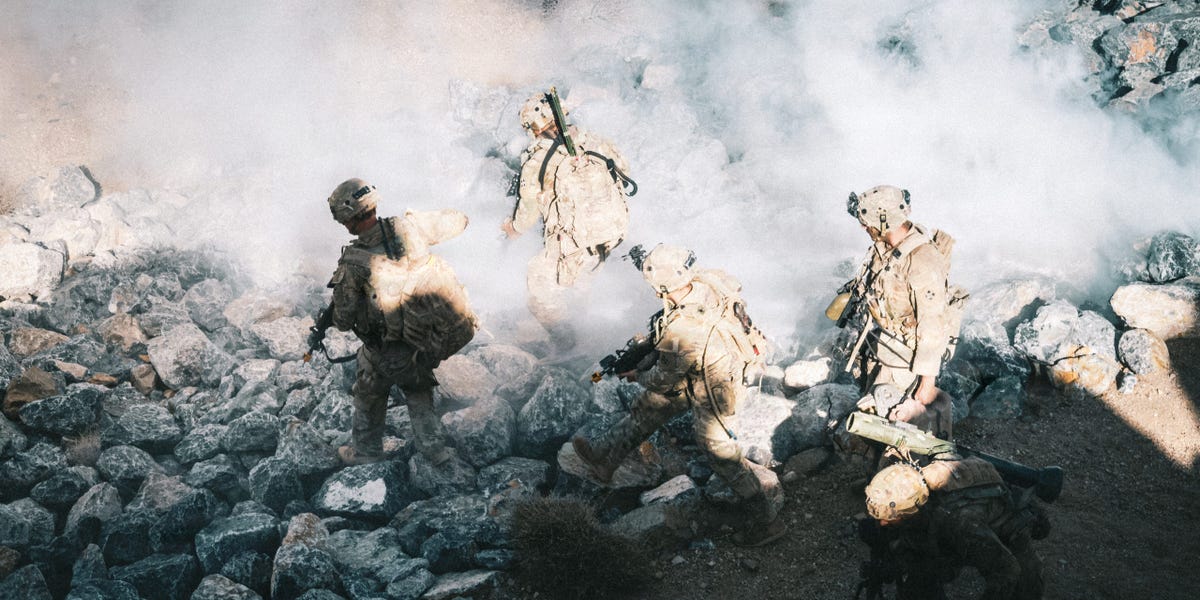
Project Convergence saw 10,000 troops test prototype drones and command gear near a simulated near-peer adversary. The tension: soldiers held back for more reps.
The US Army put roughly 100 new weapons and prototype systems in front of soldiers at Fort Irwin last month, folding the testing into a large combat exercise in the Mojave Desert rather than the controlled experimentation lanes used in past years.
Project Convergence Capstone brought about 10,000 troops from the US and allied forces into simulated warfighting against a near-peer adversary. Drones, sensors, electronic warfare gear, and the Army's prototype command-and-control system all shared the same battlespace. The service rigged the environment with emitters and jammers to create what it calls a denied, degraded, intermittent, and limited communications setup.
Useful feedback emerged from the exercise. Friction came with it. Soldiers said they sometimes held back from pushing gear to its limits, choosing safe, repeatable flights over maximum performance.
Past Project Convergence exercises were different. "More laboratory-like, where we just kind of set that technology in motion, we do a quick assessment, determine what we want to do differently, and then we'll do it again," Brig. Gen. Daniel Hibner, head of the Army Joint Modernization Command, said at the exercise.
The shift toward a realistic scenario came partly from the Army's desire to stress-test its new command-and-control system. The structure also created conditions to evaluate other emerging tech, and the Army said a combat setting against a simulated near-peer adversary produced more realistic operating conditions and potentially more useful feedback.
That feedback feeds decisions ranging from whether the Army acquires a specific drone to broader concepts for when and how to use particular weapons or tactics. Soldiers gathered practical data along the way, learning how many drone batteries to bring to an observation post and how to keep systems from overheating in the desert.
The hands-on approach is deliberate. The Army has pushed to involve soldiers early in technology development, using their feedback to inform acquisition decisions or help vendors refine products.
Still, combining experimentation with training creates real challenges. Testing new tech means learning by doing: evaluating how a system performs and figuring out where it fits. The objectives are less clear than in a standard drill, and with drones especially, soldiers are still deciding whether operating them is an added task or an entirely new job.
At Fort Irwin, soldiers navigated those competing demands differently. Some told Business Insider they did not push systems to their limits in the harsh conditions because they wanted more time to practice rather than risk losing or breaking the gear. Others kept physical backups in case they lost access to prototype digital maps or communications.
Airspace management also constrained testing. Soldiers running different drones had to deconflict shared airspace, which limited how aggressively systems could be flown. A sergeant operating an Anduril Bolt-M drone said he hadn't flown the aircraft to its full range or altitude. "We could just do it safer, and that way we could get more repetitions in." He pointed to the crowded sky. "We're not the only people flying out here."
The British contingent approached the same problem with two distinct processes: trials and experimentation. Lt. Col. John Black, a British Army commander, described trials as taking one of these drones, "put it through its paces, and test it to see if it does what the Army wants it to do" before acquisition, including safety and integration tests. Experiments apply a system to specific use cases, such as whether an uncrewed ground vehicle makes front-line logistics easier or safer.
Tomorrow's battlefields, with uncrewed systems, electronic warfare, and artificial intelligence in play, demand new skills alongside foundational combat training. Hibner said the exercise aimed for combat realism without interfering with how rotational units fight, and to introduce new technology that disrupts without detracting from foundational training. "So you bring in the right amount of tech, you train it in the right amount, put it in the hands of soldiers and leaders, and then you let them go," he said.
Drafted by a large language model from the source reporting linked above, then screened by automated publishing checks. It is not read by a journalist before publication. Some articles cite our Alpha Score. Verify prices and figures against the original source. Educational coverage, not personalized advice.