Argentina to ease pharma entry for Indian drugmakers
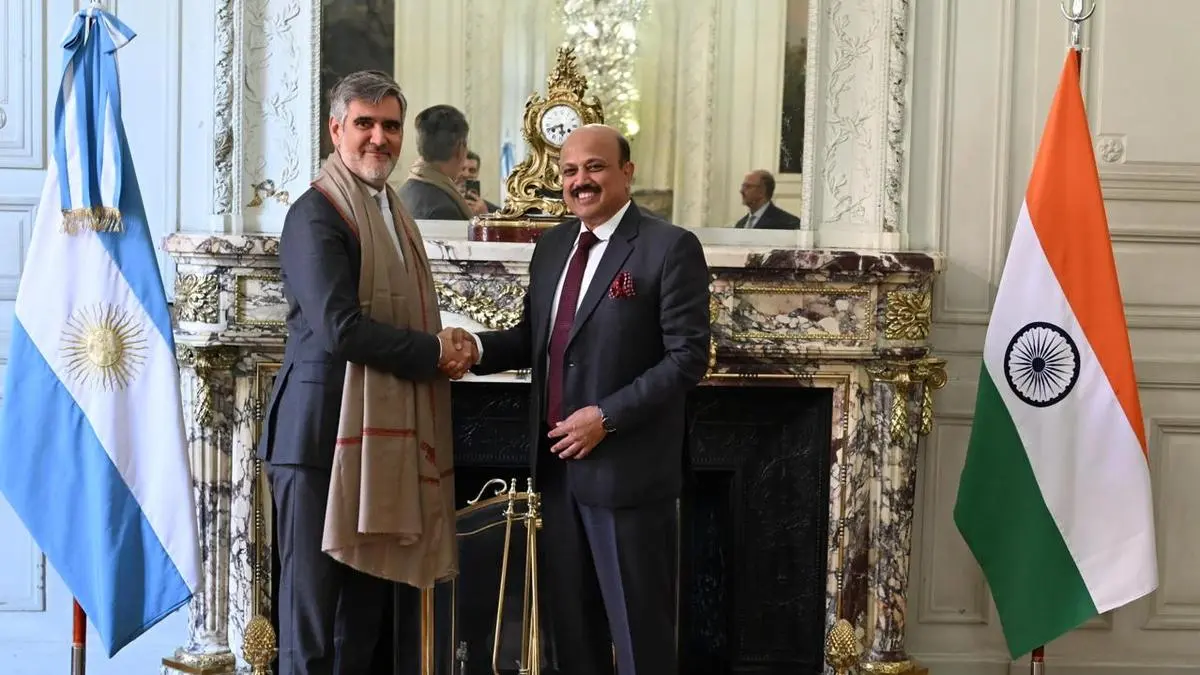
Argentina committed to upgrading India from Annex II to Annex I of its drug regulatory rules, cutting barriers for pharma entry. Bilateral trade exceeded $6.5B in 2025.
Argentina has agreed to work toward upgrading India from Annex II to Annex I of its pharmaceutical regulatory system and lowering entry barriers for Indian drugmakers, the commerce ministry said Saturday.
The pledge came out of the India-Argentina Joint Trade Committee meeting held Aug. 24 at Palacio San Martín in Buenos Aires. Commerce Secretary Rajesh Agarwal attended alongside Fernando Brun, Argentina's secretary for international economic relations.
The ministry said the change is expected to broaden opportunities for Indian pharmaceutical companies and improve access to quality, affordable healthcare in Argentina.
Bilateral trade crossed $6.5 billion in 2025, with consistent annual growth of more than 17%. Mining and energy investment were on the agenda, along with infrastructure. KABIL, India's state-backed miner, has completed Phase II drilling in Catamarca, which the ministry described as the first lithium mining initiative by an Indian company in Argentina.
Aviation and space technology were flagged as emerging areas for cooperation, along with telecommunications and digital services. Both governments pointed to 5G and artificial intelligence as immediate opportunities; digital infrastructure was listed as a shared priority.
The visit also covered the planned expansion of the India-Mercosur preferential trade agreement, which groups Brazil, Argentina, Uruguay and Paraguay and has been in force since June 1, 2009. Progress on the terms of reference and the adoption of digital certificates of origin are expected to make cross-border commerce more efficient, the ministry said.
Drafted by a large language model from the source reporting linked above, then screened by automated publishing checks. It is not read by a journalist before publication. Some articles cite our Alpha Score. Verify prices and figures against the original source. Educational coverage, not personalized advice.