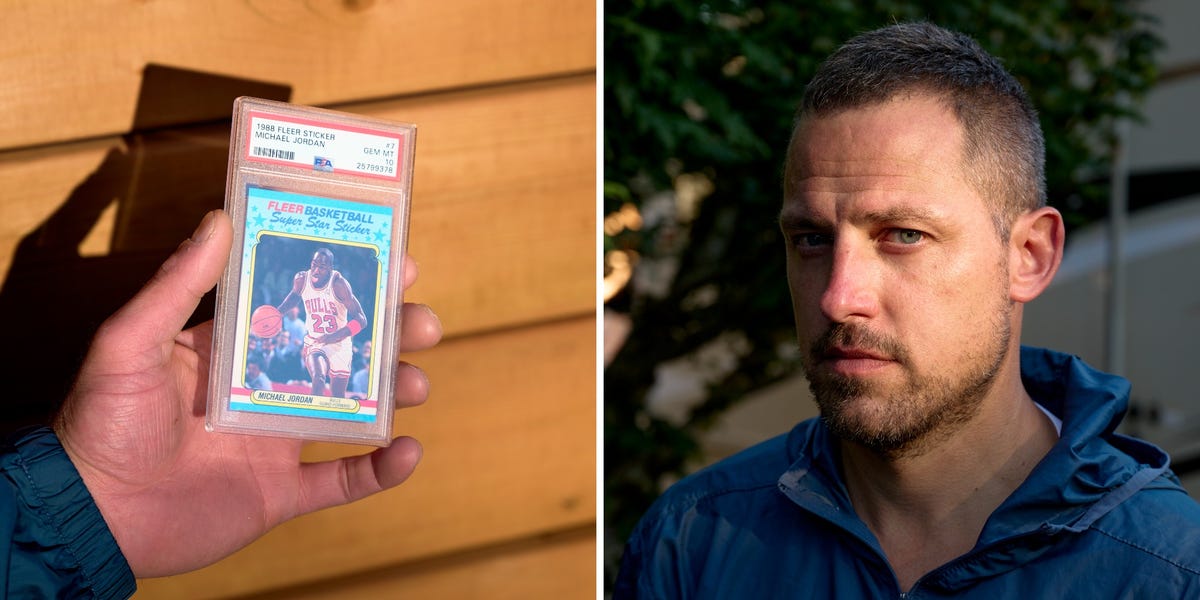
Seventeen years after an armored-truck heist with an inner-tube getaway made him an internet legend, Anthony Curcio is back inside a federal courtroom facing prison. A jury in New York found him guilty on all counts of wire fraud and conspiracy on Jan. 28, after a two-year FBI investigation called Operation Heist and Holder. The charges carry a maximum sentence of 40 years.
Curcio, 45, was accused of running a scheme that targeted buyers in the $15 billion trading-card industry. Prosecutors said he doctored labels on rare cards, faked his identity, and sold counterfeits through online marketplaces and at conventions. The evidence included texts and recordings, forgery tools found in his home workshop, and testimony from a cooperating witness who said he watched Curcio crack open authentic PSA holders, swap cards, and reseal the cases more than 20 times.
Curcio's defense argued the real villain was Professional Sports Authenticator, the industry's dominant grading company. PSA, which controls roughly 80% of the card-grading market, is owned by Collectors Holdings, backed in part by billionaire hedge fund manager and New York Mets owner Steve Cohen. Curcio's attorneys said PSA targeted him because he was exposing the company's vulnerabilities. The judge barred the defense from arguing PSA's own conduct at trial.
The case grew out of a 2021 dispute over a 1986 Fleer Michael Jordan rookie card Curcio tried to sell through Sotheby's. PSA determined the label was not authentic. Curcio refunded the buyer but later mailed eight of his most valuable cards to PSA for reholdering. The company kept them and turned them over to the FBI as evidence, he said.
Curcio's criminal history – a 2008 bank robbery for which he served five years in federal prison – shaped the trial. He wanted to testify, his attorneys said, but they warned the government would use his prior conviction to destroy his credibility before the jury.
The counterfeit operation
Prosecutors said Curcio used a network of aliases and accomplices to move fake cards. At a Chicago expo in November 2023, he introduced himself as Brendan Wooley and offered veteran dealer Remington Ewald a binder full of 1986 Fleer PSA 10s – Jordans, Montanas, Marinos – at a 90% discount. Ewald testified that the PSA logo on the slabs shifted colors in a photo, which it shouldn't. Wooley said he had a flight to catch and left.
Five months later, at an expo in Edison, New Jersey, Ewald spotted the same man with the same binder. The cards, if genuine, were worth $3 million to $5 million. Ewald found a security officer who asked for the man's driver's license. It read Anthony Curcio.
Curcio had also recruited Joe Bondarchuk, a fellow youth basketball coach going through a divorce, to list cards on his established eBay account. Bondarchuk pleaded guilty before trial and testified against Curcio.
The defense case
Curcio's key witness was filmmaker Jeremiah Murphy, who was working on a documentary about Curcio's bank heist and life after prison. Murphy testified that Curcio wanted to expose what he believed was PSA's corruption. "He said 'I have proof, all this stuff,'" Murphy recalled, "but it was never sent to me."
Curcio maintained that the tools and videos found in his home – loose PSA labels, label templates, razor blades, inks, and a small electric grinding pen – were research materials for the documentary, not counterfeiting equipment. "They took screenshots from the videos," he said. "If they had played the entire clip, you would hear me speaking to the camera, explaining exactly what I was doing and why."
The jury deliberated four hours before returning the guilty verdict.
Aftermath
PSA released a statement after the verdict. "Over the past two years, the PSA Brand Protection team worked diligently with the FBI as it built its case to charge Anthony Curcio," it read. "PSA is focused on making sure its holders, labels, processes, and technology are continuously evolving to stay ahead of the bad actors in the hobby."
Six weeks later, Curcio filed a 61-page civil suit against Collectors in King County Superior Court, alleging that PSA deactivated his Jordan card without examining it, that PSA personnel cracked open his card holders and transmitted the components to the FBI without a warrant, and that PSA's communications to law enforcement were selective, self-serving disclosure. The case was removed to federal district court. A PSA spokesperson called the claims "without merit."
In May, Curcio wrote to the judge alleging that his trial counsel, Simpson Thacher, had a hidden conflict of interest through undisclosed work with Cohen's hedge fund, Point72. The court denied his motion for a new trial.
Curcio awaits sentencing in October. He said he's been drinking again for the first time in over a decade and is terrified of spending decades in prison away from his two daughters. "I want to fight," he said. "It's not over."
PSA stock page