Stocks● Neutral
Antarctic Dinosaur Fossil Found in a Drawer After 40 Years
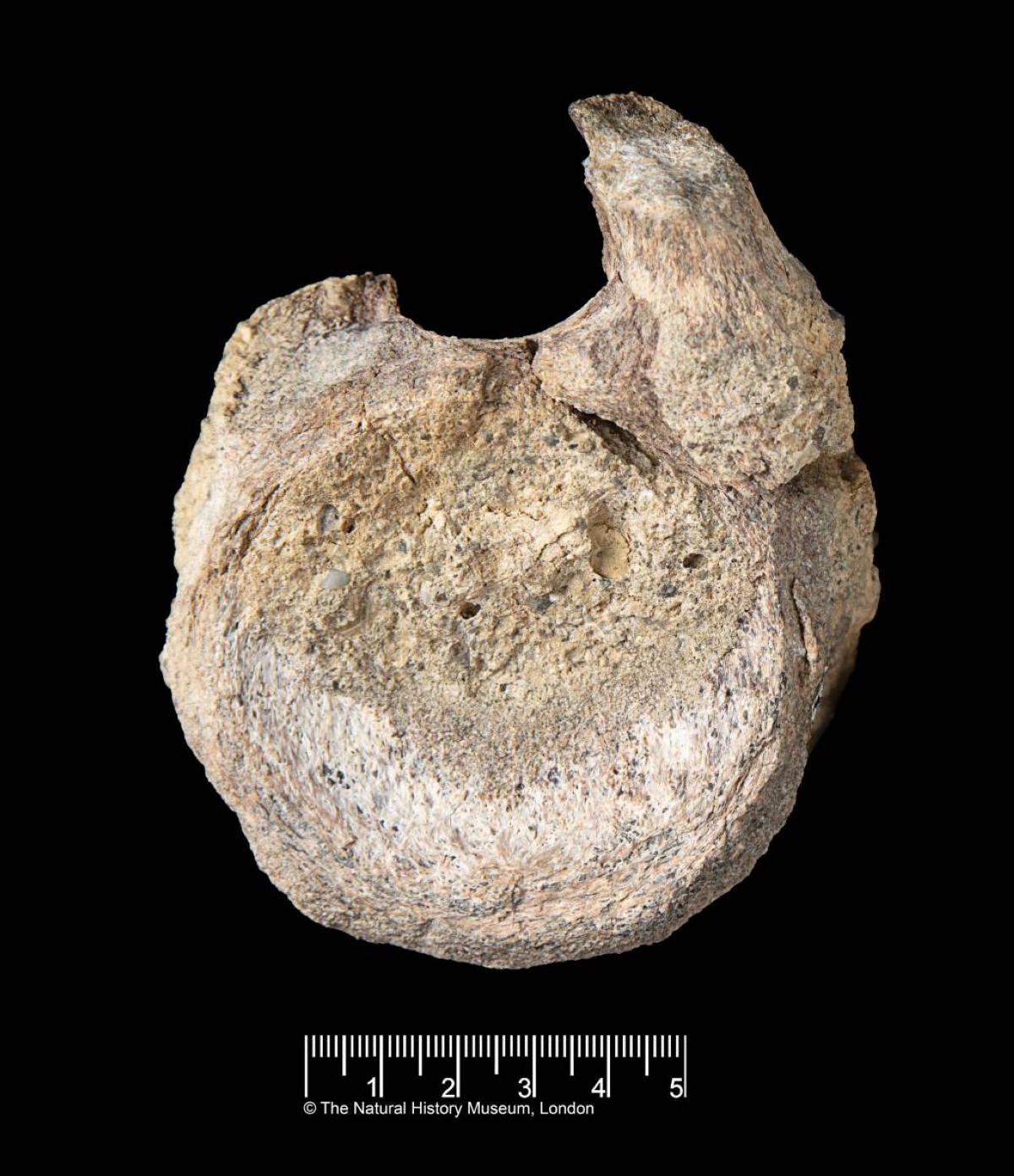
A titanosaur tail bone collected in 1985 sat mislabeled in a drawer for decades. Researchers used CT scans to identify it as a dinosaur, opening a window into Antarctica's warm past.
Continue with
Scientists have identified a dinosaur fossil from Antarctica that sat mislabeled in a drawer for nearly 40 years. The bone comes from the tail of a titanosaur, a long-necked, plant-eating dinosaur. The species has not been named.
Geologist Mike Thomson collected the fossil in 1985 during an expedition to James Ross Island. Working with the British Antarctic Survey, Thomson mapped rock layers and gathered marine reptile fossils to help with future dating. He recorded the find as a large reptile.
Decades later, paleontologist Mark Evans spotted the bone in the British Antarctic Survey's fossil collection in Cambridge, England. He noticed its hollow structure and large size, typical of sauropod dinosaurs. Evans and other researchers analyzed the shape, compared it to more complete dinosaur remains, and confirmed the identification. The findings were published Monday in the journal Acta Palaeontologica Polonica.
The specimen sat in a drawer labeled "large reptile." Evans said the bone's internal structure, revealed by CT scans, matched titanosaurs. The team concluded the fossil belonged to a young titanosaur.