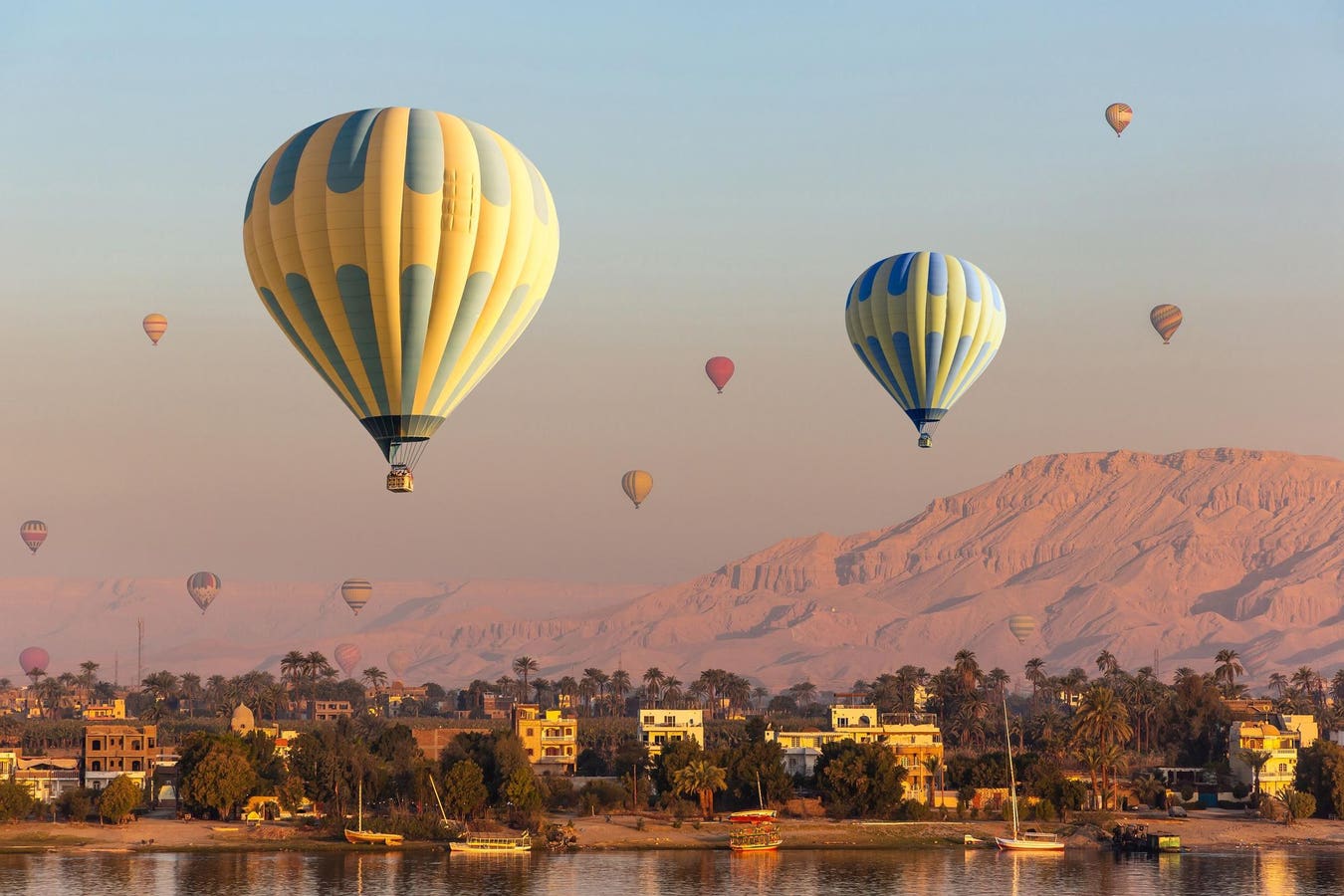
On Aug. 2, 2027, the moon’s shadow will sweep across Luxor at 1:02 p.m. local time. Totality will last 6 minutes 19 seconds. That makes it the longest total solar eclipse of the 21st century.
The path of totality cuts through southern Spain, Morocco, Algeria, Tunisia, Libya, Egypt, Saudi Arabia, Yemen and Somalia. Nearly 89 million people live inside it. But Luxor has become the symbolic center for eclipse chasers worldwide. The reason is a rare combination: exceptional duration, near-guaranteed clear skies and one of the richest archaeological landscapes on the planet.
August cloud cover is almost nonexistent across southern Egypt. The subtropical high-pressure system that dominates North Africa keeps skies clear. Dust and haze are possible, but rain is not a concern. At the same time, the sun will sit at about 82° above the horizon during totality. Most observers will need to lie on a blanket or sunbed to comfortably view the solar corona against a dark sky.
Temperatures in Luxor often exceed 108°F (42°C) in early August. During totality, the mercury could drop by as much as 18°F (10°C) before shooting back up once the sun reappears. That brief temperature swing is one of the visceral experiences regular eclipse watchers talk about.
Thousands of visitors are expected. Most will watch from hotels, Nile cruise ships or riverside viewing areas. Access to iconic sites like Karnak Temple and Luxor Temple is likely to be restricted, according to local tourism authorities. The city itself is built on the site of ancient Thebes. Across the Nile lie the Valley of the Kings, the Valley of the Queens, the Mortuary Temple of Hatshepsut, the Colossi of Memnon and Medinet Habu. The shadow will pass directly over monuments built more than 3,000 years ago by a civilization that worshiped the sun.
Luxor may be the center of attention, but it is not the only option. Dendera Temple, north of the city, offers 6 minutes 15 seconds of totality. Bahariya Oasis, west of Cairo, delivers the same 6 minutes 19 seconds under some of the clearest skies along the entire path. Siwa Oasis, Abydos, Edfu and the Red Sea coast near Berenice are also viable. None of them combine history and spectacle the way Luxor does, but they promise a more relaxed viewing experience.
The eclipse belongs to Saros 136, a family known for exceptionally long totalities. Earlier members crossed Mexico in 1991 and China in 2009. The geometry is nearly perfect. The moon will be near perigee, making it look slightly larger than average. Earth will be near aphelion, making the sun appear slightly smaller. Because the eclipse occurs close to the equator, observers stay inside the shadow for more than six minutes.
The next total solar eclipse from the same Saros family will cross the United States in 2045.