Some U.S. colleges predate the country itself. Harvard University, founded in 1636, is the oldest. At the other end, the University of Alaska Fairbanks celebrated its centennial in 2017, making it the most recent state to get its first college.
The range reflects different chapters of American history. The list below uses each institution's earliest claimed founding date, including predecessor seminaries and academies.
Alabama – Spring Hill College, founded 1830. It calls itself the first Catholic college in the Southeast and the third-oldest Jesuit college in the U.S.
Alaska – University of Alaska Fairbanks, founded 1917, opened 1922. It awarded its first Ph.D. in 1955.
Arizona – University of Arizona, founded 1885, enrollment began 1891. It started with three colleges and now has 20.
Arkansas – University of the Ozarks, founded 1834 by Cumberland Presbyterian officials. First classes were in a two-room log schoolhouse. In 1957 it became the first traditionally white college in Arkansas to admit African American students, the school's website says.
California – Santa Clara University traces its origins to Mission Santa Clara de Asís (1777). The university itself was established in 1851, making it the oldest operating higher-education institution in the state.
Colorado – University of Denver, founded 1864 as Colorado Seminary, just six years after Denver City was established in the Colorado Territory.
Connecticut – Yale University, chartered in 1701, traces roots to the 1640s. Renamed for benefactor Elihu Yale in 1718, it is one of eight Ivy League schools.
Delaware – University of Delaware, founded 1743. A separate college opened in 1914 with 58 female students; the two merged in 1921.
Washington, D.C. – Georgetown University, founded 1789, the oldest Catholic and Jesuit institution of higher learning in the U.S. Classes began in 1792.
Florida – Florida State University, authorized 1851. Rollins College was chartered first but founded later (1885), so FSU is technically older.
Georgia – University of Georgia, chartered 1785, the first state-supported university in the country. Classes began in Athens in 1801.
Hawaii – University of Hawaiʻi at Mānoa, founded 1907 under the Morrill Act as a land-grant college.
Idaho – Brigham Young University-Idaho, founded 1888 as Bannock Stake Academy, owned by the Church of Jesus Christ of Latter-day Saints.
Illinois – McKendree University, founded 1828 by pioneer Methodists. It is the oldest college in Illinois with continuous ties to the United Methodist Church.
Indiana – Vincennes University, founded 1801 as Jefferson Academy. It sits in Indiana's oldest city, a former French fur trading post.
Iowa – Loras College, founded 1839 to educate young men for the priesthood. It became coeducational in 1971.
Kansas – Baker University, founded February 1858, welcomed its first students later that year.
Kentucky – Transylvania University, traces roots to 1780, before Kentucky became a state. First classes were in a log cabin near Danville in 1785.
Louisiana – Centenary College of Louisiana, founded 1825 as the College of Louisiana. Tuition in early days was $50 a year; room, board, and firewood cost $7 a month, the school's website says.
Maine – Bowdoin College, chartered 1794, welcomed first students in 1802. It remained all-male until 1971.
Maryland – St. John's College traces roots to The King William's School (1696). Chartered in 1784, it is the third-oldest college in the U.S.
Massachusetts – Harvard University, founded 1636, named after minister John Harvard, who left his library and half his estate to the school.
Michigan – University of Michigan, founded 1817 as a Detroit preparatory school. It moved to Ann Arbor in 1837.
Minnesota – University of Minnesota Twin Cities, established 1851, seven years before Minnesota became a state. It closed during the Civil War and reopened in 1867.
Mississippi – Mississippi College, founded 1826 as Hampstead Academy. It began offering classes to both male and female students in 1827.
Missouri – Saint Louis University, founded 1818. It is the oldest university west of the Mississippi River.
Montana – Rocky Mountain College, dates to 1878 from three separate colleges that merged in 1947.
Nebraska – Peru State College, founded 1867 as a teacher-training school with 60 students in one building.
Nevada – University of Nevada, founded 1874 following the Morrill Land-Grant Act. First located in Elko, later moved to Reno.
New Hampshire – Dartmouth College, founded 1769, the ninth-oldest university in the nation.
New Jersey – Princeton University, chartered 1746, originally the College of New Jersey. Moved to Princeton in 1756 and adopted its current name in 1896.
New Mexico – New Mexico State University, founded 1888 as the state's first land-grant university, according to the school.
New York – Columbia University, founded 1754 as King's College by royal charter. It is the fifth-oldest institution of higher learning in the U.S.
North Carolina – Salem College, founded as a girls' school in 1772, four years before independence. It remains the oldest educational institution for girls and women in America.
North Dakota – University of North Dakota, founded 1883, six years before statehood. The first graduating class was coeducational: six women and two men.
Ohio – Ohio University, founded 1804, first offered classes in 1809. It began a traditional college program in 1822.
Oklahoma – University of Central Oklahoma, founded 1890. The first class of 23 students met in a church.
Oregon – Willamette University, established 1842 as a missionary school. It is one of the oldest coeducational colleges in the U.S.; its first graduate was a woman.
Pennsylvania – University of Pennsylvania, dates to 1740 as a charity school. It was the first American institution to officially bear the name "university."
Rhode Island – Brown University, founded 1764 as the third college in New England and the seventh in America. It was the first Ivy League school to accept students from all religious affiliations.
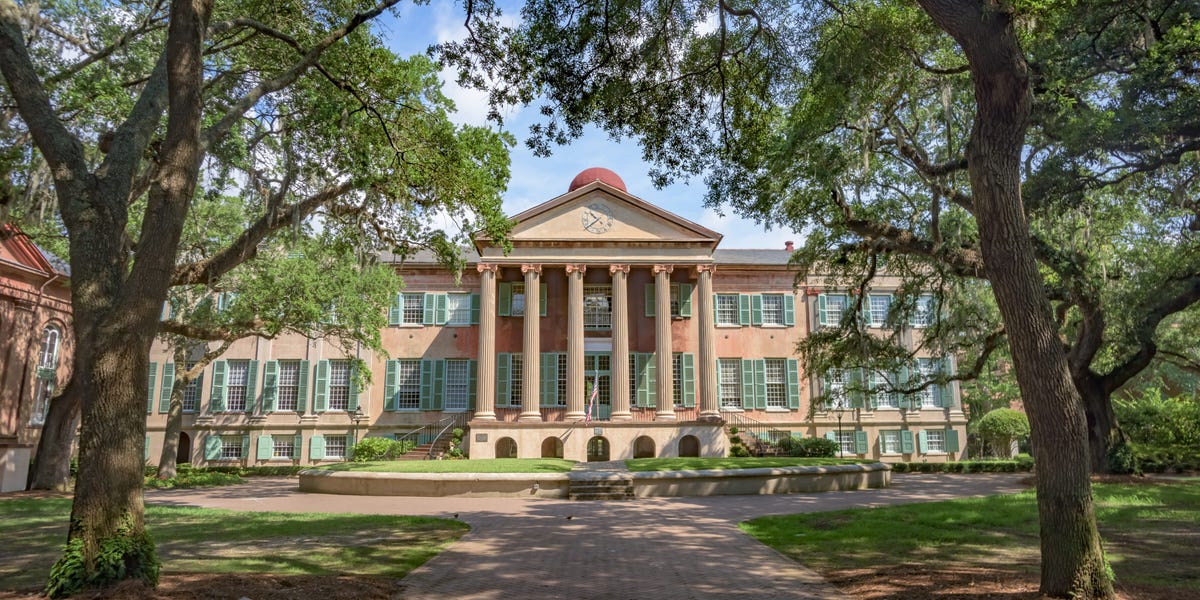
South Carolina – College of Charleston, founded 1770, chartered 1785. It became the first municipal college in the nation in 1836.
South Dakota – Augustana University traces origins to Hillsboro Academy in Illinois (1835). It moved to Dakota Territory in 1884 and to Sioux Falls in 1918.
Tennessee – Tusculum University, chartered 1794 as Greeneville College. It became Tusculum College in 1844 and Tusculum University in 2018.
Texas – Southwestern University traces roots to four predecessor institutions, the earliest chartered in 1840. The four merged in 1873.
Utah – University of Utah, founded 1850 as the University of Deseret. The first term admitted only male students; women were allowed in the second term.
Vermont – Vermont State University's Castleton campus traces origins to the Rutland County Grammar School (1787). Castleton became part of Vermont State University in 2023.
Virginia – College of William & Mary, founded 1693, the second-oldest institution of higher learning in the U.S. Alumni include Thomas Jefferson, James Monroe, and John Tyler.
Washington – University of Washington, founded 1861 as the Territorial University of Washington. Tuition in 1867 was $30.
West Virginia – Bethany College, founded 1840. By the time West Virginia became a state in 1863, Bethany was the only college offering degrees in the state.
Wisconsin – Carroll University, chartered 1846 by the Wisconsin Territorial Legislature, two years before statehood. It started with five students and two faculty members.
Wyoming – University of Wyoming, founded 1886 as a land-grant university with five faculty members and 42 students.