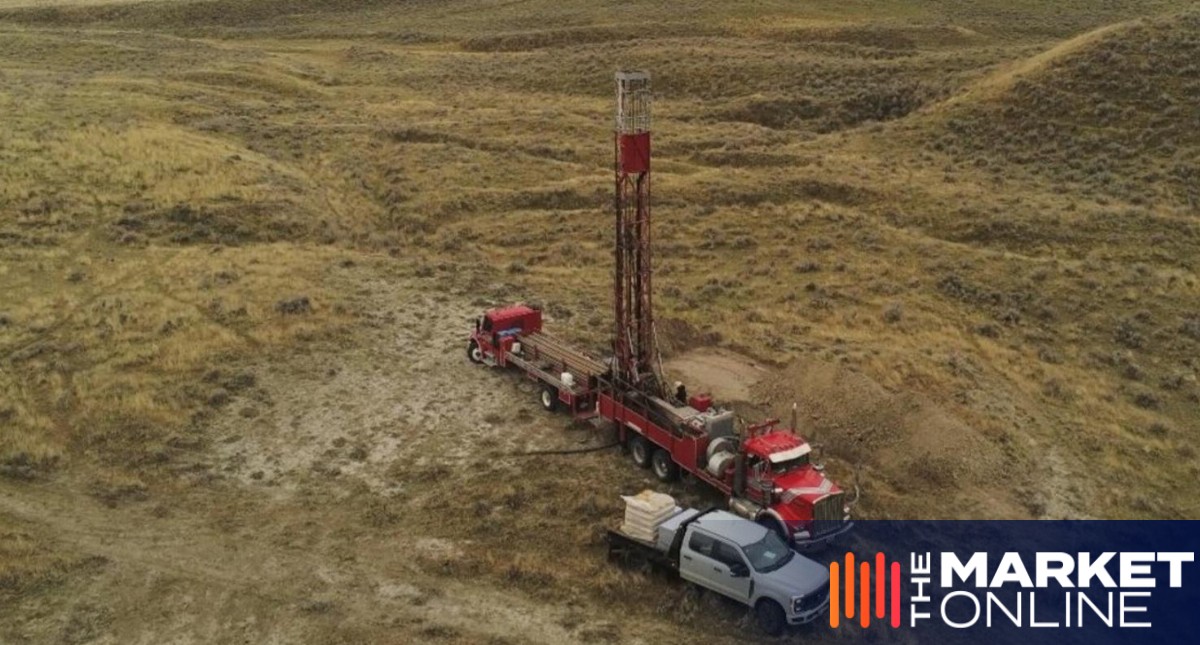
American Uranium has begun the final 55 holes of its 121-hole permit at Lo Herma. The data will feed into a scoping study and resource update due in Q3 2026.
American Uranium (ASX: AMU) has initiated the final phase of its current drilling campaign at the Lo Herma in-situ recovery (ISR) uranium project, located in Wyoming’s Powder River Basin. This operational milestone involves the completion of the remaining 55 drill holes under an existing permit that authorizes a total of 121 holes. With 66 holes already finalized, the company is moving toward the conclusion of its permitted exploration capacity, which allows for up to 37,500 meters of drilling across the site.
The primary objective of this drilling phase is to expand the existing resource base and elevate geological confidence in priority areas designated as Mine Unit 1 (MU1), Mine Unit 2 (MU2), and Mine Unit 3 (MU3). Executive director Bruce Lane noted that the campaign specifically targets mineralized trends situated south of Mine Unit 2. This focus is intended to provide the necessary data density to support an upcoming resource upgrade and a scoping study scheduled for release in the third quarter of 2026.
For investors, the distinction between simple exploration and this specific phase lies in the integration of technical data. American Uranium is not merely chasing mineralization; it is running parallel hydrogeological and metallurgical work programs. These programs are designed to refine development assumptions, such as conceptual wellfield design and process flowsheets, which are essential for determining the economic viability of the ISR method at this location. By combining historical drilling data with new results from these 55 holes, the company aims to solidify the capital cost inputs required for its future scoping study.
American Uranium currently maintains a market capitalization of $12.41 million, with shares recently trading at 9.7 cents, reflecting a 1.04% gain. The market's reaction to this drilling commencement highlights the importance of the Q3 2026 timeline. In the junior uranium sector, the transition from exploration to scoping-level development is often the most critical period for valuation, as it shifts the narrative from speculative potential to project-specific engineering metrics.
Technical participants should monitor the progress of the hydrogeological testing, as this will dictate the eventual recovery rates and operational feasibility of the Lo Herma project. ISR projects are highly sensitive to the permeability and connectivity of the host rock, and the data generated from these 55 holes will serve as the primary input for the company's internal modeling. If the drilling successfully confirms the continuity of mineralized trends south of Mine Unit 2, it would likely provide the necessary foundation for the planned resource estimate update.
While the commencement of drilling is a positive operational step, the project remains in the development phase. The primary execution risk involves the conversion of exploration data into a bankable scoping study. Investors should distinguish between the total permitted 37,500 meters of drilling and the actual results that will be reported in the Q3 2026 update. The company's ability to maintain its timeline depends on the successful integration of its metallurgical findings with the new drilling data.
For those tracking the stock market analysis of junior miners, the Lo Herma project represents a classic case of resource definition. The success of this phase will be measured by the company's ability to move from conceptual engineering to a definitive scoping study. Any delays in the hydrogeological or metallurgical testing programs would likely push back the Q3 2026 target, which would be a significant setback for the current development schedule. Monitoring the company's updates on these specific technical work streams is more informative than tracking the daily price action of the stock, as the underlying value of the project is tied to the quality of the resource and the feasibility of the extraction process.
AI-drafted from named sources and checked against AlphaScala publishing rules before release. Direct quotes must match source text, low-information tables are removed, and thinner or higher-risk stories can be held for manual review.