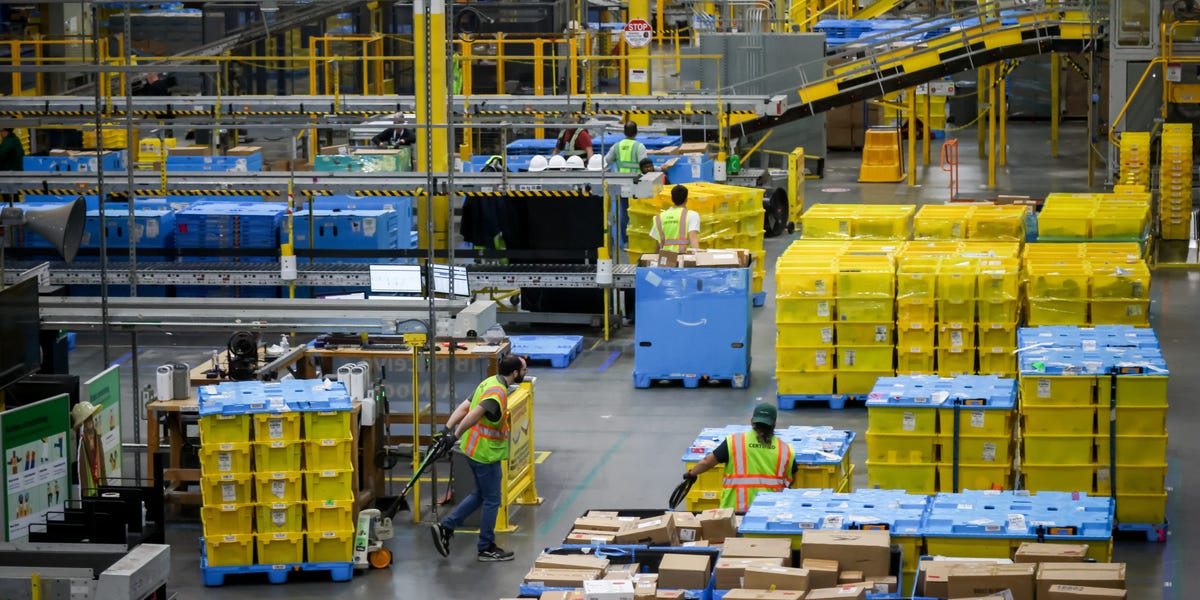
Amazon is testing software to move warehouse workers more efficiently, aiming to save millions of labor hours a year, internal documents show.
Inside Amazon's newer, robot-filled warehouses, the next big efficiency drive focuses on how humans move around the facilities, not just packages. The software tracks employee location and task completion in real time. It then suggests routes that cut unnecessary steps and waiting time. The goal is to shave seconds off every movement – and at Amazon's scale, seconds add up to millions of hours.
Labor is Amazon's biggest operating cost in fulfillment. The company has already automated shelving, picking, and packing in many facilities. Human motion remains the bottleneck. For every unit shipped, a worker walks hundreds of feet. Cutting that distance by even 10% would meaningfully reduce cost per unit. The documents estimate the system could recover several million worker-hours annually once fully deployed.
The push comes as Amazon's e-commerce margins face pressure from rising wages and a tight labor market. Last year the company raised fulfillment wages across its U.S. network. Automation has long been the counterweight. This software targets a piece of the workflow that robots have not yet replaced.
A simpler read is that Amazon is squeezing more from its workforce. The better read is about competitive moat. Smaller rivals run less automated warehouses. They cannot match the cost structure that comes from optimizing human movement alongside machine speed. That gap widens with every percentage point of labor productivity Amazon gains.
Potential hurdles exist. Worker tracking has drawn regulatory scrutiny in Europe and complaints from labor groups in the U.S. Amazon has already faced criticism over quota systems and injury rates. A system that monitors movement more precisely could reignite those concerns. The documents do not mention how the company plans to address privacy or safety questions.
Amazon is piloting the software in several warehouses already. A broader rollout depends on early results, which the company has not disclosed. If the trial proves out, the next step would be a multiyear expansion across Amazon's global fulfillment network.