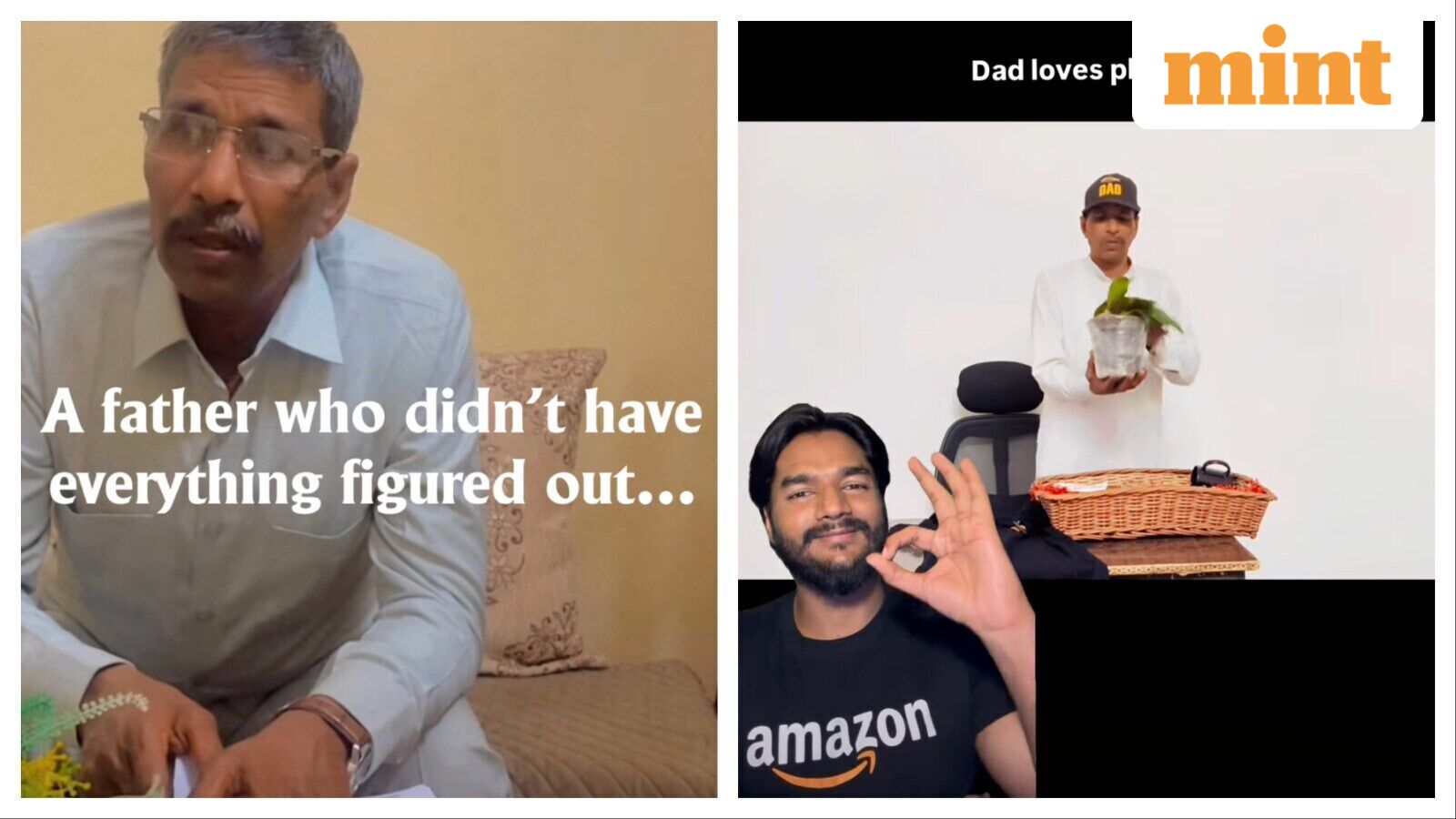
Bengaluru-based software engineer Shailendra Yadav posted a video in April showing his father reading his Amazon offer letter. The clip went viral. Weeks later, Amazon sent a joining kit for the father: a T-shirt, a cap printed with "Dad", a plant, a pen, a mug, and a chocolate. The package included a personal note from Team Amazon.
"Every great achievement starts with someone who believed first. We saw your reaction to your son's offer letter, and we couldn't help but celebrate you too. Congratulations! You helped build the kind of person we're proud to have on our team."
The simple read treats this as a feel-good PR gesture. The better read treats it as a signal about how Amazon manages one of its most expensive intangible assets: talent retention in a hypercompetitive Indian labor market.
The Viral Catalyst and Its Business Implications
Yadav came from a farming family. His father worked multiple private jobs to fund his education. Yadav became the first engineer in his family and secured an SDE-2 role at Amazon. The original video showed the father carefully reading the offer letter despite discomfort with English. The clip resonated because it captured the generational leap many Indian families make.
Amazon's response weeks later turned a one-off emotional moment into a sustained brand narrative. By sending a joining kit for the father, the company acknowledged that recruitment decisions often involve family sacrifice. Parental approval can influence an employee's long-term commitment.
Why this matters for AMZN
Tech companies spend heavily on sign-on bonuses, relocation packages, and perks to attract software engineers. Yet first-year turnover among SDE-2 hires in India can exceed 20% according to industry estimates. Replacement costs reach 1.5x to 2x annual salary. A low-cost gesture – the hamper's estimated value is under $30 – that generates viral goodwill and strengthens the employee-family bond directly addresses a root cause of early attrition: cultural fit and family support for the career choice.
Amazon's Talent Retention Mechanism in India
Amazon's global workforce exceeds 1.5 million employees. In India, where it has over 100,000 staff, the company competes with Microsoft, Google, and Flipkart for top engineering talent. The standard retention toolkit includes stock units, performance bonuses, and career progression ladders. These tools often fail to address the emotional calculus families make when a child leaves a farming background for a corporate job.
Recognition as a retention lever
Behavioral economics research shows that social recognition from an employer has a disproportionate effect on employee loyalty. The effect amplifies when recognition extends to the employee's support network. Amazon's action activates identity reinforcement: the father's pride validates the son's career choice, reducing cognitive dissonance and increasing the probability the employee stays through the critical first 18 months.
What competitors miss
Most tech companies restrict onboarding perks to the employee. Amazon's move – sending a tailored kit for the father – creates a second touchpoint in the household. When the father wears the cap or uses the mug, he becomes a brand ambassador inside the home. The message reinforces that Amazon values the whole family.
This is not scalable at industrial scale. It is highly targeted. The viral video gave Amazon a specific opportunity to demonstrate a principle it can institutionalize: acknowledging the unseen support system behind every hire.
Why Family Recognition Matters for Attrition
The direct cost of the gesture is trivial. The indirect benefit – reduced turnover, improved referral rates, and stronger employer brand – can be material. Amazon's referral hiring program already generates a significant share of new hires. When existing employees see the company celebrate their parents, they are more likely to refer friends and family, lowering recruitment costs.
Practical rule: A single viral moment does not move AMZN stock. When similar patterns appear across multiple companies in the same sector, the cumulative effect on industry-wide labor costs becomes measurable. If Amazon can demonstrate lower first-year attrition among Indian engineers compared to peers, that advantage shows up in SG&A margins over a 2-3 year horizon.
Risk to watch
Sentiment-based retention efforts work only when backed by competitive compensation. Yadav's father received a hamper, not a raise. If Amazon's total compensation lags behind peers, no amount of parental recognition will halt exits. The risk is that this gesture becomes a substitute for real wage growth rather than a complement.
Confirmation Signals for AMZN's Strategy
To assess whether this kind of family-engagement strategy matters for fundamentals, watch three data points:
- Amazon's India attrition rate – reported informally in quarterly calls. Any improvement below 15% annualized would signal the approach is working.
- Referral share of new hires – if the share rises above 40% in India, the brand effect is real.
- Competitor copycats – if Microsoft or Google launch similar programs, the industry has validated the thesis.
Invalidation would come if attrition remains above 20% or if the gesture is not repeated at scale (e.g., integrated into standard onboarding).
Next Decision Point: Earnings and Retention Metrics
Amazon's next earnings call will include data on headcount and operating expenses. Listen for explicit mentions of India retention programs or employee satisfaction scores. If analysts ask about the viral moment and management ties it to retention metrics, the market will price a small premium into the stock's human capital valuation.
For now, the story is a useful reminder that Amazon's competitive advantage rests not just on AWS cloud margins or logistics efficiency. It also depends on its ability to attract and keep talent in markets where family bonds drive career decisions. The $30 hamper is a cheap experiment with potentially high returns.
A larger lesson applies across the tech sector: employer brand is a leading indicator of future labor cost stability. When companies invest in family recognition, they are buying insurance against the churn that erodes productivity. The next time a similar viral moment hits for AAPL, GOOGL, or MSFT, treat it as a data point, not a distraction.