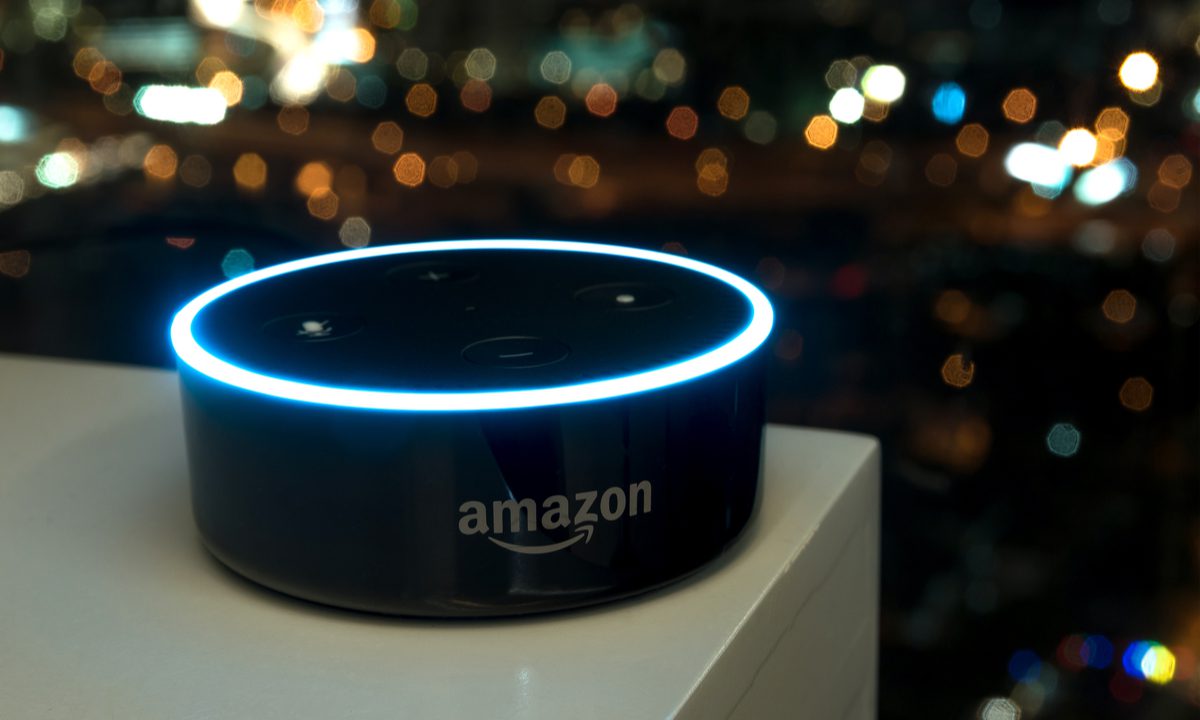
For years, retail AI focused on making product search smarter. Amazon (AMZN) is now betting that voice interfaces will become the primary gateway for agentic commerce–a shift that changes the kind of consumer data an AI can capture. Voice interactions record habitual language, timing, and unstated preferences that a typed query never reveals. An agent that hears a household run low on coffee every ten days can suggest a reorder before the user asks, and eventually place the order with permission. That is the move from reactive search to anticipatory commerce, and it is precisely the kind of behavior Amazon can train on at scale.
The Shift from Search to Ambient Intent
Text search captures explicit intent. A shopper types “coffee” and sees results. Voice captures ambient intent–the rhythm of a household, the phrasing of a request, the context of a room. An Alexa device that processes thousands of spoken commands builds a model of habitual consumption that no search bar can replicate. Amazon’s bet is that owning this ambient data layer gives its AI agents a training set competitors cannot match. The interface that controls reordering habits will eventually control a large slice of consumer wallet, and voice is the most direct path to intercepting demand before a shopper ever opens a browser.
Amazon’s Device Moat and Prime Data Integration
Three structural advantages sit beneath the voice strategy:
- Device footprint: Hundreds of millions of Alexa-enabled devices are already installed in homes, cars, and offices. That reach provides a distribution channel no other retailer can turn on today.
- Prime data integration: Amazon Prime ties together identity, payment, address, purchase history, and media consumption. When voice commands flow through that authenticated layer, the agent can act with full context, reducing the friction that kills conversion in other voice-shopping experiments.
- Voice-first agent design: Unlike a chatbot bolted onto a website, Alexa’s interaction model is built for rapid, low-friction commerce. The architecture is designed to learn from failed commands and refine intent recognition, which improves the ordering experience over time.
The combination creates a data network effect. Each voice order improves the agent’s model, which makes the service more useful, which drives more voice orders. That cycle is difficult for a competitor to jump-start without a similar installed base and a comparable dataset of purchase-linked voice interactions.
Walmart’s Counterposition Without a First-Party Ecosystem
Walmart has invested in voice commerce through its own apps and through partnerships with third-party voice assistants. Without a first-party device ecosystem, Walmart’s agent must reach consumers through platforms it does not control. That dependence creates a gap in data continuity and in the speed with which an agent can learn a household’s habits.
Walmart’s physical footprint gives it a fulfillment advantage that could close the delivery-speed gap on many items. A hybrid approach–using store inventory to fulfill voice orders placed through a mobile app–could sidestep the device disadvantage in some use cases. The direction of travel still favors the company that owns the interface, the data, and the last-mile logistics. Right now, Amazon is the only enterprise that holds all three.
This is not a quarter-by-quarter story. Voice-driven agentic commerce will show up in adoption metrics long before it moves revenue lines. The immediate catalyst path runs through any Alexa hardware refresh or feature launch that explicitly targets agentic ordering, along with any disclosure of voice-transaction growth rates in earnings calls. Traders who treat voice as a footnote to Amazon’s cloud and advertising segments may miss the strategic thread: the interface that controls reordering habits will control a large slice of consumer wallet over time, as our stock market analysis of retail shifts suggests. Watching whether shoppers delegate routine purchases to an agent–and whether Walmart can build a credible counterposition–is the signal that will tell the market this narrative is real.