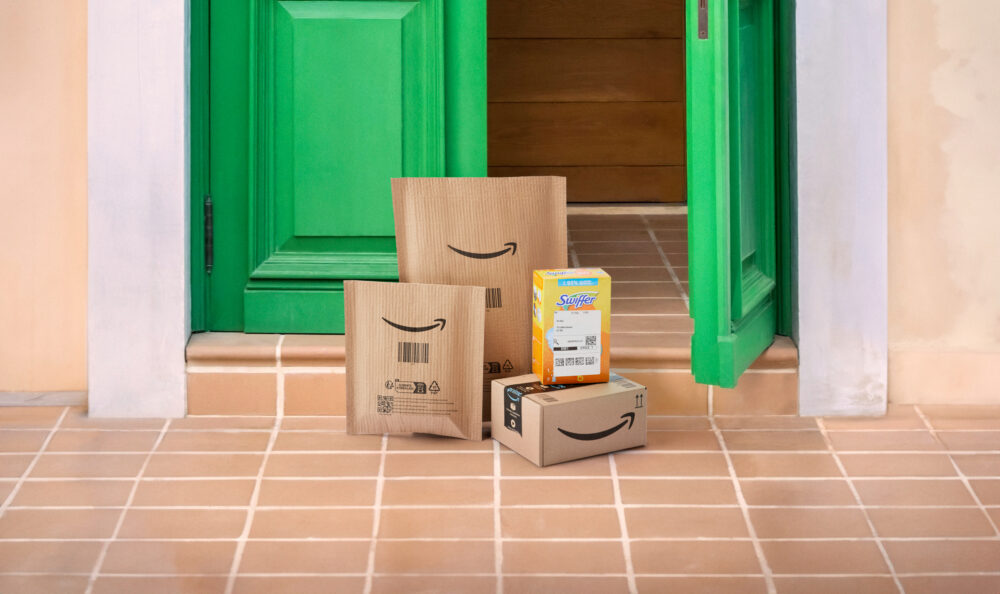
Amazon is adding fresh groceries to its same-day delivery service in parts of central and east London. The move follows the closure of its standalone Amazon Fresh stores. The online giant will now deliver fresh fruit, vegetables, meat, poultry, seafood, dairy, and bread through its same-day logistics network. This is a strategic pivot from physical retail to online-only grocery fulfillment after a costly store experiment.
The naive read is that Amazon is just broadening its delivery menu. The better market read is that this is a capital-light pivot after a failed physical expansion. Amazon Fresh stores were designed to capture impulse grocery trips and compete with Tesco Express and Sainsbury's Local. They struggled to achieve scale and profitability. Closing them and redirecting resources to same-day delivery from existing warehouses and Whole Foods locations reduces fixed costs and leverages Amazon's existing logistics infrastructure. The shift changes the cost structure from rent and store labor to variable delivery expenses.
The Catalyst: Same-Day Fresh Grocery in London
The initial rollout covers central and east London, a dense urban area that offers high delivery density. Amazon is testing the model in a market where it already has a strong Prime subscriber base and a mature delivery network. The fresh categories added are high-frequency, low-margin items that require careful handling. If the test works, Amazon could expand to other UK cities. The timing is notable: UK grocery inflation has eased, and online penetration has stabilized after a post-pandemic dip. Amazon is entering a market where incumbents have already invested heavily in online capabilities.
The Mechanism: From Storefront to Delivery Network
Amazon Fresh stores required real estate, staff, and inventory management for each location. The same-day delivery model uses regional fulfillment centers and a cold chain. This shifts cost from fixed rent to variable delivery cost. The key metric is delivery density: can Amazon achieve enough orders per route to make unit economics work? Ocado has built a model around highly automated warehouses with low picking costs. Amazon's advantage is its existing delivery network (Amazon Logistics) and the ability to cross-subsidize grocery with general merchandise. Fresh grocery introduces spoilage risk and requires temperature-controlled logistics, which add complexity and cost.
Amazon's approach differs from Ocado's. Ocado builds dedicated automated warehouses for grocers. Amazon is using its existing fulfillment centers and adding cold storage. This is cheaper to scale. It may be less efficient for high-volume fresh orders. The company will need to balance speed with cost. Same-day delivery for fresh items demands tight inventory management and rapid turnover. Any mismatch between supply and demand leads to waste, which erodes margins.
The UK Grocery Sector Read-Through
This move directly competes with Tesco's online delivery, Ocado, and Sainsbury's. Tesco has the largest market share and a dense store network for click-and-collect. Ocado has the most efficient automated fulfillment. Amazon's entry with same-day fresh could pressure margins across the sector if it forces incumbents to invest more in delivery speed or lower prices. Amazon's past grocery efforts have not disrupted the market significantly. The company's share of UK grocery remains small. The question is whether this pivot is different.
The closure of Amazon Fresh stores signals that Amazon is willing to abandon physical retail experiments that do not meet return thresholds. That discipline is positive for shareholders. It is negative for the competitive landscape. If Amazon can achieve profitable unit economics in fresh delivery, it will have a scalable model that can be replicated in other dense urban markets globally. If not, this will be another small-scale test that does not move the needle for the company's overall retail business.
Key insight: Amazon's pivot from physical Fresh stores to same-day delivery is a capital-light strategy that tests whether its logistics network can handle fresh grocery profitably. The outcome will determine whether Amazon becomes a serious threat to UK grocers or remains a niche player.
The Next Decision Point: Delivery Economics and Scale
The critical test is whether Amazon can achieve profitable unit economics in fresh grocery delivery. Fresh items have higher spoilage risk and require temperature-controlled logistics. Amazon will need to achieve high order density in London to offset costs. Watch for expansion to other cities, partnerships with local suppliers, and any pricing moves that signal aggressive market share grabs. If Amazon begins offering fresh delivery in Manchester or Birmingham within six months, that would indicate the model is working. If the service remains confined to London, it suggests the economics are marginal.
Another signal is how Amazon prices the service relative to Ocado and Tesco. If Amazon undercuts incumbents significantly, it is buying market share. If it prices at parity, it is testing demand before scaling. The company's willingness to invest in cold-chain infrastructure will also be telling. Amazon has a history of investing heavily in logistics before achieving profitability. This fresh grocery push could follow that pattern. The grocery sector has lower margins and higher competition than general e-commerce.
For traders, the immediate impact on Amazon (AMZN) stock is likely muted. The UK grocery business is a small fraction of Amazon's total revenue. The strategic signal matters more: Amazon is focusing on profitable growth over top-line expansion. That is a positive for margin improvement over time. The risk is that fresh delivery becomes another capital sink without clear returns. The next quarterly earnings call will likely include questions about the unit economics of this rollout. Any disclosure of order volumes or delivery density would be a significant catalyst.