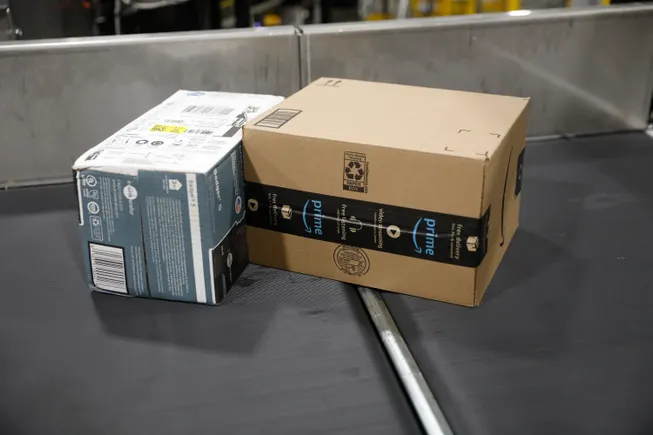
Amazon is rolling out a new requirement that pushes third-party sellers using the Merchant Fulfilled Network to set handling times that match actual shipping speed. The company will monitor each seller's SKU-level handling time over a 30-day window and enforce the fastest promise a seller can keep without exceeding a 4% late-shipment rate.
The immediate consequence: sellers who have been padding their handling windows will see those windows shrink, often automatically. Amazon stated that more than 87% of seller-fulfilled orders in the U.S. are handled within one day, yet many sellers set longer SKU-specific handling times than needed. The gap between actual speed and promised speed is what the new rule is designed to close.
Why the Handling-Time Crackdown Hits Amazon's Competitive Moat
Amazon's logic is straightforward: every one-day improvement in promised delivery time drives an average 5% increase in sales, according to the company. For sellers, a shorter handling window means a higher conversion rate. For Amazon, it means more total transactions on the platform without any change to its own logistics cost.
The rule is one tool in a broader push to speed up delivery promises across the marketplace. Amazon is simultaneously expanding its 30-minute-or-less delivery offering to more U.S. cities and reporting strong demand for same-day delivery. The handling-time mandate tightens the seller-fulfilled portion of the network, which covers orders that Amazon does not ship from its own warehouses.
From a market perspective, the policy reinforces Amazon's ability to control the last-mile experience without building more fulfillment centers. Sellers absorb the operational cost of faster handling; Amazon captures the sales uplift. That dynamic supports margin expansion on marketplace revenue, which carries higher contribution profit than first-party sales.
The Mechanism: Automated Handling vs. Manual Monitoring
Sellers have two compliance paths. They can enable the automated handling time setting, which lets Amazon adjust the handling window based on recent shipping history. That option removes the burden of monitoring individual SKUs. Alternatively, sellers can manually set handling times at the SKU level. Amazon will then evaluate each SKU over a rolling 30-day period and override any setting that does not match actual performance.
The enforcement metric is the late-shipment rate capped at 4%. If a seller's stated handling time results in a late-shipment rate above 4%, Amazon will recalculate the fastest handling time the seller can achieve at or below that threshold. The recalculation becomes the new default promise, whether the seller adjusts it or not.
- Excluded categories: custom, handmade, and bulky less-than-truckload shipments are exempt.
- Execution risk: sellers that operate with irregular inventory or variable staffing may find the 30-day window insufficient to smooth out spikes. A holiday surge or supply disruption that pushes a handful of shipments past the 4% threshold could reset the entire SKU's handling time to a slower baseline, reversing the sales benefit.
The rule effectively forces sellers to either improve their actual processing speed or accept that their delivery promises will be set by Amazon's algorithm. That design favors sellers who have consistent, predictable fulfillment operations and penalizes those who rely on occasional expediting.
Market Read: What the Rule Changes for Amazon Stock
The policy is a marginal positive for AMZN because it lifts marketplace conversion rates without incremental capital spending. The 5% sales uplift per day of improvement is a seller-level number. The aggregate effect across millions of SKUs compounds. If the average seller tightens handling by one day, total marketplace gross merchandise value should rise, and Amazon's take rate applies to that incremental GMV.
Potential pushback: some sellers may shift volume to Amazon's Fulfilled by Amazon service to avoid the monitoring. That shift would increase Amazon's logistics costs but also capture more seller fees. Either outcome – faster seller handling or more FBA adoption – benefits Amazon's competitive position relative to other e-commerce platforms.
The Next Decision Point: Seller Response and Late-Shipment Data
The 30-day evaluation periods begin at rollout. The first batch of automated handling-time adjustments will create data: how many SKUs were shortened, how many sellers saw a meaningful change in promised delivery, and whether the late-shipment rate moves up or down during the transition.
A spike in late shipments during the adjustment period would contradict the premise that current handling times are padded. That outcome would weaken the narrative that Amazon can tighten promises without operational friction. Conversely, if late-shipment rates hold steady or decline while promised times improve, the policy validates the efficiency gain and reinforces the thesis that Amazon is extracting more value from its third-party fulfillment network without building new infrastructure.
For a company that already dominates U.S. e-commerce market share, the handling-time rule is a small high-margin lever. Traders watching Amazon should track quarterly marketplace revenue yield and any seller forum chatter about forced adjustments. The mechanism is set. The results will show within two quarters.