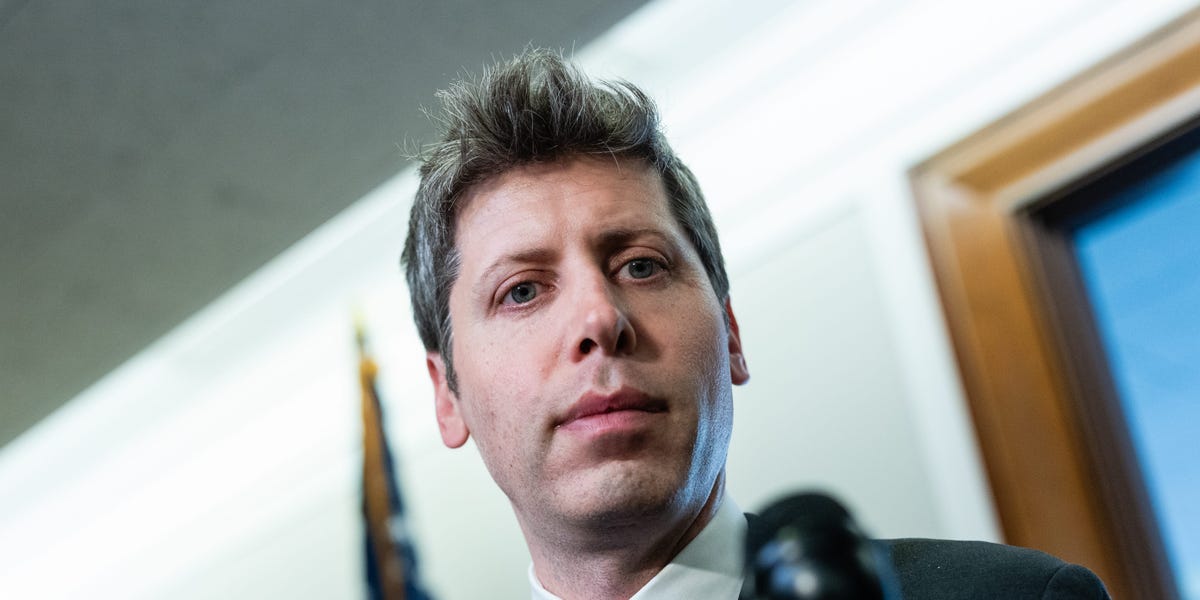
OpenAI CEO Sam Altman said one of his biggest fears is that a small number of companies could control artificial intelligence. He made the comments on the "Relentless" podcast, framing the debate as a choice between "AI authoritarianism or liberty."
"Every time that humanity has traded off its liberty for safety, it's been a long-term net loss," Altman said. "We are going to put this in the hands of people. We're going to empower them."
The warning comes from the head of a company that itself holds one of the most powerful closed AI models. OpenAI does not release its underlying architecture as open-source. The statement follows a week of debate in Silicon Valley and Washington over public access to frontier model details.
Moonshot AI recently released Kimi K3, a Chinese open-source model that some US officials want restricted. Investors and startup founders argued that blocking Chinese models could weaken global competition.
Export controls already limit which countries can buy advanced chips and computing capacity. Washington has significant influence over who builds cutting-edge AI.
Microsoft, Meta, Nvidia, OpenAI, Google, and others signed a letter urging the administration not to restrict open-source AI. Anthropic, OpenAI's biggest rival, did not sign. The company has argued for tighter safeguards on powerful models.
Altman said preventing power concentration has been central to his vision. "For so long now, I have felt focused on this singular goal of abundant intelligence and a belief that incredible human prosperity will come from that, as long as we don't have a weird power concentration," he said.
The divide between open and closed AI models has direct market implications. Companies that control the most advanced models and chips stand to benefit from tighter regulation that limits competition. Those that rely on open-source access could face higher costs or restricted supply.
Microsoft, a major investor in OpenAI, holds an Alpha Score of 60 on AlphaScala, labeled Moderate. The stock trades at $381.70, flat on the day. Nvidia, the dominant AI chipmaker, scores 74, also Moderate, at $206.84, down 0.92%. Both companies sit at the center of the AI infrastructure debate.
If Washington restricts open-source models or chip exports further, Nvidia's sales to certain regions could shrink. Microsoft's cloud business, which offers OpenAI models, could gain if competitors face barriers. The regulatory outcome will shape growth for both.
Altman's comments did not mention any specific policy. But the timing, days after the Kimi K3 release and the letter campaign, suggests the industry is bracing for new rules. The next concrete marker is the White House's expected executive order on AI, which could set guidelines for model transparency and export controls.