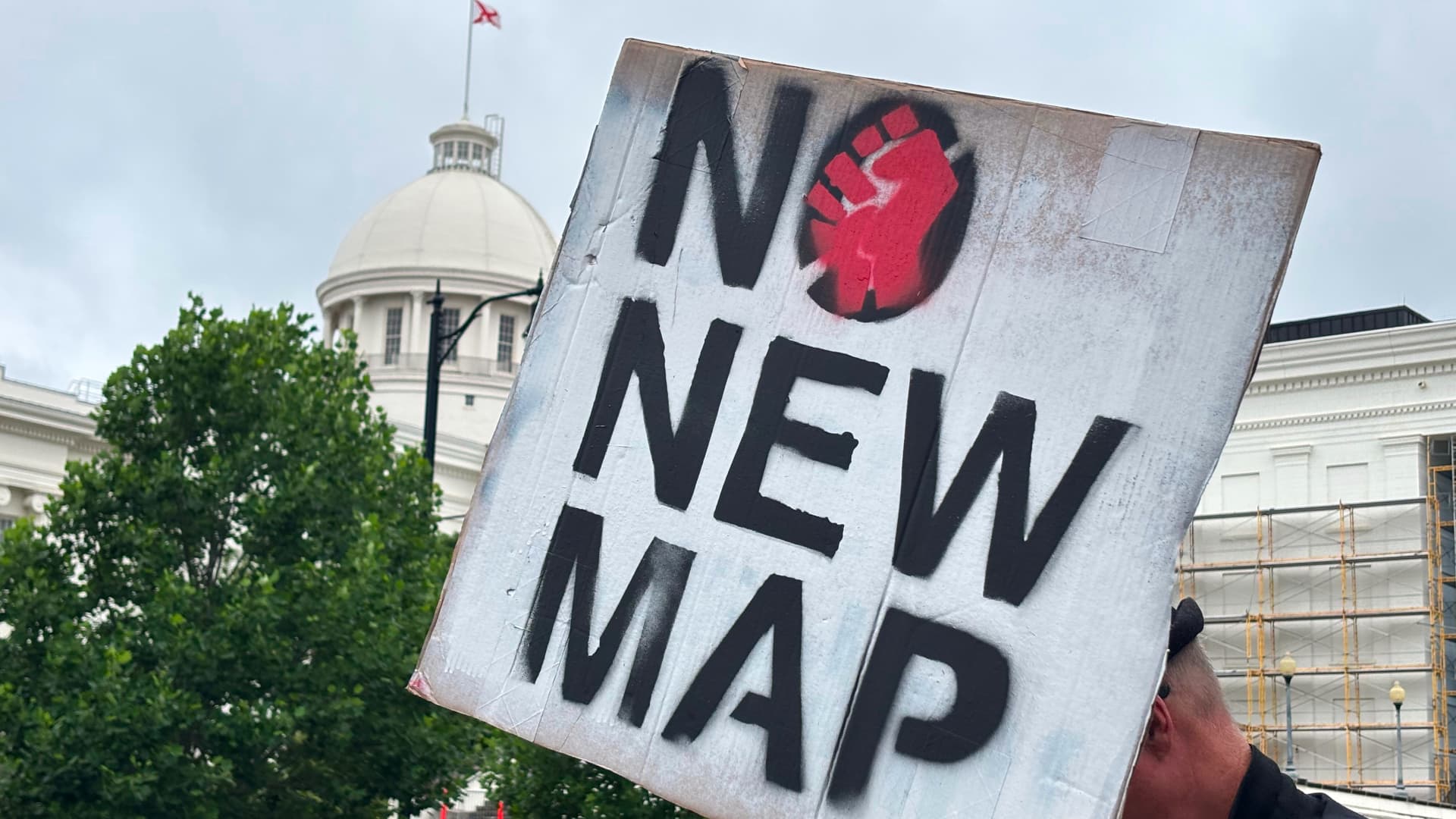
A three-judge federal panel on Monday blocked Alabama from using congressional district maps that would dilute Black voting power in the 2026 midterm elections. The ruling in U.S. District Court in Birmingham sets up a Supreme Court review that will determine whether the maps, first proposed in 2023, can be used this year.
The Legal Mechanism and Why It Matters Now
The panel acted after the Supreme Court instructed it to revisit its earlier decision. That instruction came in light of the high court's recent ruling in Louisiana v. Callais, which found Louisiana's congressional map to be a racial gerrymander. The Alabama case now forces the justices to clarify how far states can go in drawing districts that reduce minority electoral influence.
For investors, this is a political risk event, not a sector-specific catalyst. Redistricting fights directly affect control of the U.S. House. A 2026 map that reduces the number of competitive seats changes the baseline for legislative outcomes on fiscal policy, regulation, and trade. Any uncertainty over which party holds the House increases the discount markets apply to long-dated policy expectations.
What This Changes for the 2026 Landscape
If the Supreme Court upholds the block, Alabama will have to adopt a different map that preserves Black voting strength. If the Court reverses, the diluted map stands. Either decision will set a precedent for similar challenges in Louisiana, Georgia, and Texas, where voting-rights litigation is ongoing. The concentrated effect on House seats in Southern states means that even a single map ruling can shift the median district by one or two seats, enough to flip the majority in a tight cycle.
The court calendar matters. A ruling before candidate filing deadlines in early 2026 removes one layer of uncertainty; a ruling after would force last-minute changes that disrupt campaign fundraising and spending patterns.
The Next Decision Point
The Supreme Court will likely hear the case on an expedited schedule. Watch for the justices to grant certiorari or issue a summary ruling in the next 60 days. A split decision – especially one that produces a fragmented set of opinions – would leave lower courts without clear guidance and extend the litigation risk into the 2026 election cycle. Investors in sectors with heavy federal exposure, such as defense contractors and healthcare firms reliant on Medicare reimbursement, should treat the redistricting calendar as a secondary political barometer.