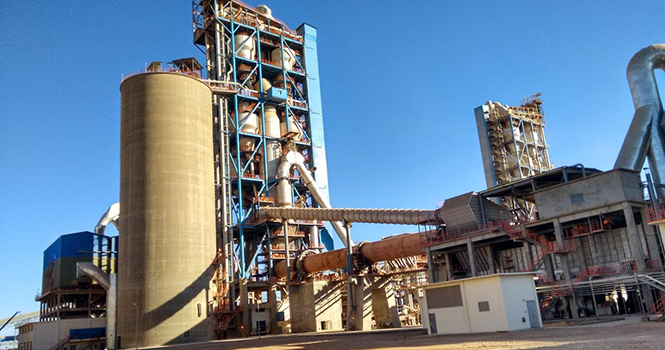
Al-Jouf Cement signs a SAR 55.4M export deal to Syria. With domestic utilization below 80%, the contract opens a channel into reconstruction demand if payment risk clears.
Al-Jouf Cement Co. signed a one-year sale-and-supply contract to export cement and clinker to Syria, valued at SAR 55.4 million ($14.8 million). The buyer is Maham Construction & Contracting Co., a subsidiary of Al-Hassan Holding Group. The company disclosed the deal in a regulatory filing but gave no further details.
The contract lands at a time when Saudi cement producers are pushing hard into export markets. Domestic construction activity has slowed after a multiyear boom tied to Vision 2030 megaprojects. Industry data from the Cement Producers Association shows capacity utilization across the sector below 80%. That leaves excess clinker that producers must either store or ship abroad.
Syria is a natural market. The country's infrastructure was devastated by more than a decade of civil war. Reconstruction needs are enormous, and diplomatic normalization between Riyadh and Damascus has reopened trade channels that were closed since 2011. Syria has relied on imports from Turkey and Iran. Saudi cement, with a shorter shipping route and generally higher quality, could compete if payment risk is managed.
Payment risk is the central issue. Syria remains under U.S. and European Union sanctions, though humanitarian and reconstruction-related transactions are exempted under certain conditions. Saudi banks likely require pre-payment or letters of credit guaranteed by third parties. Al-Jouf Cement did not disclose the payment structure of the contract.
The SAR 55.4 million agreement is not a transformative addition to Al-Jouf's top line. The company reported total revenue of roughly 750 million riyals in its most recent fiscal year, according to publicly available filings. This contract represents less than 8% of that figure. It establishes a channel. If follow-on orders materialize, or if other Saudi producers secure similar deals, the sector could see a structural lift to export volumes.
The production economics reinforce the logic. Cement is heavy and expensive to store. Producing at sub-80% utilization means fixed costs get spread across fewer tonnes, compressing margins. Every tonne shipped abroad at even a narrow margin improves plant-level profitability. The export option also reduces the temptation to discount domestically when demand softens, which protects pricing for the whole market.
Competitive positioning matters here. Turkish producers have filled Syria's import gap during the war years, benefiting from proximity and established trade routes. Iranian cement has also flowed in, often subsidized. Saudi product competes on quality and, from the Eastern Province ports, a shorter sea route. The question is whether the price premium justifies the payment terms Syrian buyers can offer.
Al-Jouf Cement trades on the Saudi stock exchange under ticker 3020. The stock has been flat year-to-date, reflecting broader headwinds for cement producers. This deal alone may not shift sentiment, it adds a dimension of export growth that the sector has lacked. For more on commodity supply-demand dynamics, see AlphaScala's commodities analysis.
The contract runs for one year. Al-Jouf Cement has not disclosed the delivery schedule, pricing formula, or payment mechanism. No other export agreements to Syria have been announced by the company.
Prepared with AlphaScala research tooling and grounded in primary market data: live prices, fundamentals, SEC filings, hedge-fund holdings, and insider activity. Each story is checked against AlphaScala publishing rules before release. Educational coverage, not personalized advice.