AI's Productivity Paradox: Brynjolfsson's Bet Is Winning, Barely
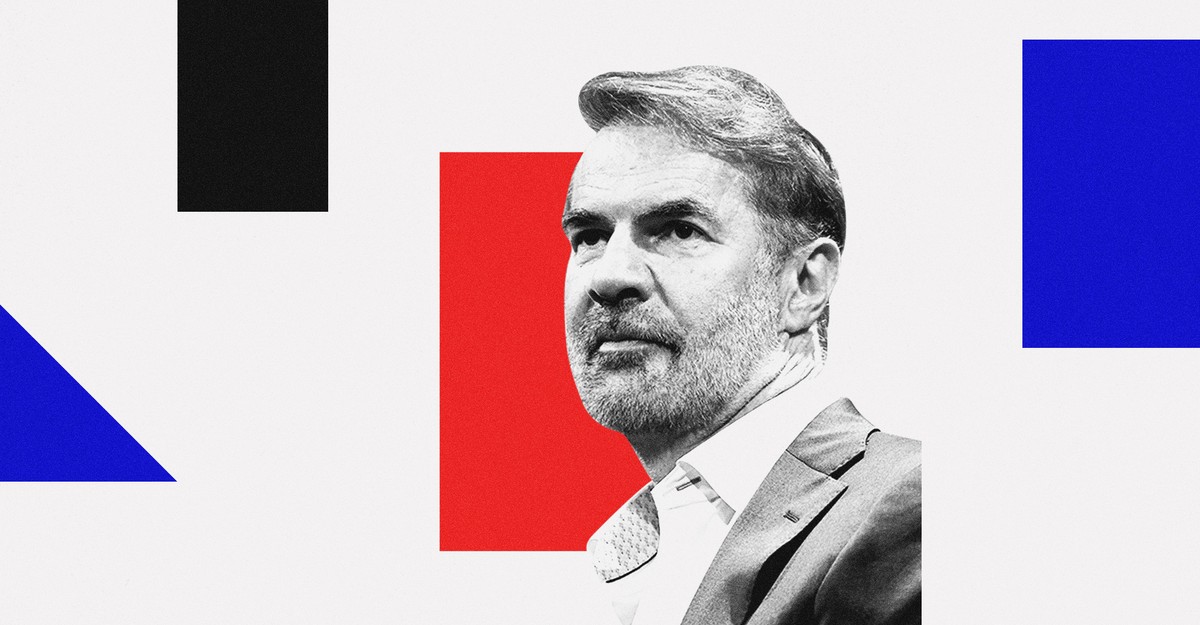
Erik Brynjolfsson leads Robert Gordon's productivity bet by a few tenths of a point. The debate tests whether AI will show up in corporate earnings. MSFT and ADP sit at the center.
Erik Brynjolfsson, the Stanford economist who predicted AI would transform everything, is winning a $400 bet against Northwestern's Robert Gordon. The wager: whether annual labor productivity growth averages above or below 1.8% this decade. Brynjolfsson leads by a few tenths of a point. Gordon argues the gain comes from construction and food service, not from white-collar automation.
Brynjolfsson has spent decades studying how technology changes work. His lab at Stanford, housed in the computer-science building, tracks AI adoption across thousands of firms. A recent paper co-authored with Danielle Li and Lindsey Raymond found generative AI boosted customer-service agents' output by as much as 30%. Another study showed AI increasing employment for some workers while reducing it for others.
Gordon sees a different picture. He separates workers into those who work remotely and those who show up in person. AI adoption has concentrated in the remote category, he says, yet all productivity improvement in the last eight years came from the other two. If AI makes white-collar workers more efficient, the effect could be offset by high-productivity firms shedding workers and low-productivity firms hiring them. The U.S. also faces headwinds from an aging population and rising costs in health care, education, and housing.
The debate frames how quickly AI will show up in corporate earnings. Brynjolfsson believes the technology is exponential: improvements in machine learning compound improvements in chip speeds and data availability. He compares the current moment to the early days of the PC revolution, when productivity gains took years to materialize. “We are at a technological plateau,” Tyler Cowen argued in 2010. Brynjolfsson and Andrew McAfee pushed back with two books arguing the digital revolution was accelerating.
Two stocks sit at the center of this debate. Microsoft, with an Alpha Score of 42, is the dominant platform for enterprise AI tools through its Copilot products and Azure cloud. The company's $372.97 share price, up 5.71% today, reflects investor confidence that AI will drive revenue growth. The Mixed label suggests the market has already priced in much of the optimism. MSFT stock page
Automatic Data Processing, the payroll processor, partners with Brynjolfsson's lab on the “canaries dashboard” that tracks AI's effect on employment, wages, and hiring. The data shows workers in their early 20s are in a hiring recession, a canary-in-the-coal-mine signal. ADP's Alpha Score of 43, also Mixed, indicates the stock is fairly valued relative to its Industrials sector peers. The company's role as a data provider gives it unique insight into how AI reshapes the labor market. ADP stock page
Brynjolfsson's lab continues to produce new measures. The Census Bureau collaboration found that firms using AI robots were less efficient at first, then more efficient soon after. The productivity paradox resolved at warp speed, he said. For investors, the key question is whether that pattern repeats across the broader economy. If it does, productivity growth could accelerate beyond the 1.8% threshold, validating Brynjolfsson's bet and boosting earnings for AI-exposed companies.
Gordon remains skeptical. He uses ChatGPT for historical trivia but doubts it will transform economic statistics. “It's not going to tell him anything about economics,” Brynjolfsson said. The two remain friends. Gordon delights in the unpopularity of tech optimism among college students, who booed AI-focused commencement speakers this spring. Joel Mokyr, a Nobel laureate who studies technological progress, delivered a pro-immigration speech at Northwestern and got a standing ovation. No boos.
Brynjolfsson's message to investors is simple: watch the data, not the hype. Productivity numbers lag adoption by years. The canaries dashboard shows early signs of disruption in hiring for young workers. Companies that integrate AI into workflows, not just bolt it on, will see the gains. Those that don't will fall behind. The bet with Gordon will resolve by 2030. Until then, the debate itself is the signal.
“Beyond the corpus of current human achievement exists this much bigger space, bigger than you know, as big as you can imagine, of things that have never been done before,” Brynjolfsson said.
Drafted by a large language model from the source reporting linked above, then screened by automated publishing checks. It is not read by a journalist before publication. Some articles cite our Alpha Score. Verify prices and figures against the original source. Educational coverage, not personalized advice.