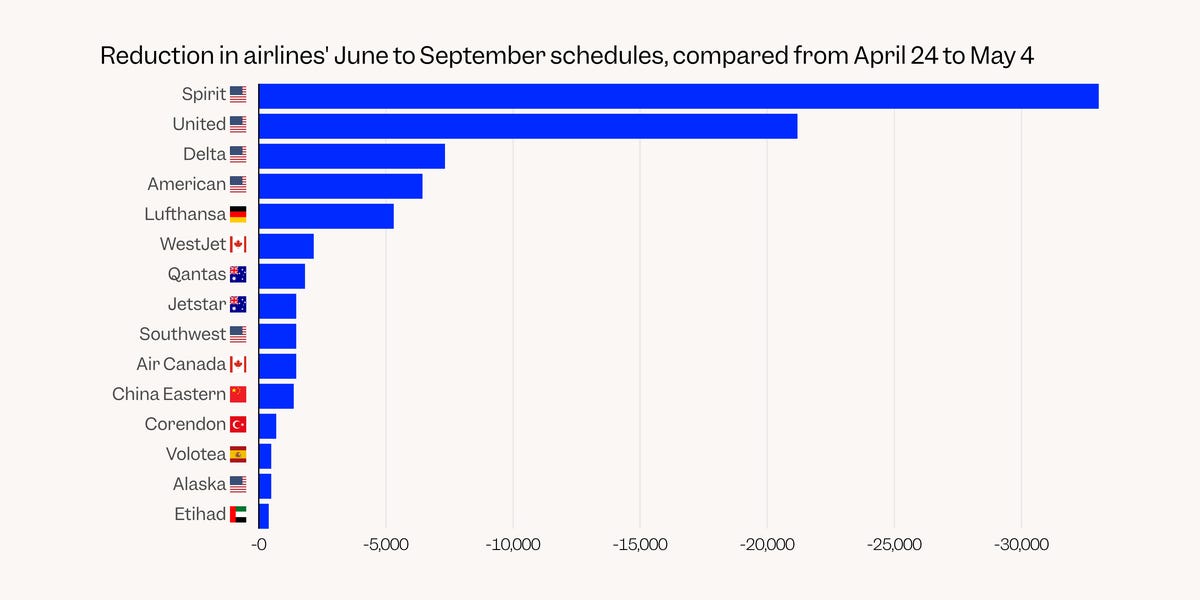
The aviation sector is undergoing a rapid contraction in capacity, with airlines removing more than 75,000 flights from their summer schedules over a recent 10-day period. This aggressive reduction in seat supply, tracked by aviation analytics firm Cirium, signals a shift in operational strategy as carriers grapple with the dual pressures of rising jet fuel costs and the need to preserve margins. While the immediate headline focuses on the volume of cancellations, the underlying mechanism is a defensive maneuver to avoid the high variable costs associated with flying under-booked or fuel-inefficient routes.
Operational Contraction and Fuel Sensitivity
United Airlines Holdings Inc. (UAL) and Spirit Airlines have emerged as the primary drivers of this flight reduction. For carriers, jet fuel remains the most volatile and significant variable expense. When fuel prices spike, the break-even load factor for any given flight rises significantly. By cutting 75,000 flights, these airlines are effectively pruning their networks to eliminate routes that no longer meet profitability thresholds under current energy price regimes. This is a direct response to the reality that fuel costs are currently outpacing the ability of some carriers to pass those expenses onto the consumer through ticket price hikes.
This trend serves as a broader sector read-through for the industrials space. When major players like UAL prioritize capacity discipline over market share, it often indicates that the industry is moving away from the post-pandemic growth-at-all-costs model. Investors should note that this reduction in supply could actually provide a floor for ticket prices, as lower capacity often leads to higher yields on remaining routes. However, the risk remains that these cuts are a leading indicator of weakening consumer demand or an inability to manage operational costs effectively.
Market Context and Performance
United Airlines Holdings Inc. (UAL) currently holds an Alpha Score of 62/100, reflecting a moderate outlook within the industrials sector. The company's decision to lead in flight cancellations suggests a proactive approach to managing its balance sheet against energy volatility. You can track further developments regarding the company's operational efficiency on the UAL stock page.
For those monitoring the broader energy-to-transportation link, the correlation between fuel costs and flight availability is tightening. As carriers continue to adjust their summer schedules, the next decision point for the market will be the reporting of load factors and unit revenue metrics in upcoming quarterly filings. If these capacity cuts fail to stabilize margins, it would suggest that the cost of fuel has reached a level that threatens the viability of even the most optimized flight networks. Conversely, if yields improve despite the reduced volume, it would confirm that the industry has successfully shifted to a high-margin, low-volume operational environment. Traders should watch for subsequent guidance updates from other major carriers to see if this trend of capacity discipline becomes a sector-wide standard for the remainder of the fiscal year.