India's natural rubber supply gap exceeds 500,000 tonnes; AIRIA president says Northeast could become second production hub, calls for income-support mechanism for growers.
India's natural rubber industry needs a diversified sourcing model that balances growers, manufacturers, and exporters, the All India Rubber Industries Association said.
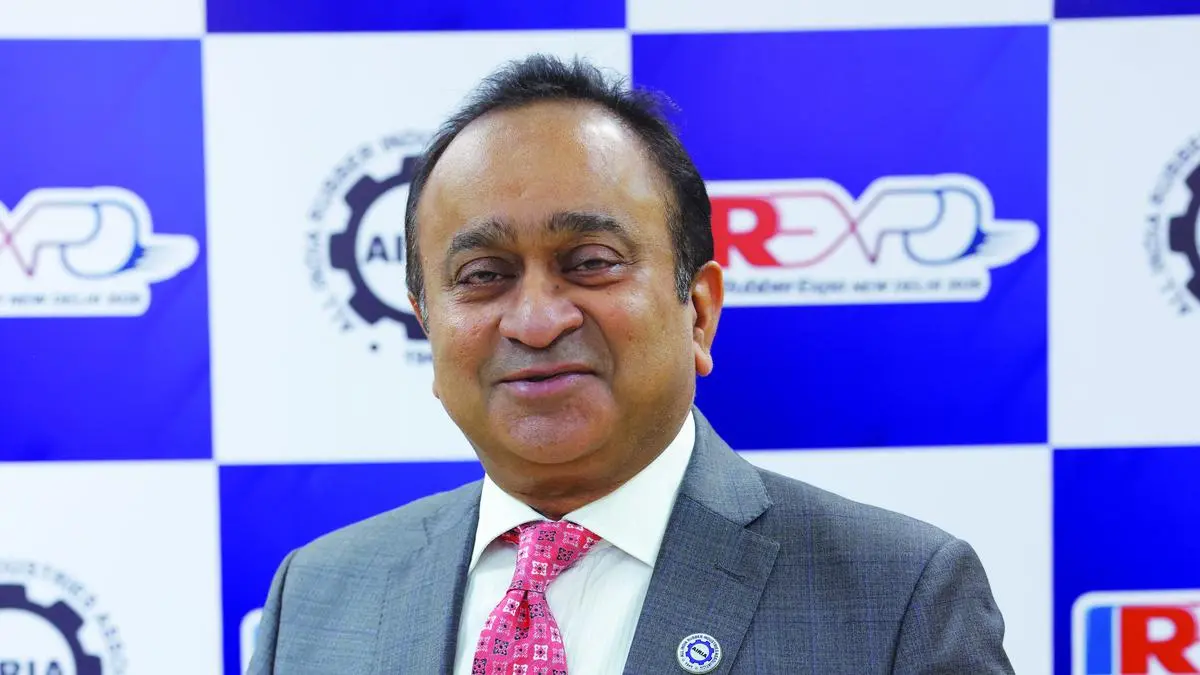
Anay Gupta, president of AIRIA, said Kerala should remain the primary rubber-producing state, while the Northeast could emerge as a significant second hub. Imports should serve as a transparent mechanism to bridge structural supply gaps and stabilise availability during volatile periods, he said.
India consumed roughly 1.41 million tonnes of natural rubber in the 2024-25 fiscal year. Domestic production fell well short of that, leaving a structural supply gap of more than half a million tonnes, Gupta said.
"Managing this imbalance requires looking beyond the question of whether India produces enough rubber in aggregate. The more important considerations are where the rubber is produced, in what grades, how consistently it is processed, how efficiently it reaches manufacturing clusters and whether alternative sources remain available during geopolitical, climatic or logistical disruptions."
The non-tyre sector is particularly vulnerable to supply disruptions. It comprises several MSMEs that manufacture hoses, seals, gaskets, conveyor belts, footwear, and medical products. Their raw material requirements vary widely. Some depend on natural rubber latex, while others need RSS grades, technically specified rubber, synthetic elastomers, or specific rubber compounds.
An increase in national production does not automatically eliminate shortages of specific grades or ensure timely availability in every location, Gupta said. Building resilience requires more than just raising domestic output.
On tyre companies looking beyond Kerala for natural rubber, Gupta said the shift toward the Northeast could fundamentally alter India's rubber map. Under the INROAD project, rubber plantations were planned for 200,000 hectares across the Northeast and West Bengal. By the 2025 planting season, roughly 179,376 hectares had been planted, benefiting more than 207,000 growers, he said.
On renewed demands for a minimum support price or price-support mechanism, Gupta said growers need income stability. Natural rubber is a long-gestation crop, and tapping decisions are highly sensitive to prices, labour costs, and weather.
A conventional procurement-based MSP may not be suitable for natural rubber, which is traded in multiple grades and forms, Gupta said. Quality, moisture, contamination, and processing standards directly affect value.
AIRIA would instead favour a carefully designed price-deficiency or income-support mechanism. Under such a system, eligible small growers could receive the difference between a scientifically determined reference price and the prevailing market price, subject to quantity, quality, and traceability conditions, he said. Support should also be linked to replanting, productivity improvement, rain-guarding, disease management, scientific tapping, and farmer aggregation.
"India needs a balanced framework like remunerative returns for growers, predictable raw-material availability for manufacturers and internationally competitive input prices for exporters. Producer and user interests should not be treated as opposing interests; both are essential parts of the same rubber value chain," Gupta said.
Drafted by a large language model from the source reporting linked above, then screened by automated publishing checks. It is not read by a journalist before publication. Some articles cite our Alpha Score. Verify prices and figures against the original source. Educational coverage, not personalized advice.