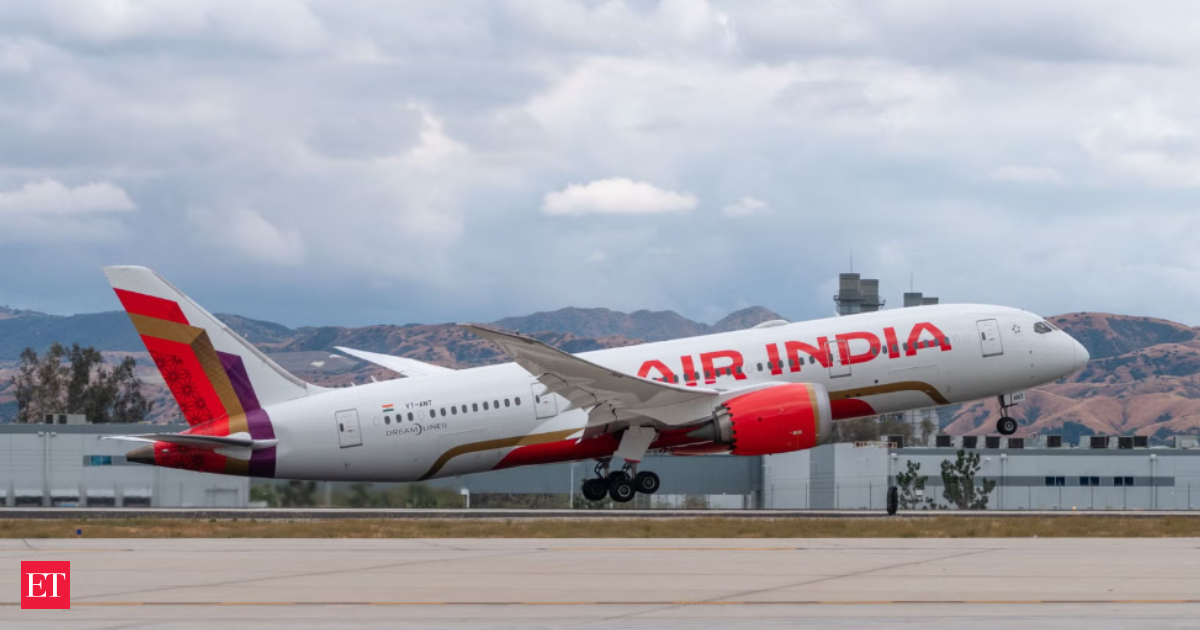
Air India is pulling back from its post-privatization growth push after owner Tata Group ordered management to focus on stemming losses, people familiar with the matter said.
The carrier is deferring aircraft deliveries and cutting flights. Expansion plans are on hold. The directive from Tata follows months of heavy spending on fleet upgrades and network expansion, along with cabin refurbishments that have not translated into sustainable profits.
Air India has been burning cash faster than internal projections allowed, the people said. The airline posted an annual loss of more than $400 million in its most recent fiscal year, according to a person with direct knowledge. That figure excludes interest and depreciation costs, which add several hundred million more.
Tata executives told Air India's leadership in meetings last quarter to prioritize cash flow and cost discipline over growth. The group wants the airline to hit breakeven within 18 to 24 months rather than chase market share against IndiGo, which controls more than 60% of domestic traffic.
Aircraft deliveries on order from Airbus and Boeing will slow. Air India had committed to taking roughly 470 new planes, including 250 from Airbus and 220 from Boeing. The first batch of A350s arrived last year and entered service on long-haul routes to New York, London, and Dubai. Those planes will stay in service. Deliveries scheduled for 2025 and early 2026 are now set for review, with some likely pushed back 12 to 18 months, the people said.
Route cuts are focused on international sectors where load factors have lagged targets. Mumbai to San Francisco and Delhi to Melbourne are among the routes under review, a person familiar with the planning said. Domestic cuts are smaller, with a handful of low-demand connections between tier-2 cities suspended.
Tata has its own financial constraints. The salt-to-software conglomerate is managing capital spending across its portfolio – steel, autos, IT services – and Air India's cash burn has become a visible drag. Tata Sons chairman N. Chandrasekaran told analysts in a February call that group capital allocation would be "more disciplined" going forward, language the people familiar with the matter interpret as a direct reference to the airline's spending.
Air India's union of pilots and cabin crew have been told the airline will slow hiring through the end of 2025. The carrier had been recruiting aggressively, adding roughly 3,000 staff in 2024 alone as it inducted new planes. That pace will drop by about half this year, one person said.
The hard part is that Air India still needs investment. Its long-haul fleet is a mix of old Boeing 777s and 787s that require expensive maintenance. The A350 fleet needs crew training and new route certification. Deferring deliveries saves cash in the short term. It also keeps the airline stuck with a less competitive fleet for longer.
Tata bought Air India from the government in early 2022 for $2.4 billion, taking on $3 billion in debt. The group has since injected about $1 billion in fresh capital. The losses the airline has accumulated since the takeover mean the total investment remains far from a recovery.
An Air India spokesperson declined to comment on internal financial targets or delivery schedules. Tata Group did not respond to a request for comment.