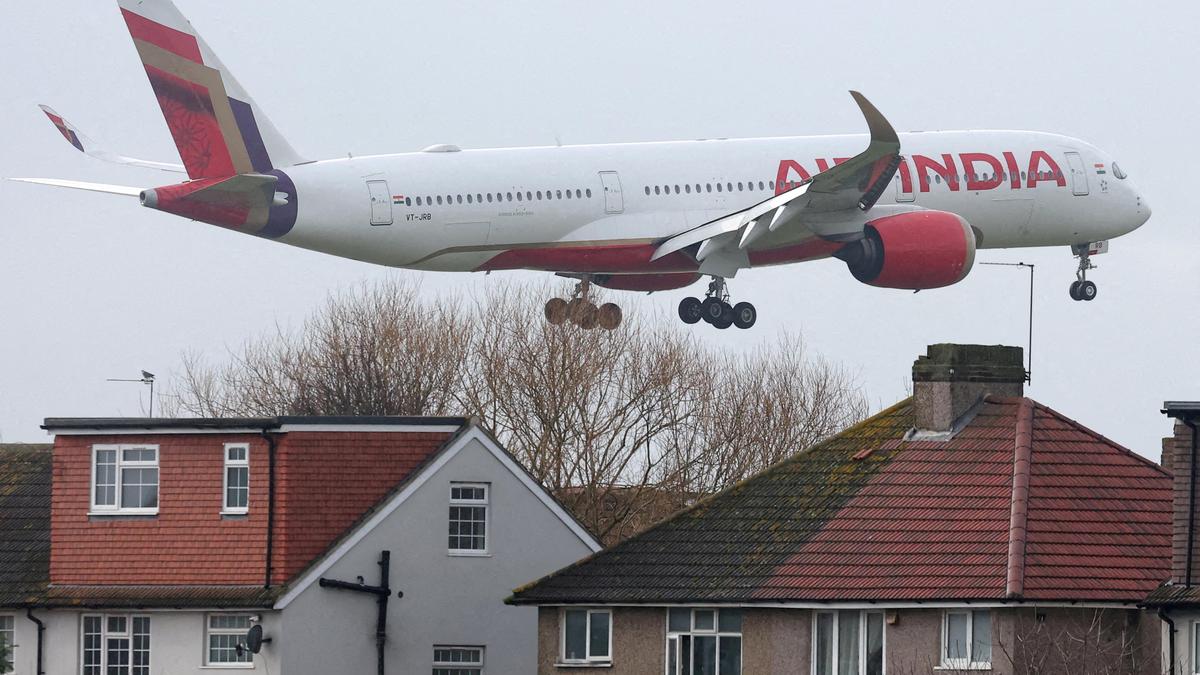
Air India has initiated a significant reduction in international flight frequencies for May, citing a confluence of rising fuel costs and complex geopolitical headwinds. The carrier has implemented capacity cuts ranging from 5 per cent to 25 per cent across its global network, marking a strategic pivot toward network optimization as operational margins face sustained pressure. This recalibration is not merely a tactical response to immediate fuel price spikes but a structural adjustment to the realities of long-haul profitability in an environment defined by airspace closures and volatile energy markets.
The Mechanism of Fuel-Driven Capacity Contraction
The immediate catalyst for this reduction is the May 1 decision by Oil Marketing Companies to hike the price of jet fuel for international flights by 5 per cent. For an airline like Air India, which relies heavily on long-haul routes to North America and Europe, fuel represents the largest variable cost component. When fuel prices rise, the break-even load factor for these routes shifts upward. If demand does not support higher ticket pricing, the airline faces a binary choice: operate at a loss or reduce capacity to preserve cash and maintain yield integrity.
Air India CEO and Managing Director Campbell Wilson has explicitly linked these operational decisions to the broader geopolitical landscape in West Asia. The conflict has forced carriers to adopt longer flight paths to avoid restricted airspace, which increases fuel burn per flight and extends crew duty times. These inefficiencies, combined with unfavorable currency exchange rates, have rendered specific international segments unprofitable under the current cost structure. While domestic operations benefit from government-led price stabilization mechanisms, international routes are fully exposed to the global volatility of energy prices and the logistical drag of redirected flight paths.
Geographic Scope of the Network Adjustment
The impact of these cuts is most pronounced on the airline's long-haul portfolio. North American operations have seen a 20 per cent reduction, with 40 out of 200 previously scheduled flights cancelled for the month of May. European routes, specifically Paris, Copenhagen, and Zurich, have seen nearly 20 flights removed from a planned schedule of over 450. Australia remains a point of focus as well, with two out of seven weekly flights cancelled for both Melbourne and Sydney. Southeast Asia has seen a more moderate 10 per cent reduction in frequency.
This pattern suggests a prioritization of high-yield routes over volume, as the airline attempts to mitigate the impact of the fuel price hike. By trimming capacity in regions where the marginal cost of fuel outweighs the revenue per available seat kilometer, Air India is attempting to protect its bottom line. This approach is consistent with broader trends in the aviation sector, where carriers are increasingly sensitive to the commodities analysis that dictates their primary input costs.
Competitive Positioning and Industry Read-Through
While Air India is actively trimming its schedule, competitors like IndiGo are maintaining a more cautious, wait-and-watch approach. IndiGo has kept its international capacity for May largely intact compared to April, though it has previously reduced its footprint in the Gulf region by approximately 10 per cent year-on-year due to regional instability. The divergence in strategy between the two carriers highlights different risk appetites and fleet compositions. Air India, with its heavy reliance on wide-body, long-haul aircraft, is inherently more sensitive to fuel price fluctuations on international routes than a carrier focused on short-to-medium-haul regional connectivity.
Global peers are mirroring this trend of capacity discipline. Lufthansa has moved to cancel 20,000 flights through October, while Qantas has extended its suspension of flights to India until at least October. These actions confirm that the current environment is not an isolated issue for Air India but a systemic challenge for international aviation. The industry is effectively signaling that the era of aggressive post-pandemic capacity expansion is being replaced by a focus on operational efficiency and cost-containment.
Risk Factors and Future Schedule Volatility
Investors and market participants should monitor the potential for further schedule adjustments in June and July. While Air India has not yet confirmed cuts for these months, the CEO has indicated that the operating environment remains challenging. The primary risk to this thesis is a further escalation in West Asian geopolitical tensions, which would likely lead to additional airspace closures and a subsequent spike in fuel prices. Conversely, a stabilization in fuel prices or a resolution to the airspace restrictions would allow the airline to restore capacity and improve utilization rates.
For those tracking the sector, the key metric remains the ability of airlines to pass through fuel costs to the consumer. If demand remains resilient, the current capacity cuts may actually support higher yields. However, if the combination of higher fares and reduced frequency leads to a decline in load factors, the airline will face a difficult path toward profitability. The current strategy of network optimization is a defensive move, designed to survive a period of high input costs rather than to capture market share. The success of this strategy will be determined by the airline's ability to balance its long-haul commitments with the harsh reality of current energy and geopolitical constraints.