AI Cuts ATM Cash Stockpiles by 30-40% as Banks Tackle Idle Capital
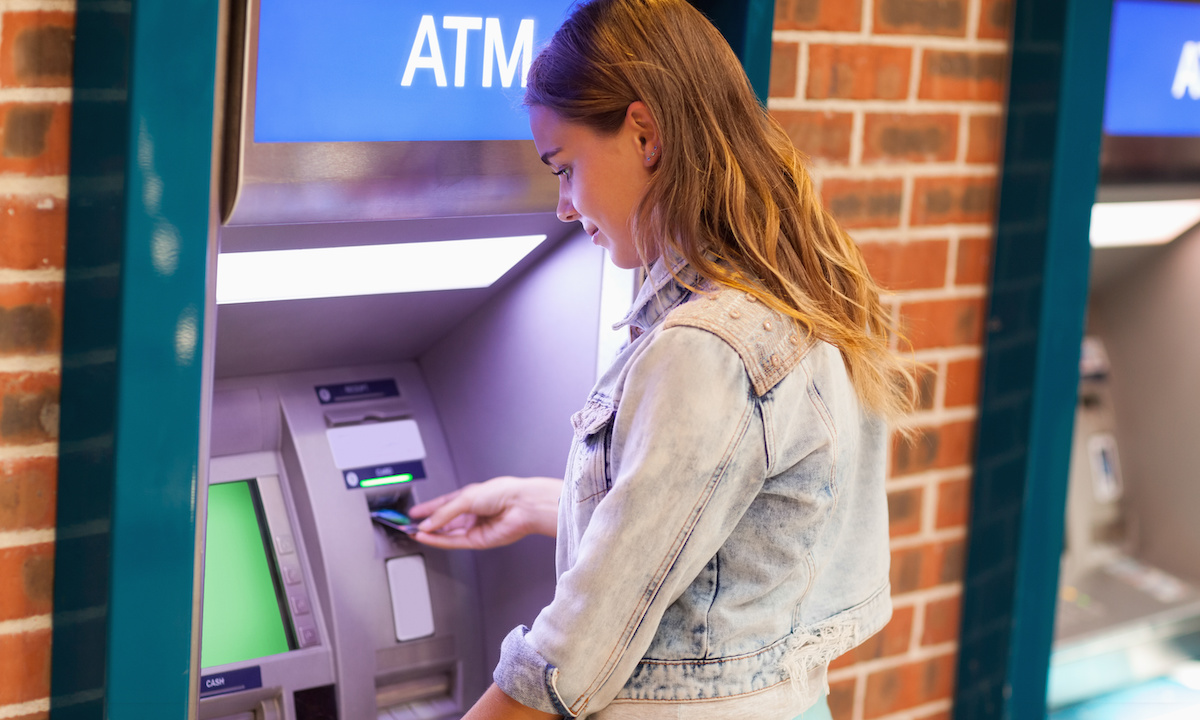
Brink's says AI-driven forecasting can reduce total ATM cash demand by 30-40%, freeing capital tied up in idle machines. H2O.ai and Hyosung detail models that predict demand to within 15%.
Banks face a persistent tradeoff with the cash machines that still serve millions of customers. Either they overstock ATMs with cash and leave capital sitting idle in a vault on wheels, or they understock and risk an outage, an extra armored car run, or frustrated customers at empty machines. Artificial intelligence is starting to narrow that tradeoff by treating it as a forecasting problem rather than a guessing game.
Brink’s, the cash-logistics company, said smarter forecasting alone can cut total ATM cash demand by 30% to 40%, freeing up capital that used to sit locked in a machine instead of earning a return. The company combines cash supply, branch inventory forecasting, order optimization and cash monitoring into one system, it said on its website. Brink’s analyzes future cash requirements seven to 10 days in advance, giving inventory managers enough lead time to anticipate a spike or a dip before it happens.
The reduction comes down to timing. A bank that knows an ATM near a stadium will see a surge before a big event can pre-position cash there instead of discovering the shortfall after customers hit an unavailable screen. For a slower machine, a bank can stretch the interval between armored car visits instead of restocking on a fixed schedule, cutting transportation and insurance costs without raising the risk of a cash-out.
H2O.ai, an enterprise AI software company, builds cash-demand models for individual ATMs using historical withdrawal patterns, paydays, holidays and regional seasonal trends, achieving forecast accuracy within roughly 15% on average, the company said on its website. That precision lets a bank stock a machine closer to what it needs on a given day instead of padding every ATM with a buffer sized for the worst case.
Hyosung Americas, an ATM and cash-recycling technology provider, is applying AI at the level of the individual machine. Its systems analyze historical transaction data, nearby events and seasonal fluctuations to predict the optimal cash balance for each ATM in real time, minimizing idle cash while reducing refill frequency, Hyosung said in a January blog post. Cash recycling, letting an ATM redeposit and redispense customer cash rather than shipping it back to a vault, has cut transportation costs but made demand forecasting harder because it introduces more complex deposit and withdrawal patterns. Hyosung also uses AI to watch machines for early signs of mechanical trouble, flagging subtle sensor-level changes before a full failure, so a technician can diagnose and fix an issue in a single visit instead of two.
Cash has not disappeared the way many predicted. Cash accounts for 14% of consumer payments in the United States, more than 80% of consumers used it in the past 30 days, and 90% expect to keep using it, the Federal Reserve said Aug. 4 in its 2026 Diary of Consumer Payment Choice. That persistence keeps the ATM tradeoff alive, but the AI tools are starting to tip the balance.
The push to automate cash decisions extends beyond the ATM. The PYMNTS Intelligence report “Time to Cash™: A New Measure of Business Resilience” found in October that 70% of surveyed firms use at least one AI tool for cash flow management. Firms using agentic AI have automated as much as 95% of their accounts receivable processes, compared with 38% for businesses that have not integrated AI.
Drafted by a large language model from the source reporting linked above, then screened by automated publishing checks. It is not read by a journalist before publication. Some articles cite our Alpha Score. Verify prices and figures against the original source. Educational coverage, not personalized advice.