Stocks● Neutral
AI Compresses Film Budgets, But Human Control Remains the Bottleneck
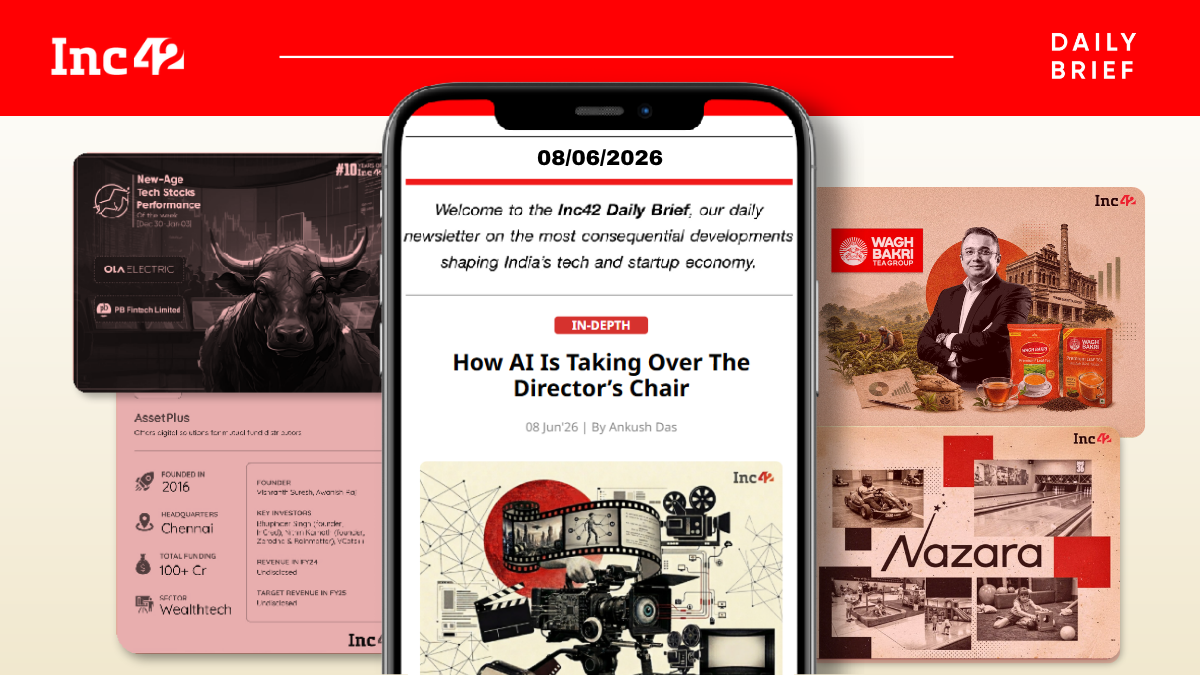
GenAI compresses film budgets by replacing physical sets and VFX renders, but human oversight remains essential for consistency and quality.
Continue with
AI Moves From Backstage Utility to Creative Engine
For years, filmmakers treated AI as a backstage utility for storyboarding, dubbing, and VFX cleanup. It was rarely central to the creative process. That has changed. Studios and creators are now using GenAI systems to build entire scenes and worlds that would once have been too expensive or technically difficult. JioStar's AI Mahabharat, which clocked millions of views, is one example of how the technology is ushering the film industry into an entirely new medium.
The Mechanism: Cost Compression Meets Creative Expansion
The deeper disruption is economic. Epics, fantasy worlds, war sequences, and stylised cinematic universes have traditionally demanded huge budgets, large crews, and long timelines. AI is beginning to compress those constraints, lowering the cost of experimentation and making storytelling more accessible to smaller studios and independent creators. The mechanism is straightforward: GenAI replaces or reduces the need for physical sets, location shoots, expensive VFX renders, and large post-production teams for certain types of scenes.
The Caveat: Cheaper Does Not Mean Effortless
AI-native productions still require compute, proprietary workflows, middleware, refinement, and human oversight. In many cases, the biggest expense remains people, not models. Even as generative video matures, the hardest problems are consistency, controllability, and cinematic coherence. Studios still rely on directors, editors, VFX artists, and production designers to preserve intent and quality. This is why the emerging model appears to be hybrid – AI is expanding scale and flexibility, while humans retain authorship and judgement.
Practical rule: The studios that win in this transition will be those that build proprietary AI pipelines while retaining creative control, not those that outsource both.
Startups Fill the Gap: AI-Native Studios and Infrastructure
AI startups are carving out a niche in filmmaking by building AI-native studios, tools, and infrastructure that go beyond traditional production workflows. This has enabled faster iteration, lower costs, and entirely new storytelling formats designed specifically for scalable cinematic experiences.
What This Changes for Production Economics
The table shows where the compression is real and where it is not. The biggest savings come from eliminating physical production costs. The smallest savings come from the human oversight layer, which remains essential.
The AI Edge: Faster Iteration, Lower Barriers
AI startups are building tools that go beyond traditional production workflows. These platforms allow for faster iteration on storyboards, scene composition, and character design. A director can now test multiple visual approaches in hours rather than weeks. This speed advantage is most valuable for independent creators and small studios that cannot afford long development cycles.
The Hybrid Model: Why Human Control Still Matters
Even as generative video matures, the hardest problems are consistency, controllability, and cinematic coherence. Studios still rely on directors, editors, VFX artists, and production designers to preserve intent and quality. This is why the emerging model appears to be hybrid – AI is expanding scale and flexibility, while humans retain authorship and judgement.