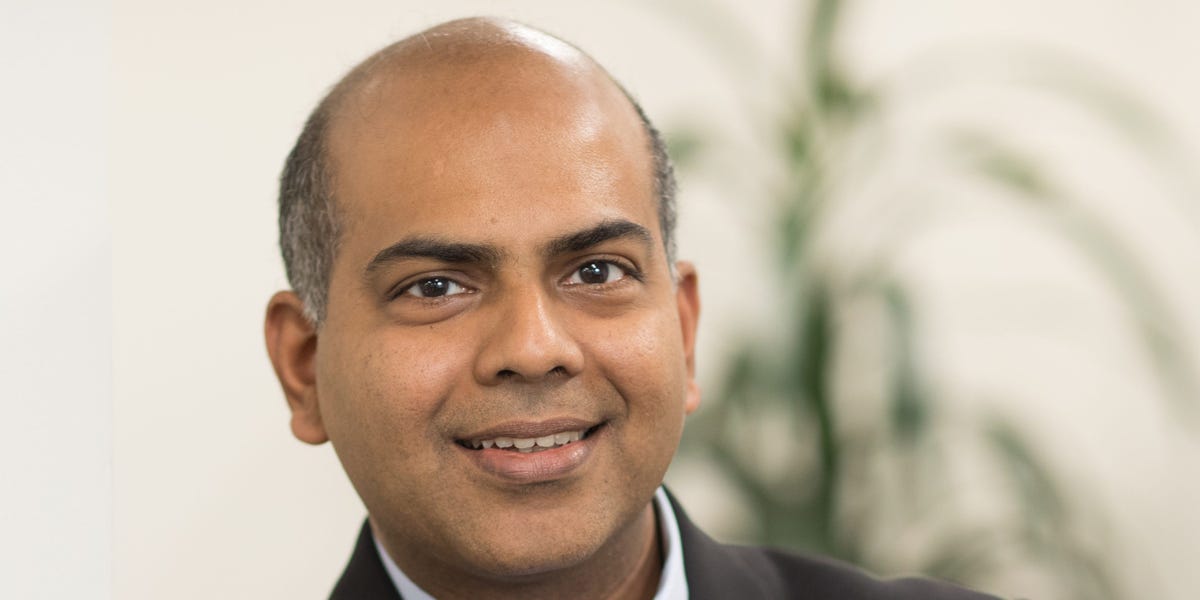
The artificial-intelligence buildout is using financial tactics that echo Enron's, according to a technology professor who studies the parallels. That does not mean the boom is heading for a crash, he said.
Ram Bala, an associate professor of AI and analytics at Santa Clara University, told Business Insider this week that the AI buildout replicates three Enron-like mechanisms, all entirely legal. He pointed to two in particular: off-balance-sheet debt through private credit and mark-to-model demand projections. A third, circular financing, also appears.
"The AI buildout is replicating versions of all three, entirely legally, and that is exactly why it deserves attention," Bala said.
Private credit plays the same role now that Enron's special purpose entities did, he said. "It's the place where risk goes to become less visible." Private equity firms including KKR & Co. are helping finance the infrastructure. Nvidia gets paid upfront. Borrowers and their lenders carry the default risk. Because private credit is funded through pension funds, "the tail risk lands on households," Bala said.
KKR, which carries an Alpha Score of 52 out of 100 (rated Mixed by AlphaScala), is one of the firms underwriting the buildout. Nvidia, the chip supplier at the center, holds an Alpha Score of 79 (Strong) and trades near $225 a share.
On the demand side, the buildout is "financed against demand curves that are marked to model, not to market," Bala said. He pointed to Anthropic CEO Dario Amodei's comment that a small error in demand projections could separate success from bankruptcy. "When the smartest guys in this room are that candid about forecast fragility, leveraged borrowers underwriting to the optimistic case should give everyone pause," Bala said.
Circular-financing deals – Nvidia investing in OpenAI, which then uses the cash to buy Nvidia chips – amount to vendor financing, common in capital-intensive industries. That can increase market liquidity and generate value. "Done too much with uncertain outcomes, it can be risky," Bala said.
Investor Michael Burry of "The Big Short" fame has been a vocal skeptic. On X this week, he told his two million followers that "history is repeating" and directed them to the Enron book "The Smartest Guys in the Room." In another post, Burry said the situation is "orders of magnitude more dangerous to the economy and investors than Enron."
Bala said he does not see this boom as a classic bubble. Long-term demand for AI could justify the current financial strategies, he said. "Only time will tell who is right."
The next quarterly reports from NVDA and its major customers, along with private credit performance data, will offer the clearest view into whether the financial engineering is containable or compounding.