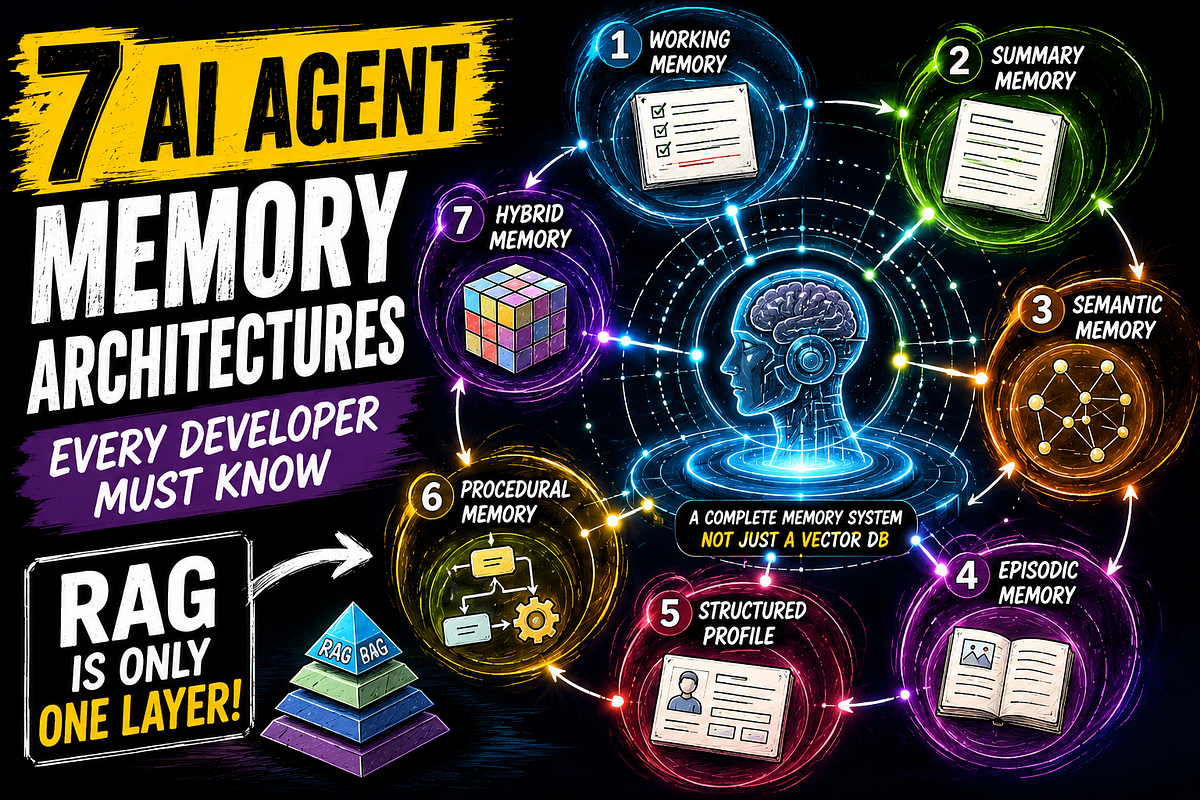
A new wave of AI agent memory architectures is pushing past the retrieval-augmented generation (RAG) approach most developers start with. Production systems now layer short-term, episodic, and procedural memory on top of vector databases, creating a more complex inference stack that demands higher compute and storage throughput.
NVIDIA (NVDA) stands to benefit directly. The shift from simple RAG to multi-layer memory increases the number of attention operations per query and raises context-window requirements. Each new architecture layer adds latency and memory footprint, which in turn pushes workloads toward faster GPUs and larger HBM pools. AMD and Intel face the same opportunity but trail in software ecosystem maturity.
Infrastructure providers are already adapting. Pinecone, Weaviate, and Redis have updated their vector-database products to handle tiered memory reads. The larger implication is that AI infrastructure spend, previously concentrated on training, will see a sustained lift from inference as these architectures become standard. Gartner estimates that inference compute will account for 60% of AI hardware spending by 2027, up from 35% today.
For now, the immediate catalyst is developer adoption. GitHub repositories referencing multi-agent memory systems have tripled year-over-year, according to a recent analysis by MLOps startup Arize AI. That pipeline will translate into cloud and data-center orders within two to three quarters.