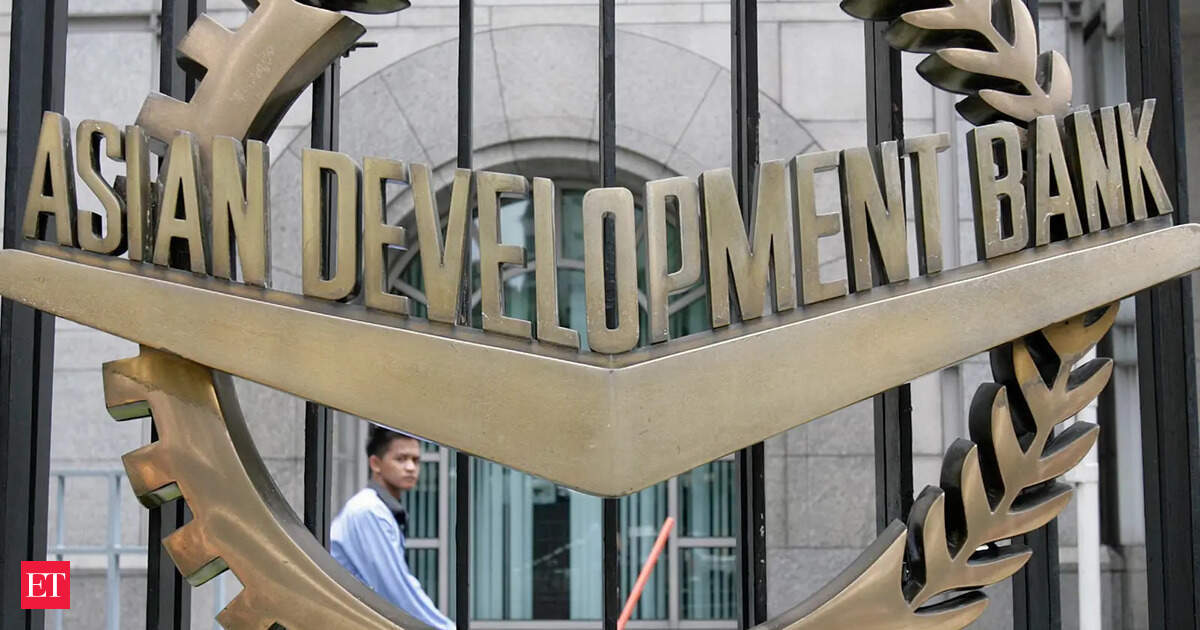
The ADB is under pressure to expand capital and adopt a transformational strategy to address regional development needs amid ongoing geopolitical challenges.
Alpha Score of 57 reflects moderate overall profile with moderate momentum, moderate value, moderate quality, moderate sentiment.
The Asian Development Bank (ADB) is facing renewed calls from Indian government leadership to fundamentally alter its operational framework. Pankaj Chaudhary, Minister of State for Finance, formally requested that the multilateral institution accelerate capital expansion efforts and shift toward a more transformational approach to regional development. This directive arrives as the institution navigates a complex landscape defined by persistent geopolitical friction and the urgent requirement for sustainable infrastructure financing across its member nations.
The core of the request centers on the ADB's capacity to deploy capital effectively in an environment where traditional funding models are increasingly strained. By advocating for a transformational approach, the Ministry of State for Finance is signaling that incremental adjustments to lending volumes are no longer sufficient to address the scale of regional needs. This implies a push for the bank to leverage its balance sheet more aggressively, potentially through expanded risk-sharing mechanisms or structural changes to how it categorizes and manages its capital reserves. For those following stock market analysis, the shift in multilateral development bank policy often serves as a leading indicator for infrastructure spending cycles in emerging markets.
The mention of geopolitical challenges suggests that the ADB is expected to prioritize projects that enhance supply chain resilience and energy security. When multilateral institutions pivot toward these themes, it typically results in a reallocation of resources away from legacy projects and toward high-impact, cross-border initiatives. This transition is not merely about the volume of capital but the quality and speed of deployment. If the ADB adopts these recommendations, the immediate impact will be felt in the procurement and construction sectors across Asia, where project timelines are often sensitive to the availability of low-cost, long-term multilateral financing.
Translating these high-level policy requests into actionable institutional change remains a significant hurdle. Multilateral banks are notoriously slow to adjust their risk appetite, and any move to expand capital deployment usually requires a delicate consensus among a diverse group of member states with competing economic priorities. The primary risk for the market is that the call for a transformational approach remains rhetorical, leading to a period of institutional uncertainty where project approvals stall while the bank debates its new mandate.
Investors should monitor the upcoming board meetings and subsequent policy filings from the ADB. If the bank announces specific reforms to its capital adequacy framework or introduces new, specialized lending facilities, it will confirm that the institution is moving beyond the status quo. Conversely, a lack of concrete policy updates in the next two quarters would indicate that the requested shift is facing significant internal resistance, potentially limiting the expected surge in regional infrastructure development. The ability of the ADB to reconcile these demands with its existing risk management protocols will determine whether this push for expansion results in tangible economic growth or remains a secondary policy objective.
AI-drafted from named sources and checked against AlphaScala publishing rules before release. Direct quotes must match source text, low-information tables are removed, and thinner or higher-risk stories can be held for manual review.