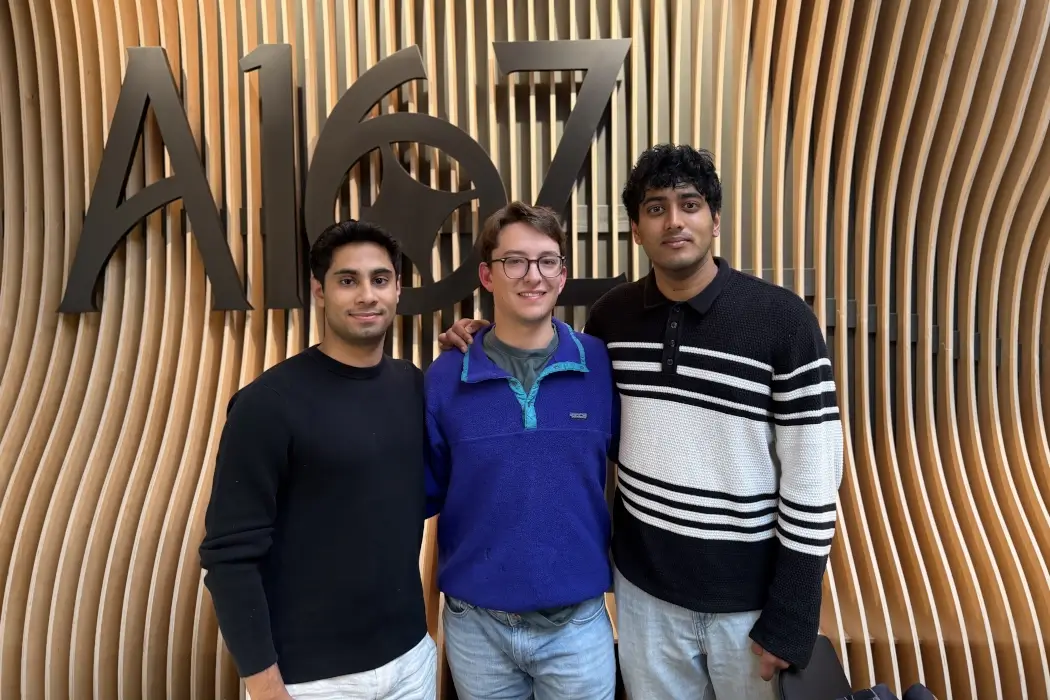
Toronto-based Blueprint, an AI startup that pivoted from building autonomous delivery robots to helping people design physical devices from text prompts, has raised $1 million USD ($1.4 million CAD) in pre-seed funding. The round came from a16z speedrun, Founders Inc., and undisclosed angel investors.
Blueprint announced the funding alongside a tally of 175,000 users who have joined its platform in the three months since it launched. The company's software lets users describe a gadget in plain language and get back a full design and build plan: wiring diagrams, mechanical specs, a list of off-the-shelf parts with purchase links, and step-by-step assembly instructions.
Co-founder and CEO David Feldt told BetaKit in an interview that traditional hardware design is "quite slow and tedious and scattered" and relies heavily on human expertise. The company's goal, he said, is to let anyone "take any idea and bring it to reality," regardless of technical skill.
Blueprint's pivot from delivery robots to a design tool came after the founders realized their internal AI could be productized. The startup now prohibits users from designing guns, ammunition, or explosives. It does allow compound bows, which it classifies as consumer sporting goods.
Customers have used the platform to generate plans for more than 200,000 hardware projects, including augmented reality glasses, drones, go-karts, MP3 players, robotic arms, and a pickleball launcher. One client runs a medical device company in India and used Blueprint to prototype a urine-sampling machine, COO Sajeel Purewal said.
The pre-seed round includes $250,000 USD in SAFEs from November and another $850,000 USD in SAFEs closed in May. Feldt, Purewal, and CTO Pranav Seelam are currently in San Francisco for the a16z speedrun program and plan to return to Toronto afterward.
Users fall into two camps: hobbyists building devices for personal use and founders prototyping products they hope to sell. Feldt said Blueprint functions as a research and development tool for small teams. "With Blueprint, you're making 'one of ones'–you're not making products that can scale yet," he said.
The startup monetizes through monthly and annual subscriptions. Its near-term focus is improving parts selection and using the data its users generate to sharpen design quality. Purewal described the long-term vision as a blend of Lovable and Amazon: either sourcing and buying components directly for users, or orchestrating full manufacturing and delivery.
The company faces competition from established CAD software and other AI design tools, but the speed of user adoption has drawn venture backing. The a16z speedrun program is a Silicon Valley accelerator that provides funding and mentorship to early-stage startups.
Blueprint's team of three plans to expand hiring after the program. The founders have not disclosed revenue figures but said the subscription model is gaining traction among the hobbyist and prototyping crowd.