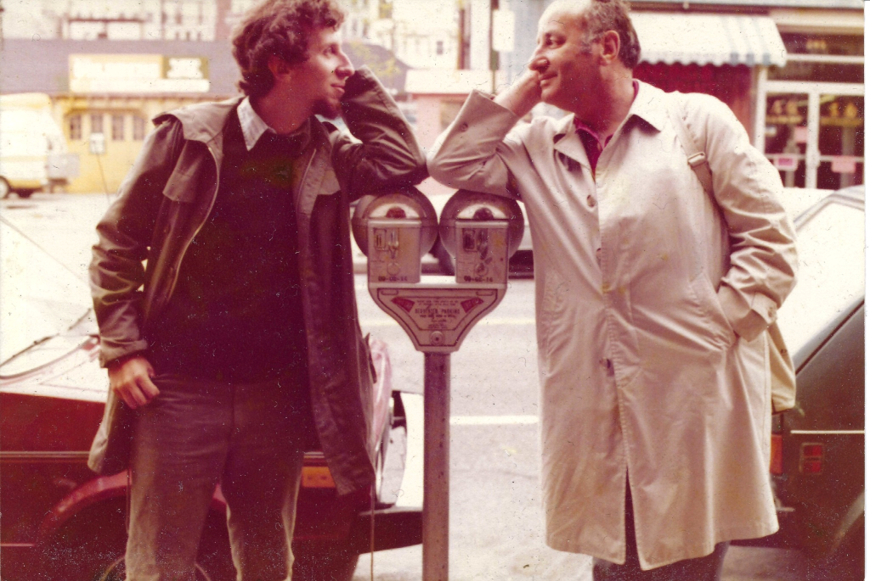
Mark A. Cohen traces two innovations by his father, a New York City sanitarian, and the patent he never received for a device that prevented carbon monoxide poisonings.
Mark A. Cohen, an intellectual property lawyer who taught Chinese IP law at Fordham Law School, has written an essay tracing two innovations by his father, Ronald Cohen, and what they reveal about the role of patents in public health and safety. The essay is dedicated to Ronald Cohen ahead of his 100th birthday on August 27.
Ronald Cohen was a sanitarian for New York City in the early 1950s. Inspecting tenements in Hell's Kitchen, he saw a recurring hazard: carbon monoxide poisoning from blocked flues on gas space heaters. He and a co-inventor developed a blocked-flue safety control that would shut off the heater if dangerous gases backed into an apartment.
After a meeting with the New York City Health Commissioner, the city decided not to seek a patent. The decision reflected a view that a patent mainly served to collect royalties, Cohen writes. A major U.S. company licensed the technology anyway, without identifying the inventors. For Ronald Cohen, that missed a second function of the patent system: attribution.
"A patent identifies its inventors and places their contribution in a permanent public record and in the sequence of improvements to the constitutional 'useful Arts,'" Cohen writes. His father wanted the invention used to protect people. He also wanted credit for having created it.
About a decade later, in 1962, Ronald Cohen, Benjamin L. Novak, and Epifanio Sineno published a paper in the journal The Sanitarian describing the invention and its results. Among unapproved gas space heaters in New York City, reported carbon monoxide incidents fell from 17 in 1956 to two in 1960. Fatalities dropped from seven to zero. After the city enacted Local Law 79 in December 1957, requiring approved heaters in multiple dwellings, the authors reported that "not a single case" of carbon monoxide poisoning was traced to an approved gas-fired space heater.
Cohen reads the 1962 paper as a partial substitute for the patent his father never had. "Knowing how much attribution mattered to Dad, I now believe that the article was in part an effort to create the public record that the City's decision not to patent had denied him 10 years earlier," he writes.
Ronald Cohen's second innovation came in 1984, after he had moved to Middlesex Borough, New Jersey. He and colleagues developed a system to give emergency responders immediate access to information about industrial hazards during incidents. Using a desktop computer and a CB radio network, the system could connect through the New Jersey State Police to FEMA. It was tested during three major emergencies in 1985. After a chemical plant explosion, responders had a computerized diagram of the facility and details on chemical storage, tanks, hydrants, and protective equipment.
Cohen draws a line from his father's work to his own career in intellectual property law. "Dad taught me that innovation begins with seeing real problems that others have learned to tolerate," he writes. "He taught me to solve these problems. He taught me to persist, even if that initial recognition passed you by."
Prepared with AlphaScala editorial tooling from the source reporting linked above. Indexable analysis may include a cited Alpha Score value. Publishing checks screen each story before release. Educational coverage, not personalized advice.