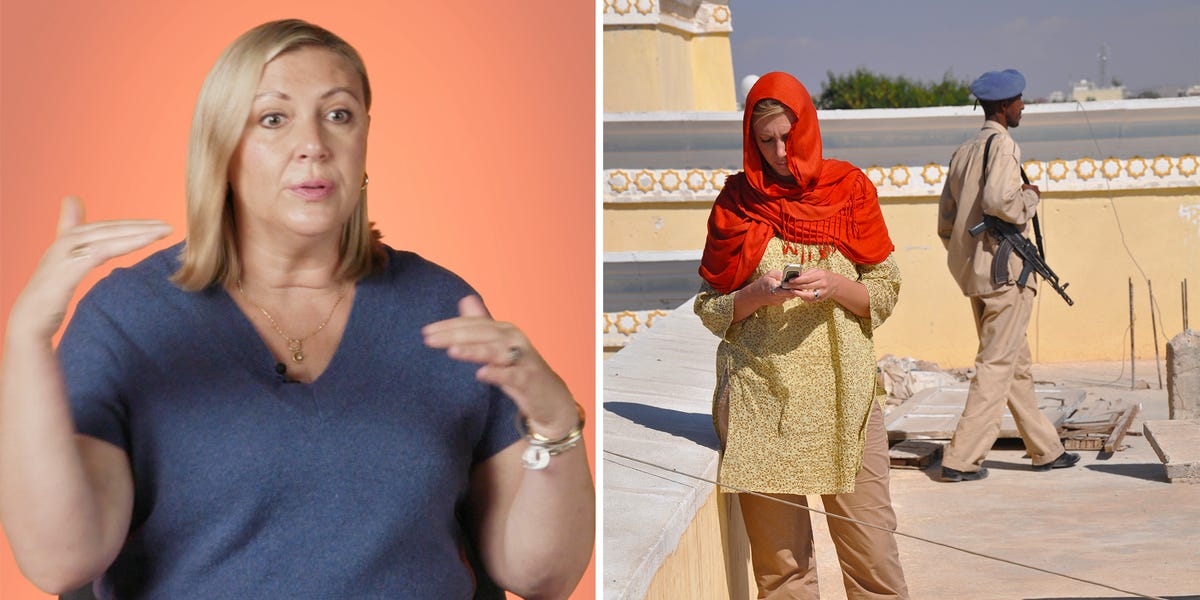
Jessica Buchanan spent 93 days as a Somali pirate hostage. She describes the mental discipline that kept her alive and the PTSD that followed her rescue.
Jessica Buchanan, a US aid worker, spent 93 days as a hostage of Somali pirates before a classified SEAL Team Six raid pulled her out. She spoke with Business Insider about the abduction, the mental toll of captivity, and what she calls the challenge of "surviving survival" after the rescue.
Buchanan was taken at gunpoint on October 25, 2011, while finishing a routine field mission in Somalia, where she worked as an education advisor for a nongovernmental organization. She was held for ransom outdoors in harsh conditions, and her health declined over the months before the raid. The rescue itself was a high-stakes operation authorized by President Barack Obama, but Buchanan's account focuses on the psychological preparation required to endure captivity, she said.
She described the mental fortitude she had to develop to stay alive – a skill set she argues is just as critical as the physical endurance of the ordeal. "You have to find a way to keep your mind from collapsing into the fear," she told the outlet. Buchanan said she focused on small routines: counting the days, recalling memories of her family, and refusing to let her captors see her despair. That discipline, she said, was what kept her sane through the uncertainty.
The rescue did not erase the trauma. Buchanan detailed the complexities of what she terms "surviving survival" – the PTSD, the hypervigilance, the difficulty of reacclimating to a normal life after intense trauma. She said many people assume that being rescued is the end of the story. In reality, the hardest part often starts after the helicopters leave. She described night terrors, a constant sense of threat, and the challenge of trusting people again.
Her experience is documented in "Impossible Odds," the 2013 book she coauthored about the kidnapping and rescue. She has since written "How to Survive Survival," published in 2025, which addresses the long recovery that followed long after the rescue teams left. Buchanan said she wrote the second book because she found little guidance for the psychological aftermath of surviving a life-threatening event. She wanted to offer a framework for others facing similar struggles.
Buchanan's account offers a rare first-person perspective on a hostage crisis that ended in a military intervention. The lessons extend beyond her own story. She argued that the same mental tools – compartmentalization, purpose, routine – apply to anyone facing a protracted crisis, whether a hostage, a patient with a severe diagnosis, or a soldier in combat. The key, she said, is not to deny the fear but to keep it from becoming the only thing you see.
Drafted by a large language model from the source reporting linked above, then screened by automated publishing checks. It is not read by a journalist before publication. Some articles cite our Alpha Score. Verify prices and figures against the original source. Educational coverage, not personalized advice.