Stocks● Neutral
7 mistakes home bakers make, from a pastry school grad
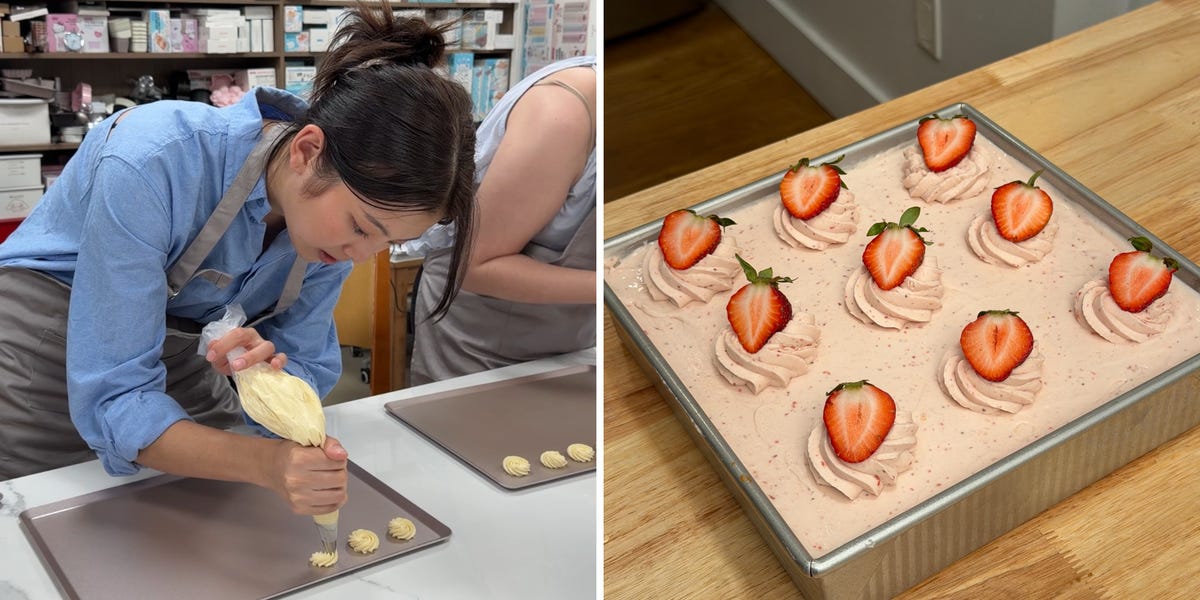
A pastry school grad shares why measuring cups fail, expired leaveners ruin texture, and opening the oven door too early collapses delicate bakes.
Continue with
I trained in pastry in France, took a baking course in China, and have worked in New York City bakeries. Over years of making cakes, croissants, and cookies, I have picked up habits that separate a reliable result from a disappointing one. The difference is rarely talent. It is usually a few specific missteps.
Here are the seven most common mistakes I see home bakers make, and how to fix them.
1. Using measuring cups instead of a scale
I avoid measuring cups for almost everything. A cup of flour can weigh anywhere from 120 to 150 grams depending on how it is scooped, how tightly it is packed, and whether the top is leveled. That 25% swing is enough to turn a tender cake dry or a sturdy cookie into a puddle.
A kitchen scale solves the problem. Weighing ingredients gives the same result every time. It also makes scaling a recipe up or down trivial. Halving a recipe that calls for 237 grams of flour is easy. Halving a recipe that calls for one cup of flour is a guess.
2. Changing ingredients without understanding their job
Once a batter goes into the oven, a series of chemical reactions take over. Changing an ingredient without knowing what it does can derail those reactions.
Sugar is a good example. It does not just add sweetness. Sugar attracts and holds moisture, helps baked goods brown, and affects how cookies spread and cakes rise. Cut the sugar by a third and you might get a dessert that is less sweet. You will also get something drier, denser, paler, and tougher. The same logic applies to swapping butter for oil, or reducing eggs.
I always follow a recipe exactly the first time. When I do make changes, I adjust one ingredient at a time and think through what it does in the finished bake.
3. Overmixing the batter
Many home bakers mix their dough or cake batter too long. That develops gluten, which makes the final product tough and dense instead of tender.
For most cakes, muffins, and quick breads, the goal is to mix just until the flour disappears. A few small lumps are fine. I often switch from a stand mixer to a spatula for the last few turns, folding the remaining dry ingredients in by hand.