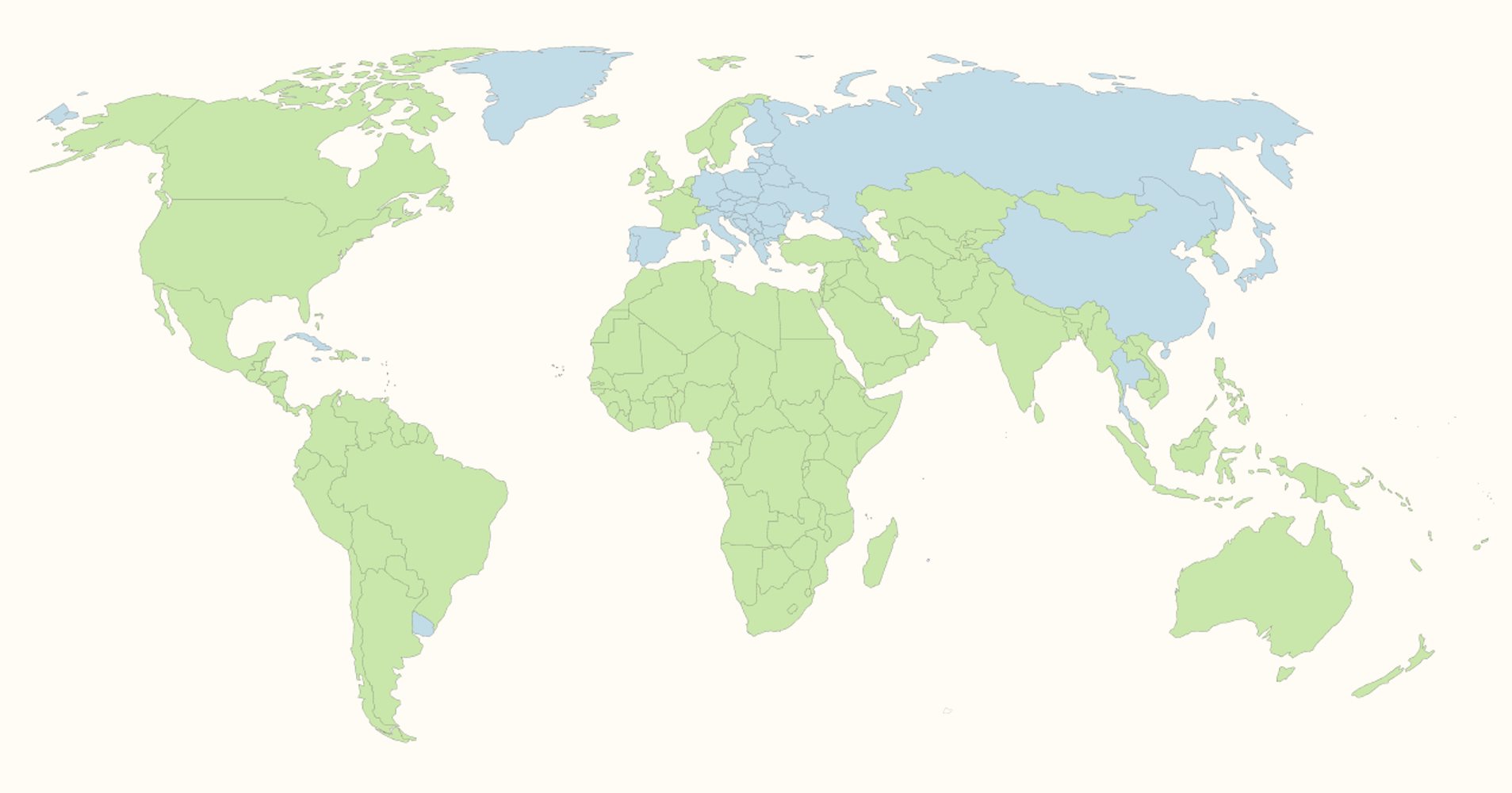
64 countries passed peak population by 2026. Falling birth rates, not temporary shocks, drive the shift. By 2100, South Korea and China may halve. Migration is the wildcard for the US.
More than 60 countries have already seen their populations peak, a shift driven by falling birth rates that is reshaping long-term economic growth, labor markets, and fiscal math. The United Nations' medium-variant projections show 64 nations and territories had passed peak population by 2026.
Nearly all of them sit in Europe and East Asia, where fertility rates dropped below replacement level decades ago and have stayed there. Many Eastern European countries compounded the decline with emigration. Thailand, a Southeast Asian outlier, saw its fertility rate fall below two births per woman in the early 1990s and now sits at 1.2. Uruguay in South America is at 1.4.
The timing of each peak differs. Japan and Italy crested more than a decade ago. South Korea and China could see their populations halve by 2100 under current projections. Italy could shrink 40%, Spain and Thailand a third.
By the 2050s, much of South America is expected to hit peak population. By the 2060s, much of South Asia – including India, currently the world's most populous country – may follow.
The projections hinge on three assumptions: fertility rates, life expectancy, and migration. All three are hard to forecast 50 years out, and migration is the most volatile factor.
The United States never appears in the peak map even by 2100, but only because the UN assumes enough immigration to offset low birth rates. With zero net migration, the U.S. would peak soon and lose 60 million people by 2100, a 130 million gap versus the migration-inclusive scenario.
For countries like South Korea, the decline looks baked in. Even aggressive assumptions – a rebound in fertility, a jump in life expectancy, or a surge in immigration – cannot stop the contraction under plausible scenarios, UN researchers concluded.
The demographic transition carries direct consequences for equity markets. A shrinking workforce cuts potential GDP growth. Older populations shift demand from housing and durables toward healthcare and income-generating assets. Pension systems face pressure when fewer workers support more retirees.
Countries that peak later – India and much of sub-Saharan Africa – may hold a demographic dividend for longer, but even there fertility rates are falling. The global trend is toward stable or shrinking populations, a structural shift with no historic precedent.
The full interactive tool from the UN allows users to stress-test how changes in fertility, mortality, or migration alter the population path. The base case already points to a world where most major economies are shrinking by the second half of the century.
Drafted by a large language model from the source reporting linked above, then screened by automated publishing checks. It is not read by a journalist before publication. Some articles cite our Alpha Score. Verify prices and figures against the original source. Educational coverage, not personalized advice.