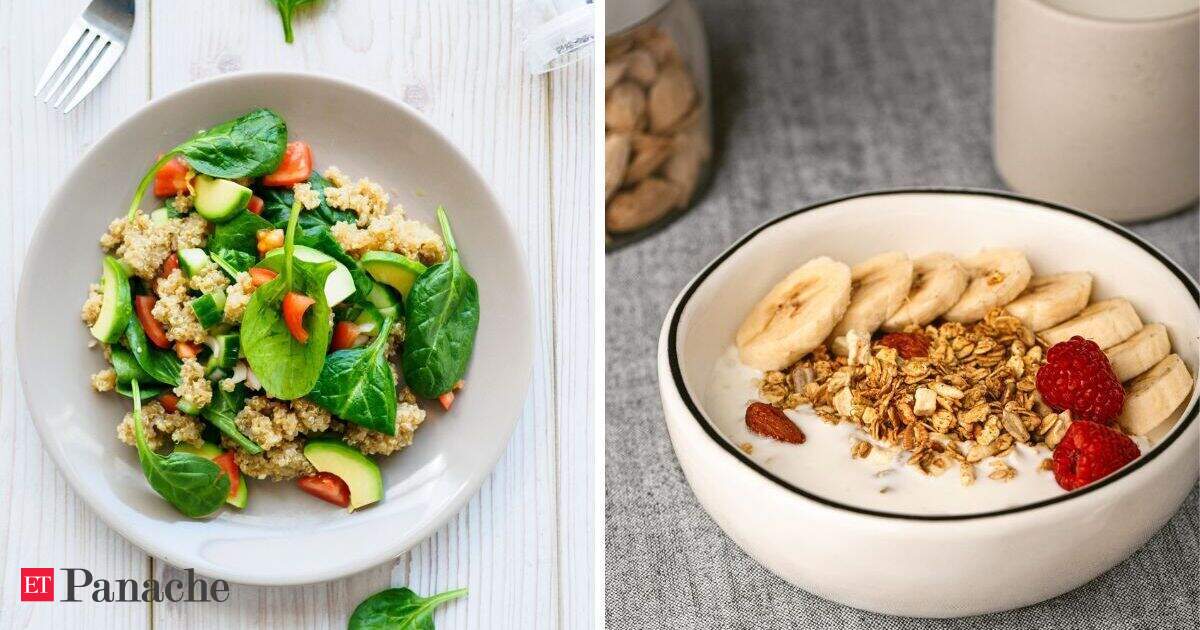
Weight loss plateaus often trace back to foods marketed as healthy but carrying hidden calorie loads. Celebrity nutritionist Suman Agarwal named five common culprits: avocado, nuts, smoothies with toppings, muesli, and salads with heavy dressings. Each requires careful portion control, not elimination.
Avocado delivers a dense 160 calories per 100g. A single medium fruit adds about 240 calories. Pair that with toast or eggs, and the breakfast alone can hit 500 calories before any other meal. Athletes or active dieters can absorb that; a sedentary worker may not.
Nut and nut butter density is worse. Almonds run 579 calories per 100g. Two tablespoons of peanut butter – a common smoothie addition – add roughly 190 calories. Three such servings across the day equal an extra meal.
Smoothie bowls are the worst offender. A base of banana, mango, and oat milk already carries 300-400 calories. Toppings of granola, coconut flakes, and seeds pile on another 200. Consumers treat the bowl as a snack when it functions as a full meal's energy.
Muesli looks wholesome but typical 50g servings supply 200 calories with added sugar. Many pour 100g without measuring.
Salads with creamy dressings also disguise calories. A Caesar dressing at two tablespoons adds 160 calories. Add croutons, cheese, and grilled chicken, and the 'light' lunch passes 600 calories.
The mechanism is simple: calorie density plus portion drift. The body does not register liquid calories from smoothies the same way it does solid food, so satiety lags. Nuts and avocado lack the volume that triggers fullness signals.
Agarwal's advice: measure everything for two weeks. Use a food scale, not eyeballs. The simple read is "eat less avocado." The better read is "track the energy density of everything that touches your plate."