3,000 LPG Cylinders Lost in Mumbai Floods: The Real Risk
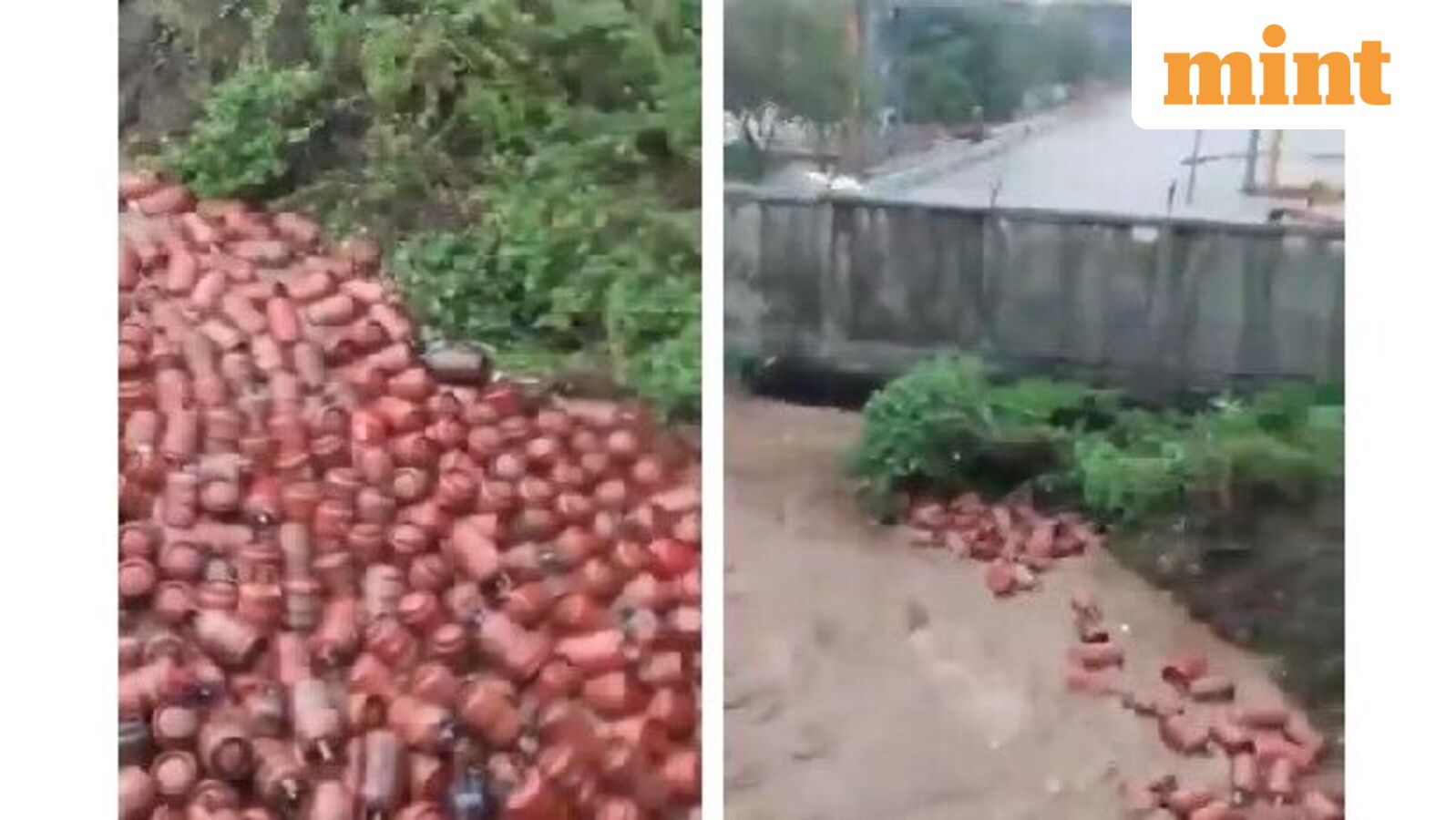
3,000 LPG cylinders swept into the Patalganga River after an HPCL plant wall collapsed in Raigad. Search teams are tracking the flow. The real risk is not the viral video, it is what the missing cylinders mean for local supply and safety.
Heavy rain in Maharashtra washed about 3,000 LPG cylinders from an HPCL bottling plant into the Patalganga River. The protective wall at the Chavane facility in Raigad district collapsed under the downpour, sending both filled and empty cylinders into the floodwaters. A video of the cylinders floating on the Mumbai-Goa Highway has been circulating on social media.
Khalapur Police Inspector Abhijit Bhujbal confirmed the incident. The district administration issued an urgent warning: residents along the riverbanks should not touch any cylinder they find. "Do not touch it under any circumstances, nor should any attempt be made to move it or take it home," Raigad District Collector Kishan Jawale said, according to ANI.
The administration's statement stressed that the technical condition and gas content of the cylinders cannot be determined after being swept away. Handling or tampering with them could trigger a gas leak or explosion.
Search teams from the administration, the Disaster Management Department, and HPCL are tracking the Patalganga River to recover the cylinders. Authorities have asked anyone who spots a cylinder to inform the local police or the disaster management office immediately.
The incident raises a question that goes beyond the immediate safety advisory. A bottling plant's yard should not flood so easily that its inventory empties into a river. The plant sits in Chavane, Panvel taluka, an area that has seen repeated flooding during heavy monsoon seasons. The wall collapse points to a vulnerability in industrial infrastructure that is separate from the weather event itself.
For anyone tracking commodities analysis, the episode is a reminder that physical supply chains face risks that do not show up in futures curves or inventory reports. An LPG bottling plant losing 3,000 cylinders to a river is not a price event. It is an operational event that, if repeated, could affect local distribution. The plant's ability to refill and dispatch cylinders depends on recovering the lost stock and repairing the flood wall. Until then, the missing cylinders represent both a safety hazard and a gap in the local supply chain.
The district administration has not said how many of the 3,000 cylinders were filled versus empty. That distinction matters. Filled cylinders pose a greater explosion risk if damaged. Empty cylinders are a recovery problem but not a safety crisis. The search operation will determine the balance.
For now, the immediate risk is to anyone who finds a cylinder and decides to keep it. The administration's warning is direct: deposit it at HPCL, an HPCL dealer, the Tehsildar office in Khalapur or Pen, or the Sub-Divisional Officer's office in Pen. Do not try to use it.
The broader read-through for the sector is about infrastructure resilience. A single wall collapse at one plant does not change India's LPG supply picture. It is a data point on how much of the distribution network sits in flood-prone zones. The monsoon season is not over. More rain could test other facilities.
Drafted by a large language model from the source reporting linked above, then screened by automated publishing checks. It is not read by a journalist before publication. Some articles cite our Alpha Score. Verify prices and figures against the original source. Educational coverage, not personalized advice.