Stocks● Neutral
30-Year Yield at Highest Since 2007 Puts Housing at Risk
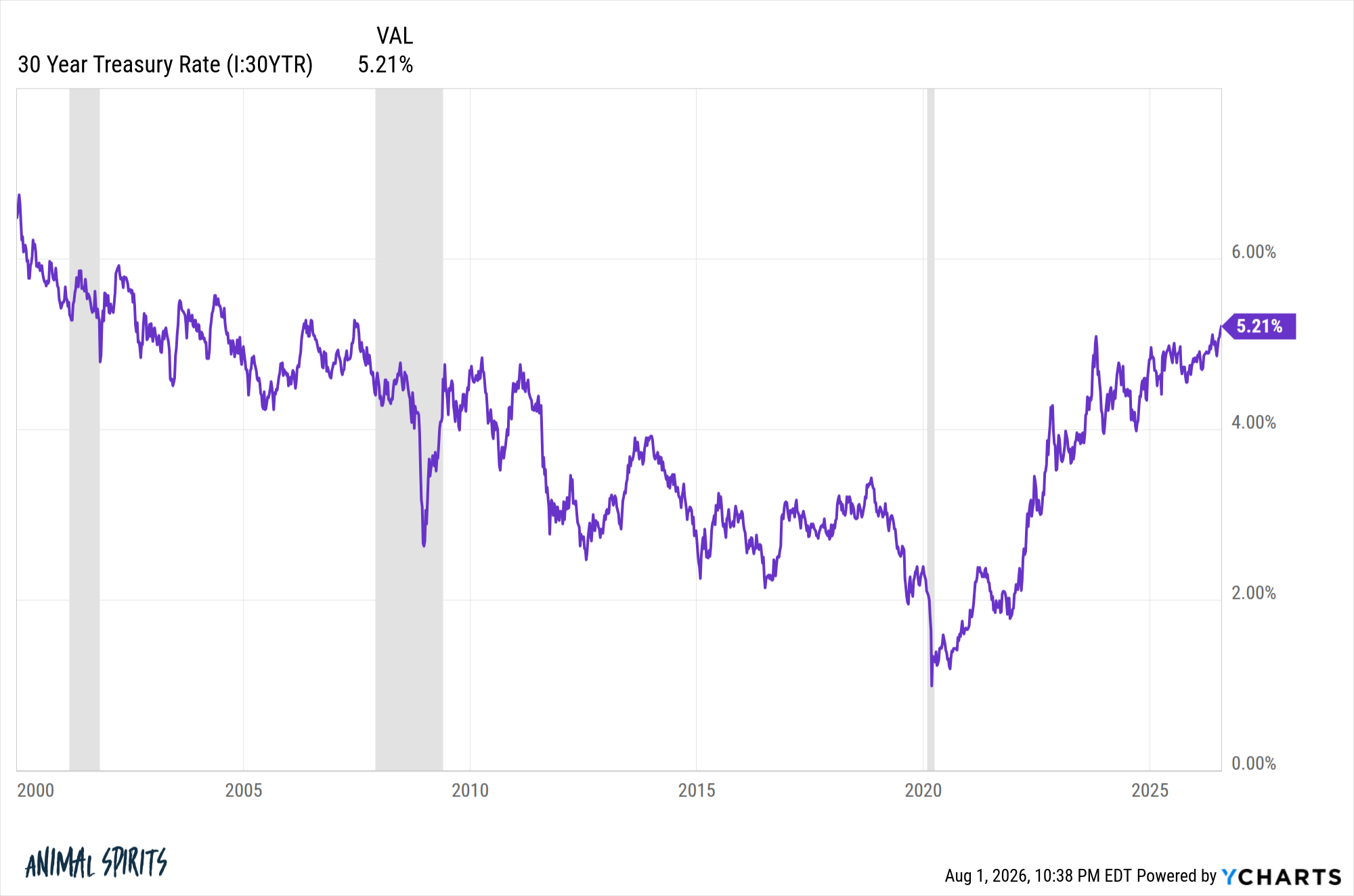
30-year Treasury yields are at their highest since 2007. Mortgage rates near 7%. The speed of the move, not the level, is the biggest risk to housing.
Continue with
Thirty-year Treasury yields are trading at their highest level since 2007. Mortgage rates are closing in on 7% again. The housing market is the clearest risk in the bond move.
The level of long-term rates is not the unusual part. The average long-bond yield over the past 50 years is 6.2%, and from 1977 through the summer of 2001, 30-year yields never dipped below the current range. What is unusual is the speed. Long bonds yielded about 1% at the Covid crash low. A move from roughly 1% to current levels in a few years, combined with sticky inflation and record government debt, changes how the move is read. Deficits keep running, and no credible plan to narrow them has emerged in Washington.
A sovereign debt crisis is not the base case. No liquid alternative to U.S. Treasuries or the dollar exists. The Treasury also funds itself across maturities, and short-dated bills make up a large share of the borrowing. The government can refinance into bills even if long-term demand softens. The failure mode would be a buyer's strike on T-bills, and nothing suggests that is close.