Three Singapore-listed REITs demonstrate the asset quality, tenant health, and balance sheet strength needed to sustain income through recessions and rate cycles.
The highest yield on the board can be tempting. It's also a familiar trap: if the income behind that headline number isn't sustainable, the payout vanishes when you need it most.
Long-term investors look past the biggest figure. They examine asset quality, tenant health, and balance sheet strength. Three Singapore-listed REITs demonstrate those qualities.
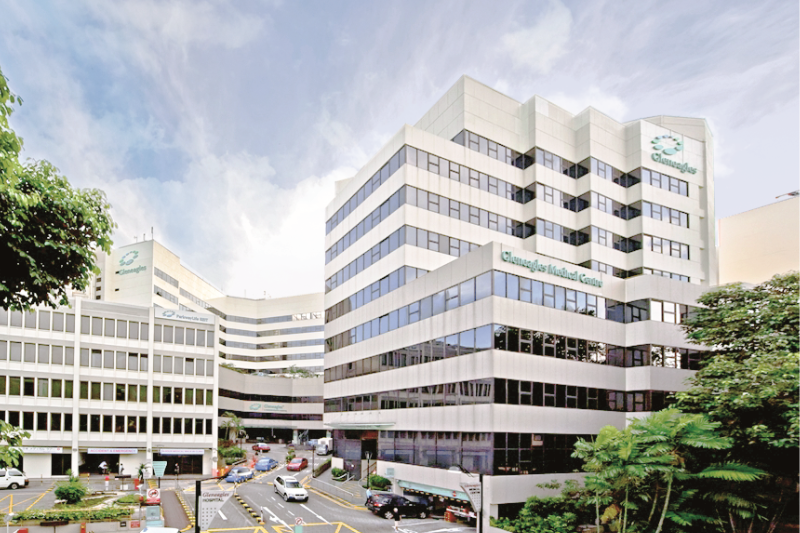
Parkway Life REIT owns healthcare infrastructure across Singapore, Japan, and France. Hospitals and nursing homes provide services that remain necessary regardless of economic conditions. The REIT's 73 properties, valued at S$2.56 billion as of 30 June 2026, benefit from long-term leases and structural demographic trends, particularly the aging population in Asia and Europe.
First-half 2026 gross revenue slipped 1.6% year on year to S$77.1 million, while net property income eased 2% to S$72.4 million. Japanese yen depreciation, a tenant exit affecting five Japanese nursing homes, and the divestment of its Malaysia portfolio drove the decline. Higher Singapore contributions partially offset the drop.
Distribution per unit jumped 14.6% year on year to S$0.0877 despite the lower revenue. The Singapore hospitals' Annual Rent Review Formula, step-up leases in France, and the absence of a prior-year tax provision drove the increase. Under the Singapore master lease running through 2042, minimum rent jumps 24.3% from S$79.7 million in FY2025 to S$99.1 million in FY2026. The REIT also completed the divestment of a Japanese nursing home at a 38% premium to its purchase price, with gearing at 33.8%.
CapitaLand Integrated Commercial Trust (CICT) provides exposure to prime retail, office, and integrated real estate across Singapore, Australia, and Germany. As one of Singapore's largest listed REITs, it leverages scale and geographic density in transport-linked commercial districts.
First-half 2026 gross revenue rose 7.5% year on year to S$846.8 million, with net property income up 8.7% to S$630.5 million. Income contributions from CapitaSpring's commercial component and Gallileo drove the performance, partially offset by the divestment of Bukit Panjang Plaza. Distributable income surged 13.3% to S$466.7 million, lifting DPU by 7.1% to S$0.0602 despite an enlarged unit base.
Portfolio occupancy improved to 95.6%, with retail at 97.7% and office at 94.4%. Rental reversions were positive across both segments, around 4% for retail and 6.5% for office. Aggregate leverage declined to 37.4%. Growth drivers include the integration of the Paragon acquisition, tenant commencement at Gallileo, and planned asset enhancements such as the S$160 million initiative at Plaza Singapura.
Mapletree Logistics Trust (MLT) owns and manages regional logistics and supply chain infrastructure across nine Asia-Pacific markets. The portfolio of 175 properties, with assets under management of S$13.1 billion, is leased to 989 tenants. Structural demand trends including regional trade growth, supply chain modernisation, and e-commerce fulfilment requirements support the portfolio.
First-quarter FY2027 gross revenue rose 0.8% year on year to S$178.9 million, with net property income up 2% to S$156.4 million. Revenue gains from a new Mumbai warehouse and the Joo Koon Hub, plus operational strength in Singapore and South Korea, offset currency headwinds and weaker performance in China. On a constant-currency basis, gross revenue and net property income grew 2.0% and 3.1% respectively.
Portfolio occupancy stood at 96.4%, with positive overall rental reversions of 0.9% (2.3% excluding China). MLT continues to pursue capital recycling and redevelopment opportunities, announcing the post-quarter divestment of three assets worth S$155 million, including 39 Changi South Avenue 2 at a 20.3% premium to valuation. Borrowing costs fell 2.7% year on year, with aggregate leverage holding steady at 40.5% and an average borrowing cost of 2.6%.
Combining healthcare, commercial, and logistics properties creates sector-level diversification. Weakness in consumer retail spending does not directly hit healthcare demand. Logistics performance relies on supply chain activity rather than office space utilisation.
Diversification alone is not enough. A static yield that fails to outpace inflation erodes purchasing power over time. Long-term investors evaluate REITs through the lens of business ownership: daily price fluctuations matter far less than occupancy stability, rent collection integrity, and cash flow durability. Selecting REITs with resilient operational drivers establishes a portfolio capable of delivering steady income growth across economic shifts.
Parkway Life REIT brings defensive healthcare stability. CICT delivers scale across prime commercial space. MLT taps into regional trade logistics. None are immune to rate shifts or economic bumps. Their fundamentals give them the power to sustain and grow their payouts for years to come.
This article is for informational purposes only and does not constitute financial advice. Investors should conduct their own research before making any investment decisions.
Drafted by a large language model from the source reporting linked above, then screened by automated publishing checks. It is not read by a journalist before publication. Some articles cite our Alpha Score. Verify prices and figures against the original source. Educational coverage, not personalized advice.