Stocks● Neutral
3% of Restaurant Sites Generate 81% of Incidents, Data Shows
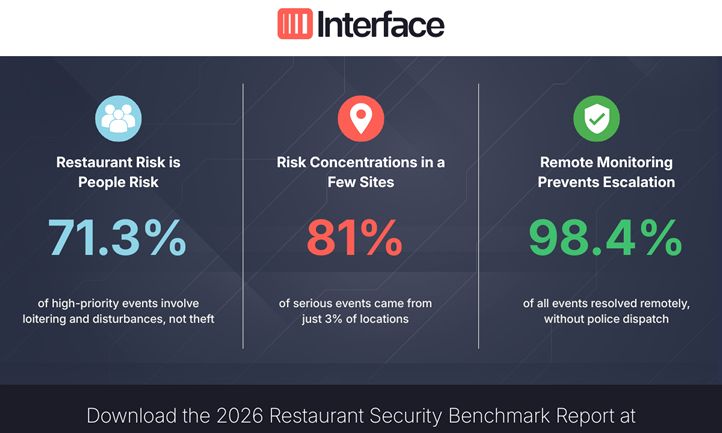
Restaurant security data from 1.1M events shows 3% of sites account for 81% of incidents, with loiterers and disturbances making up 70% of high-priority calls.
Continue with
Interface Systems, a provider of AI-powered security and remote video monitoring, released its 2026 Restaurant Security Benchmark Report on Tuesday. The report draws on 1.1 million monitoring events across 9,392 U.S. restaurant locations covering 78 quick-service, fast-casual, and casual dining brands.
Risk is not evenly distributed. Three percent of monitored locations generated 81% of all high-priority events. The top 100 sites alone accounted for 59%. Uniform security spending across a portfolio, the report argues, overprotects most sites while leaving the few that carry the risk underprotected.
Loiterers and panhandlers made up 49.8% of high-priority events. Disturbances added another 21.5%. Together they account for more than 70% of the highest-risk incidents. Theft and loss, the dominant threat in retail, barely registered at restaurants. Other tracked threats included battery and assault, burglary, robbery, property damage, and medical emergencies.
High-priority events stayed elevated around the clock. They peaked at 6 PM during the dinner rush. Roughly 30% occurred overnight between 10 PM and 6 AM, when restaurants run skeleton crews or sit closed. January was the worst month, running 61% above the summer low.
Interactive remote monitoring resolved most incidents before police response was needed. Of 1.1 million events, only 1.6% required a police, fire, or medical dispatch. Trained intervention specialists with live video and two-way audio resolved 98.4% remotely.