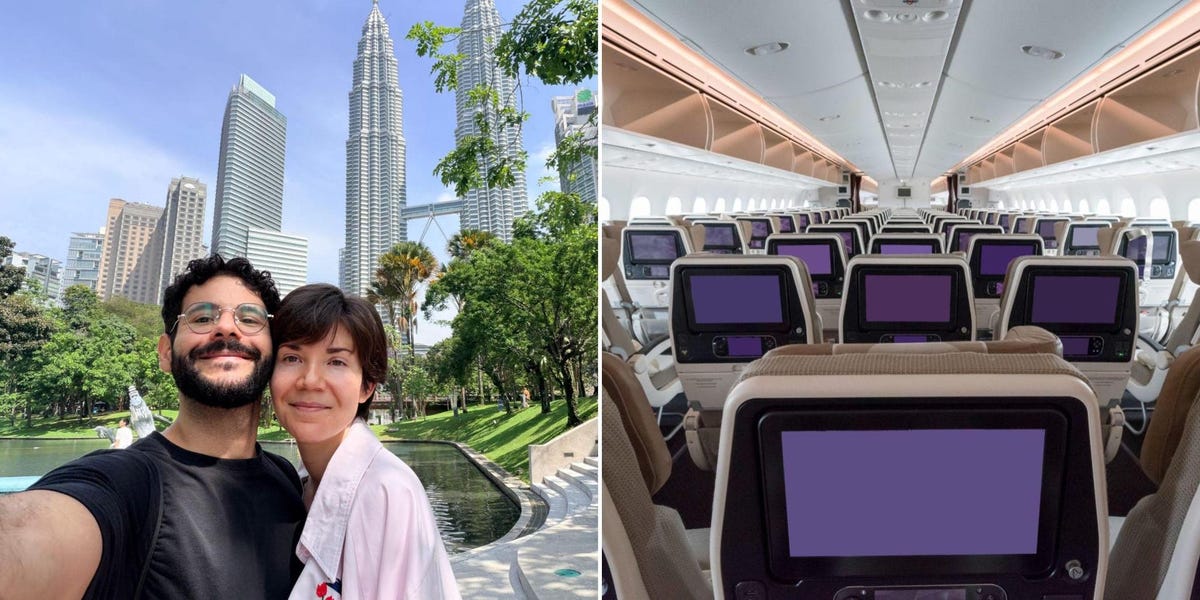
After 200 hours in economy seats across a dozen airlines, three carriers stood out for comfort and consistency. One I would not book again.
I've flown long-haul economy on a dozen airlines over the past four years, crossing the Atlantic and Pacific enough times to develop strong opinions about seat pitch, meal service, and how much misery a 10-hour flight can pack into a single seat.
Etihad Airways came out ahead of the pack. The Abu Dhabi-based carrier runs a modern fleet on its long routes, and the economy cabin shows it. Seat pitch runs 32-33 inches on most of its 787 and A380 flights, a full inch more than the industry standard. The in-flight entertainment screen is large and responsive. Meals arrive hot and on a real tray, not a cardboard box. The cabin crew circulates with water without being asked. None of it is revolutionary. It is simply consistent, and that consistency matters more on a 14-hour leg than any single perk.
Singapore Airlines delivered a similar experience on the Asia routes I tested. The service standard is well-documented. What stood out was the seat design itself. The recline mechanism does not intrude into the space of the passenger behind you the way many economy seats do. The headrest adjusts with wings that actually lock into place. The meal service offers a "book the cook" option on some routes where you pre-select your main course, and it arrives exactly as ordered. For a 16-hour flight from Singapore to London, those details turn a survival exercise into something closer to tolerable.
Japan Airlines (JAL) was the surprise. I expected efficiency. I did not expect the seat to be genuinely comfortable. JAL runs a 2-4-2 configuration on some of its 787s, which means window passengers do not have to climb over a seatmate to reach the aisle. The cabin humidity is slightly higher than the desert-dry standard on most long-haul flights, which makes a real difference on a 12-hour sector. The meal service includes a hot towel and a small cup of miso soup before the main course. It sounds minor. It is not minor when you are 8 hours in and your skin feels like parchment.
China Eastern was the one I would not book again. The seat pitch on its A330 fleet is tight – closer to 30 inches on the flights I took. The in-flight entertainment system had a limited selection and a slow interface. The meal service was a single cold box with no hot option on a 10-hour overnight flight from Shanghai to London. The cabin crew were professional but scarce; the call button went unanswered for 45 minutes on one leg. None of it was catastrophic. It was simply worse than every other option on the same route, and the fare difference was not large enough to justify the downgrade.
The takeaway from a dozen airlines and roughly 200 hours in economy seats is that the gap between the best and the worst is not about luxury. It is about whether the airline has designed the experience for the passenger who is stuck in the middle seat for 12 hours. Etihad, Singapore, and JAL have. China Eastern has not.
Prepared with AlphaScala editorial tooling from the source reporting linked above. Indexable analysis may include a cited Alpha Score value. Publishing checks screen each story before release. Educational coverage, not personalized advice.