Zoox Targets 100 Robotaxis a Week After Design Upgrade
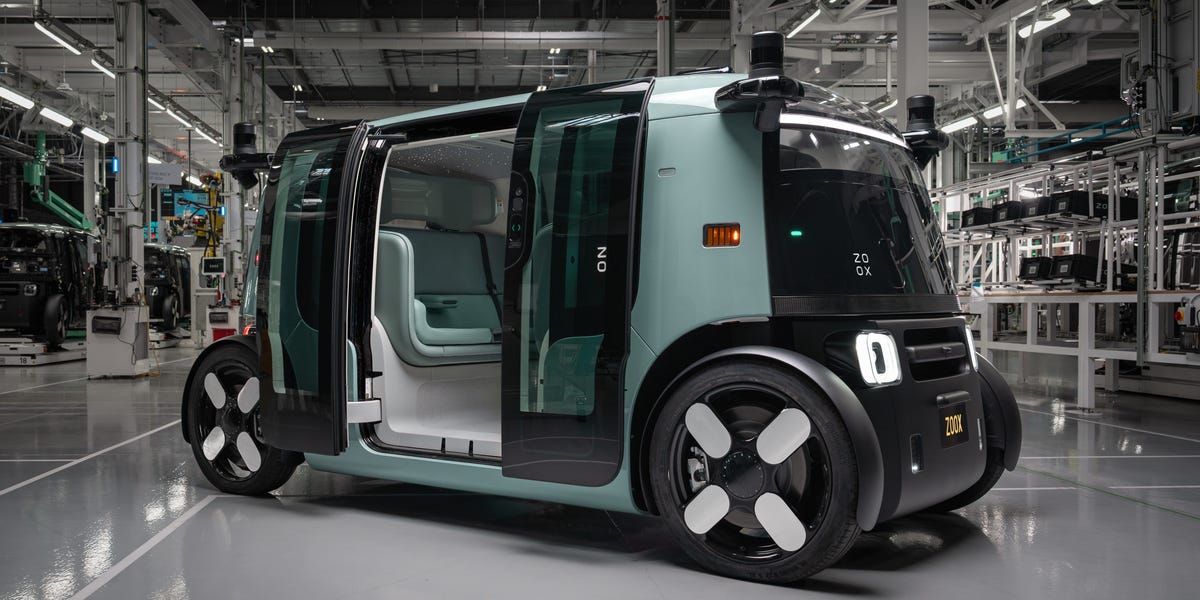
Zoox targets 100 robotaxis a week after a design upgrade. The production ramp would push Amazon's autonomous unit toward commercial scale, pending regulatory approvals.
Amazon's Zoox unit is preparing to build as many as 100 robotaxis a week after an upgrade to its vehicle design, the company said. The move comes as Zoox looks to expand its service areas inside the U.S. and move closer to commercial-scale operations.
The redesigned robotaxi, which Zoox showed off late last week, includes a new sensor suite and a revised interior layout. Zoox said the changes improve pedestrian detection and passenger comfort, two areas where earlier prototypes drew scrutiny from regulators and safety engineers.
The production target of 100 vehicles per week would mark a significant jump from the current assembly rate, which Zoox has not disclosed publicly. Previous reports pegged annual capacity at a few hundred units. Hitting 100 a week would put Zoox on a path to produce thousands of robotaxis a year, assuming it can clear remaining regulatory hurdles.
Zoox has been testing its purpose-built, bidirectional vehicle in San Francisco and Las Vegas since 2023. The company holds a permit from California's Public Utilities Commission to carry passengers in its autonomous vehicles, with a safety driver behind the wheel. Driverless deployment would require additional approvals.
The ramp-up comes as the autonomous taxi market gets more crowded. Waymo, owned by Alphabet, already operates a commercial driverless service in Phoenix, San Francisco and Los Angeles. Cruise, backed by General Motors, recently resumed supervised testing in three cities after a pause tied to a pedestrian injury. Tesla has promised a robotaxi unveiling for October, though it has yet to detail a vehicle or production timeline.
Amazon has invested heavily in Zoox since acquiring the startup in 2020 for a reported $1.2 billion. The unit operates independently inside Amazon, with its own engineering and manufacturing teams. A fleet of thousands of robotaxis would slot naturally into Amazon's last-mile delivery ambitions, though Zoox has not said it will carry packages.
The timing of the production ramp matters for Amazon shareholders. The e-commerce and cloud company spent $19 billion on capital expenditures last year, much of it on data centers and logistics. Zoox is a small piece of that, a successful commercial launch could open a new revenue stream at a time when Amazon's core retail growth is slowing.
Zoox faces two big unknowns. First, whether regulators in new states approve driverless operations without a safety driver. Second, whether the manufacturing scale holds up. Building 100 bespoke electric vehicles a week requires a stable supply chain for custom parts, including four-wheel steering and 180-degree door openings. Any disruption could push the timeline.
The company said it will release more details on the expansion schedule later this year. No specific cities have been named beyond the existing test sites.
Drafted by a large language model from the source reporting linked above, then screened by automated publishing checks. It is not read by a journalist before publication. Some articles cite our Alpha Score. Verify prices and figures against the original source. Educational coverage, not personalized advice.