Toronto‑based photonic quantum computing company Xanadu reported a net loss of $20.6 million in its first quarter as a public company. Revenue quadrupled to $2.8 million, driven entirely by a U.S. Department of Defense contract. The $0.28 per share loss was deeper than the $0.08 loss analysts had modelled, handing markets their first clear view of how a public, pure‑play quantum firm monetises a hardware roadmap that is still years from commercial delivery.
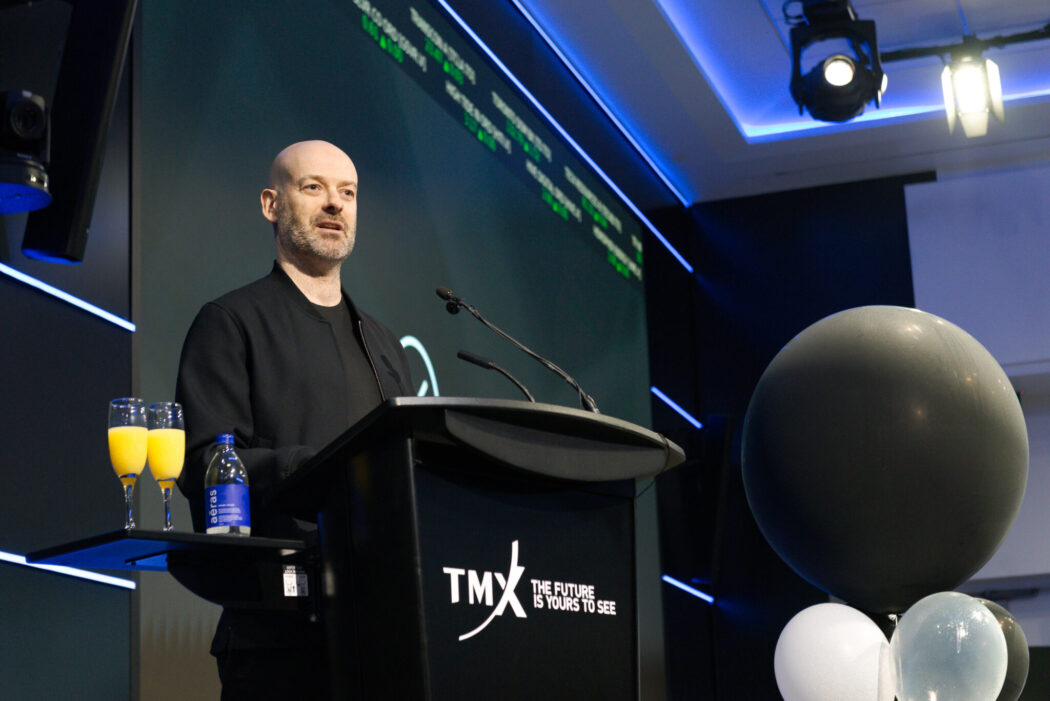
“I want to take a moment to acknowledge what this call represents, not just a financial reporting milestone but a public commitment to transparency and accountability,” CEO Christian Weedbrook told analysts.
The profit‑and‑loss miss shifted attention to the composition of Xanadu’s revenue and the durability of its government‑backed funding.
DARPA Contract Drives Revenue to $2.8M; Loss Widens to $20.6M
Revenue of $2.8 million was roughly four times the ~$0.7 million recorded in the same quarter a year earlier. The top‑line result is tied directly to a U.S. Department of Defense research contract administered through the Defense Advanced Research Projects Agency (DARPA). Xanadu did not report gross margin on its quantum‑services line, so the recurring‑revenue profile remains opaque. The wider net loss – the prior‑year comparable figure was not disclosed – reflects public‑company costs, increased R&D spending, and the absence of any large hardware sale.
DARPA Quantum Benchmarking Initiative Phase II Backs Top Line
The revenue surge traces to Xanadu’s participation in the Quantum Benchmarking Initiative (QBI), run by DARPA. Alongside Canadian peers Photonic and Nord Quantique, Xanadu advanced to Phase II of the programme, which awards $5 million USD to each participant and provides a path to negotiate a further $10 million USD. Revenue was recognised in the quarter, pointing to milestone‑based accounting rather than a one‑time grant.
Adjusted EBITDA Loss Widens to $13.9M
Adjusted EBITDA loss reached $13.9 million, up from $10.6 million in the first quarter of 2025. Operating cash consumption deepened even as revenue jumped. The DARPA payments do not yet offset the step‑up in overhead from running a public company and maintaining parallel R&D programmes in photonic chip fabrication and error‑correction software.
| Metric | Q1 2026 | Q1 2025 (where stated) |
|---|
| Revenue | $2.8M | ~$0.7M |
| Net loss | $20.6M | Not disclosed |
| Loss per share | $0.28 | Not disclosed |
| Adjusted EBITDA loss | $13.9M | $10.6M |
| Cash and equivalents | $272.5M | $257M (end‑March) |
Stock Rollercoaster and Weedbrook’s Nvidia Reality Check
Xanadu shares debuted around $10 CAD on the Toronto Stock Exchange in late March, a moment when broad equity markets were under pressure from elevated oil prices linked to the Iran conflict. The stock subsequently spiked more than 300% in a single week, triggering multiple trading halts. It reversed sharply on May 4 and has since traded near the $20 CAD level. Weedbrook addressed the volatility directly on the call, attributing some of the swings to traders misreading a recent announcement from chipmaker Nvidia about open‑source quantum AI models.
Nvidia GPUs ‘Too Fast’ for Xanadu’s Photonics
Xanadu has used Nvidia chips for years, making the chipmaker’s newest quantum‑AI model release irrelevant to Xanadu’s technical roadmap. The CEO’s comment that the GPUs are “too fast” for photonic error correction underscores that classical‑quantum integration is not a uniform play. For traders, the episode shows how easily the Xanadu ticker can get swept into thematic momentum disconnected from its actual contract‑driven revenue.
Key insight: Government defence contracts, not chipmaker hype, drive Xanadu’s actual revenue.
Nvidia’s own stock was trading at $235.75 on the day, up 4.39%, with an Alpha Score of 70 (moderate). The discrepancy between the chipmaker’s price action and Xanadu’s speculative spike illustrates the gap the CEO called out.
Cash at $272.5M and the $300M ATM Overhang
Xanadu held $272.5 million in cash and equivalents at quarter‑end, slightly above the $257 million in net cash at the end of March. The company also announced plans to establish a $300 million USD synthetic at‑the‑market facility.
SPAC Proceeds Fell Short; Private Placement Brought $275M
The March SPAC merger with Crane Harbor Acquisition Corp. delivered roughly $302 million USD in gross proceeds, far below the $500 million USD initially projected when the $3.6 billion deal was announced in November. Redemptions by the SPAC’s public stockholders cut the trust‑account contribution. A concurrent private placement raised $275 million from investors that included AMD, the asset‑management arms of BMO and CIBC, Bessemer Venture Partners, Georgian Partners, and OMERS Ventures.
AMD’s participation provides a notable institutional anchor, however the chipmaker’s own Alpha Score of 62 (moderate) suggests its strategic bet on quantum photonics is still viewed with measured sentiment. Xanadu’s cash position, after the redemption hit, means the balance sheet is stable but the float is thin – and the stock sensitive to any hint of dilution.
ATM Facility Adds a Dilution Overhang
The $300 million at‑the‑market facility gives Xanadu the ability to sell shares at prevailing prices over time. CFO Michael Trzupek stated that all proceeds would go straight to the balance sheet. The facility has not yet been activated and no timeline was provided. The filing creates an overhang that could cap the stock on rallies, given the wide bid‑ask spread and low float typical of a SPAC that saw heavy redemptions.
Government Funding Pipeline and the 2029 Quantum Data Centre Target
Weedbrook reiterated the company’s goal of building a quantum data centre in Toronto by 2029. That facility would house fault‑tolerant photonic quantum processors and is central to the investment case. The timeline stretches over multiple government budget cycles, making fiscal‑policy conditions in both Canada and the U.S. a material risk factor.
DARPA’s $316M Final Phase and Phase‑Dependent Revenue
The QBI programme’s final phase offers $316 million USD to any participant that demonstrates a functional, fault‑tolerant quantum computer. Because Xanadu’s near‑term revenue is tied to programme milestones rather than commercial product sales, quarterly income will be lumpy and contingent on demonstrated technical progress. Phase II currently provides $5 million USD with an option for an additional $10 million USD; the larger sum remains a distant valuation lever.
Canada’s Counterpart and $390M CAD Semiconductor Talks
Canada’s Canadian Quantum Champions Program, announced last fall, offers Xanadu and other selected companies up to $23 million CAD in its first phase. Xanadu has not disclosed how much of that funding was recognised in the quarter. Separately, Xanadu is in discussions with the Canadian and Ontario governments for a combined investment of up to $390 million CAD to establish domestic semiconductor and photonic manufacturing capabilities. If finalised, that capital would sit outside the DARPA and Champions streams and would mark a significant expansion of Xanadu’s physical‑hardware footprint.
CFO Trzupek emphasised that access to capital from both the U.S. and Canadian governments is key to the company’s growth. The dual‑jurisdiction funding model reduces reliance on a single sponsor, however it also means government‑programme timelines – not product cycles – will shape the quarterly earnings pattern for the foreseeable future.
The statement underscores the partnership model rather than a dependence on standalone hardware sales.
Valuation: No Guidance, High Burn, a Sentiment‑Driven Price
Xanadu does not provide forward revenue guidance or a timeline for operating breakeven. With a market capitalisation that has swung wildly on a thin float, the stock’s price remains a function of quantum‑thematic sentiment rather than discounted cash flows. The ATM facility, if drawn, would add to the share count and could weigh on the stock. The bull case rests entirely on milestones: advancing through QBI phases, finalising the semiconductor‑fab agreement, and delivering a prototype capable of error‑corrected computation. Each milestone is years away.
R&D Spending Outpaces Non‑Recurring Revenue
The company burned $13.9 million of adjusted EBITDA in a single quarter on $2.8 million of largely non‑recurring, contract‑driven revenue. While the cash position of $272.5 million provides a runway, the pace of spending – directed at photonic chip fabrication, error correction, and public‑company overhead – means Xanadu remains a government‑funded R&D entity listed on public markets. The earnings confirm that funding is arriving. They also show that the path to a self‑sustaining revenue model runs through a series of technical gates, each of which can reset the stock’s risk‑reward profile sharply.