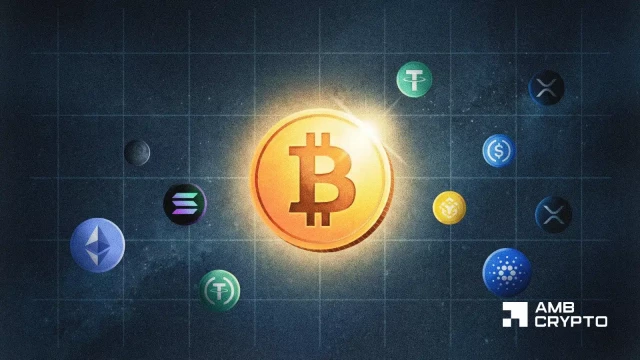
Bitcoin dominance near 58% and a cautious macro backdrop are keeping altcoins sidelined. Analysts say the next altseason will likely be sector-driven, not market-wide.
Bitcoin dominance is hovering near 58%. The Altcoin Season Index sits at 51, well below the 75 threshold that confirms a broad altseason. The pattern that defined previous cycles – Bitcoin leads, then capital rotates into altcoins – has not materialized this time.
Ivan Patriki, co‑founder of Quantmap, said the altcoin market is at one of its lowest ebbs in years.
Sentiment is terrible, liquidity is thin, and a lot of investors have simply stopped paying attention.
Global stablecoin supply has surpassed $300 billion, suggesting capital is available but parked on the sidelines. The U.S. Dollar Index and 10‑year Treasury yields remain elevated, keeping safer assets competitive with speculative crypto positions. Bitcoin dominance has stayed above 57% for weeks, reflecting investor preference for the largest digital asset during macro uncertainty.
In 2017 and 2021, Bitcoin peaked and then liquidity spilled into smaller tokens over a period of weeks. Both times, the rotation followed a clear Bitcoin‑first phase. This cycle, that spillover has not happened. Total market capitalisation excluding Bitcoin and Ethereum (TOTAL 2) has lagged behind BTC's gains.
Ryan Lee, chief analyst at Bitget Research, said the structure of any future altseason will differ from past cycles.
The next altseason, if we still call it that, will likely be driven by sectors rather than a blanket rally.
Sectors such as tokenized real‑world assets and artificial intelligence are drawing new users and institutional interest. Memecoins and weaker DeFi projects are not seeing the same inflows. The divergence suggests investors reward protocols with revenue and adoption over narratives alone.
Some traders compare the current phase to 2019, when Bitcoin dominance stayed above 70% for months before eventually rotating into altcoins. That cycle lacked spot Bitcoin ETFs and deep institutional participation. This one has both, which changes how capital flows in. Institutions tend to buy Bitcoin directly through ETFs rather than using crypto exchanges, reducing the natural spillover effect.
A sustained decline in Bitcoin dominance below 55%, combined with stronger altcoin relative performance, would strengthen the case for a broader rotation. Until then, Bitcoin remains the market's primary liquidity magnet. Altcoin rallies depend on sector‑specific catalysts, not market‑wide momentum.
Lee's comment points to a market where liquidity is available but highly selective. The old playbook of buying every altcoin during a Bitcoin rally may no longer apply. The data so far supports that view: altcoins that show protocol revenue and user growth are separating from the rest.
Prepared with AlphaScala research tooling and grounded in primary market data: live prices, fundamentals, SEC filings, hedge-fund holdings, and insider activity. Each story is checked against AlphaScala publishing rules before release. Educational coverage, not personalized advice.